
What Is Door Skin? Materials, Production, and Modern Applications
A door skin is a thin, pre-shaped layer applied to a door’s core to provide a finished surface, improve appearance, and add durability. Door skins replace the need for solid wood doors while delivering the same visual appeal at a lower cost. They are made from materials like HDF, MDF, wood veneers, or PVC and are shaped using heat and pressure to create textures, patterns, and designs.
This article explains what door skins are, the materials used to make them, how manufacturers produce them, and where builders install them. It covers the types available, standard sizes and thicknesses, and answers common questions about door skin applications. Readers will learn how door skins compare to solid doors and which options work best for specific projects.
What Is a Door Skin?
A door skin is a thin decorative sheet bonded to the surface of a flush door to enhance appearance and provide protection. These sheets range from 0.6mm to 4mm thick and transform plain doors into designer doors without requiring expensive solid wood.
Door skins serve two functions. They improve the door’s visual appeal through various colors, patterns, and textures. They also protect the door core from wear, scratches, and environmental damage.
Common door skin materials include:
- HDF (High Density Fibreboard) with density of 700–850 kg/m³
- PVC (Polyvinyl Chloride) membrane
- Natural wood veneer
- Laminate sheets
- Decorative paper with protective coating
- Melamine-coated panels
The door facing forms the outer layer visible to users. Manufacturers bond this facing to a flush door core using adhesives or hot pressing methods. The core typically consists of particle board or honeycomb paper framed with wood rails.
Material selection affects key properties:
| Property | Best Materials | Avoid |
| Moisture resistance | PVC membrane, melamine HDF | Paper-based, untreated veneer |
| Ease of maintenance | Laminate, PVC | Natural veneer |
| Density/strength | HDF (850+ kg/m³) | Thin paper (under 0.7mm) |
Door skins cost 40-60% less than solid wood doors while offering uniform appearance and consistent quality. Damaged skins can be replaced without changing the entire door structure. The thickness and material determine durability, with thicker HDF and PVC options lasting 10-15 years compared to 5-8 years for paper-based alternatives.
What Is a Door Skin Made Of?
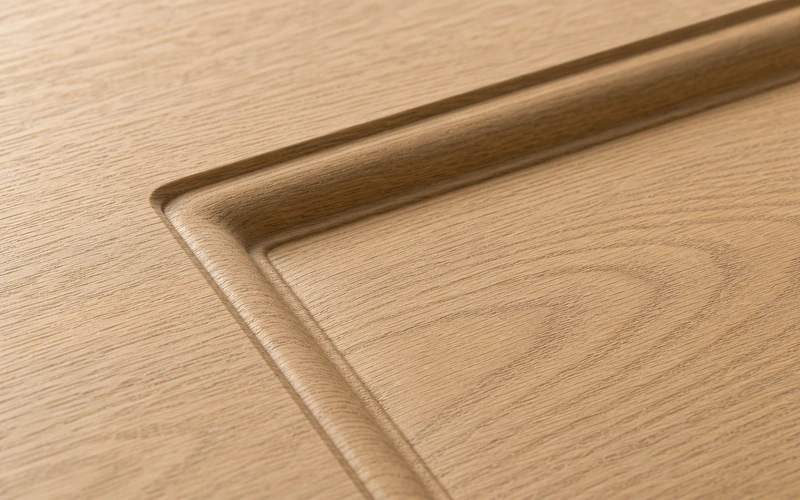
Door skins are made from several core materials that determine their appearance and durability. The most common base is high-density fiberboard (HDF), which serves as the foundation for most modern door skins.
Primary Base Materials:
- High-Density Fiberboard (HDF) – Compressed wood fibers with density between 700–850 kg/m³
- Door skin plywood – Layered wood sheets bonded together
- Medium-Density Fiberboard (MDF) – Lower density alternative to HDF
The base material receives a surface treatment that creates the final appearance. Three main surface types exist for door skins.
Surface Treatment Options:
- Laminate door skin – High-pressure laminate (HPL) bonded to the substrate
- Veneer door skin – Thin slices of real wood (oak, walnut, teak) applied to the surface
- Melamine – Resin-saturated decorative paper pressed onto the base
HDF door skin products dominate commercial applications because of their stability and resistance to warping. The HDF substrate maintains moisture content between 6-10%, which prevents deformation in different climates.
Laminate door skins use HPL sheets pressed onto the base at temperatures around 220°C. This process creates deep molding patterns up to 15mm in depth.
Veneer door skins apply real wood sheets to the HDF base through heat and pressure bonding. These types of door skin cost more but provide authentic wood grain patterns.
The substrate thickness stays within ±0.1mm tolerance in quality products. This precision reduces assembly defects by 20% compared to lower-grade materials.
How Is a Door Skin Manufactured?
Door skin manufacturing begins with selecting the base material, typically high-density fiberboard (HDF) or composite sheets. The factory cuts these materials to the required door dimensions using precision cutting equipment.
The material moves through a routing machine that creates the desired panel design. This machine carves patterns, grooves, or textures into the surface based on the door style being produced.
The production process follows these steps:
- Material selection and cutting to size
- Routing the design pattern into the surface
- Applying adhesive to both the door skin and core
- Assembling components (skin, core, stiles, and rails)
- Pressing in a cold press for 30 minutes
- Drying for 10 to 24 hours
- Trimming edges to final dimensions
- Applying white primer to exposed edges
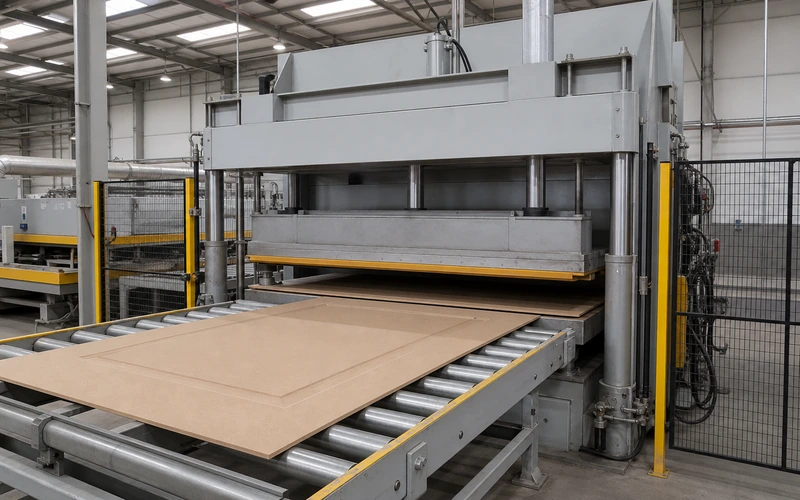
The cold press applies uniform pressure across the entire door assembly. This bonds the door facing to the core without using heat, which prevents warping and material damage.
After pressing, doors enter a drying area where adhesive cures completely. The drying time depends on the glue type and environmental conditions.
A sizer machine trims excess material from all edges once the door is dry. The freshly cut edges receive white primer through an automated priming machine. This protects the exposed core material and prepares the door for final finishing.
Quality control inspectors examine each door skin for defects, proper adhesion, and dimensional accuracy before packaging and shipping to door manufacturers or distributors.
What Types of Door Skin Are Available?
Six main types of door skin exist in the market: HDF molded skins, paper-based skins, PVC membrane skins, laminate skins, natural veneer skins, and melamine door skins. Each type differs in material composition, thickness, cost, and performance characteristics.
HDF door skins use High Density Fiberboard pressed into molded doors with raised panel designs. These skins range from 2.7mm to 4.5mm thick and offer density above 850 kg/m³. HDF door skins provide moderate to high moisture resistance and are priced according to thickness, density grade, and order volume.
Paper-based door skins are the most economical option in the market. These measure 0.6mm to 0.85mm thick and feature digitally printed designs on decorative paper with protective lamination. Door facing applications requiring low moisture exposure suit this type.
PVC membrane skins use polyvinyl chloride foil measuring 0.35mm to 0.6mm thick. These deliver high moisture resistance, making them well suited for bathroom and kitchen doors.
Laminate door skins apply HPL or LPL sheets at 0.7mm to 1.5mm thickness. These offer moderate moisture resistance and sit in the mid-range for both cost and durability.
Natural veneer skins use real wood veneer between 0.5mm and 1mm thick. These premium door facing materials sit at the higher end of the price range and offer authentic wood appearance.
Melamine door skins feature melamine-coated HDF at 3mm to 4mm thickness. These ready-to-install options offer moderate moisture resistance at a mid-range price point.
What Are the Standard Sizes, Thickness, and Density of a Door Skin?
Door skin manufacturers produce panels in standard sizes of 2040mm x 820mm (80″ x 32″) and 2140mm x 920mm (84″ x 36″). These dimensions match common door frame sizes in residential and commercial construction.
Substrate panel thickness (HDF/MDF) ranges from 1.5mm to 6.0mm across the industry, while thinner surface finishes such as veneer, laminate, or PVC membrane are bonded onto these panels separately. Most door skin manufacturers offer three common substrate thickness options:
- 1.5-3.0mm: Used for lightweight interior doors
- 3.0-4.5mm: Standard for residential doors with better rigidity
- 4.5-6.0mm: Heavy-duty applications requiring sound insulation
The 3mm thickness represents the most common choice for standard interior door production.
Density depends on the core material. HDF (High Density Fiberboard) door skins have a density of 850-1000 kg/m³. This high density provides scratch resistance and dimensional stability. MDF door skins range from 600-800 kg/m³, offering easier machining but less durability.
Door skin manufacturers also produce custom sizes on request. Cut-to-size options accommodate non-standard door frames and specialized applications like fire doors or apartment entrances.
The combination of thickness and density determines the door skin’s final properties. A 3mm HDF skin at 900 kg/m³ weighs approximately 2.7 kg per square meter. A 6mm version of the same material doubles the weight to 5.4 kg per square meter.
Door skins made from HDF perform better in moisture-prone areas due to their higher density and tighter fiber structure.
Where Is Door Skin Used?
Door skins are used on interior and exterior doors in residential, commercial, and industrial buildings.
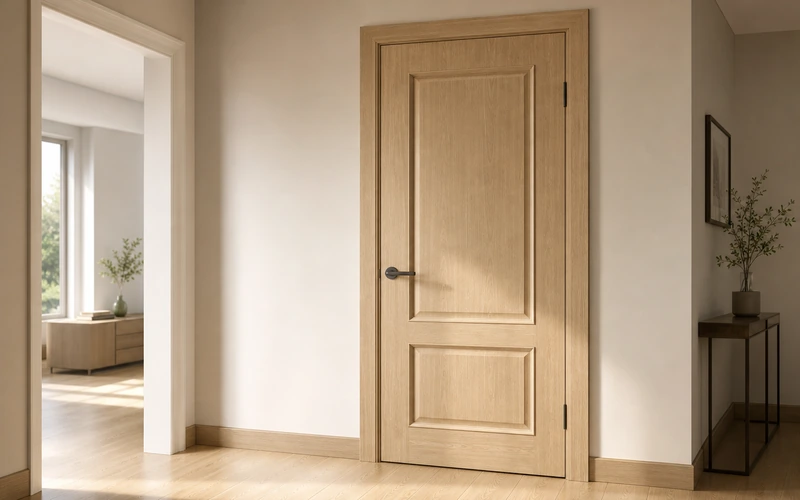
Residential applications include bedroom doors, bathroom doors, kitchen doors, closet doors, and main entrance doors. Bedroom doors typically use laminate or HDF moulded skins for aesthetic appeal. Bathroom and kitchen doors require PVC membrane or melamine-coated skins due to high moisture exposure. Main entrance doors need premium HDF moulded skins or natural veneer with protective coatings for weather resistance.
Commercial spaces use door skins extensively in hotels, offices, hospitals, schools, and retail stores. These environments demand durable materials like HDF moulded skins that withstand heavy use. Door skin manufacturers produce commercial-grade products with impact resistance and easy maintenance properties.
Industrial facilities apply door skins to warehouse doors, storage rooms, and facility partition doors. HDF moulded and PVC-membrane door skins work best in these settings, offering fire-retardant grades and structural rigidity for heavy-use industrial doors.
Door skins are used in both new construction and renovation projects. Contractors install them during door manufacturing at factories or apply them on-site to existing doors. The renovation market uses door skins to update old doors without full replacement.
Key application factors include:
- Moisture exposure level (bathroom vs bedroom)
- Usage frequency (main entrance vs closet)
- Budget constraints (paper-based vs HDF)
- Aesthetic requirements (wood grain vs solid color)
- Building codes and fire ratings
Residential interior doors remain the largest global application segment for door skin, driven by their lower cost and design flexibility compared to solid wood.
FAQs
What Is the Difference Between Door Skin and Wood Veneer?
Door skin is a full HDF or MDF panel that forms a door’s entire outer surface, while wood veneer is a thin real-wood layer bonded onto that skin purely for a natural grain finish.
Can Door Skin Be Used on Exterior Doors?
Yes, but only moisture-resistant grades such as PVC-membrane or high-density HDF skins with waterproof adhesives suit exterior use. Standard paper-based or untreated veneer skins are unsuitable given constant rain, humidity, and UV exposure outdoors.
How Long Does a Door Skin Last?
A quality HDF or PVC door skin typically lasts 10 to 15 years under normal use, while thinner paper-based skins last around 5 to 8 years, depending on density and moisture exposure.
Is HDF or MDF Better for Door Skin?
HDF is generally better for door skin because its higher density resists warping, moisture, and impact better than MDF. MDF remains a lower-cost option suited to lighter-duty interior doors with less humidity exposure.
What Formaldehyde Emission Standards Should Door Skin Meet?
Door skin should meet recognized low-emission standards such as CARB Phase 2, EPA TSCA Title VI, or E1/E0 grades. These standards limit formaldehyde release from resin binders, ensuring safer indoor air quality.
What Is the Minimum Order Quantity for Door Skin From a Factory?
Most door skin factories set MOQ around one 20-foot container load, though this varies by supplier and customization level. Buyers should confirm exact MOQ, lead time, and packaging terms directly with the manufacturer.
Learn More About Our Products?
Contact Now