
Melamine Board vs HPL Laminate: Key Differences
Melamine board and HPL laminate differ in three core ways: structure, durability, and cost. Melamine board, also called thermally fused laminate (TFL), bonds decor paper to a particleboard or MDF core in one step. HPL, or high-pressure laminate, presses six to eight kraft-paper layers into a separate sheet glued onto a substrate. HPL is denser and tougher; melamine is cheaper and faster to install.
This guide draws on SUMEC’s 40+ years manufacturing wood-based panels and certified data. Readers will learn what each material is, how they compare on durability, moisture, heat, cost, and finishes, and when to choose each for cabinets, worktops, and commercial interiors.
What Is a Melamine Board?
Melamine board is a finished panel with decorative paper fused onto a wood core. The industry also calls it thermally fused laminate (TFL) or low-pressure laminate (LPL). It arrives ready to cut and install.
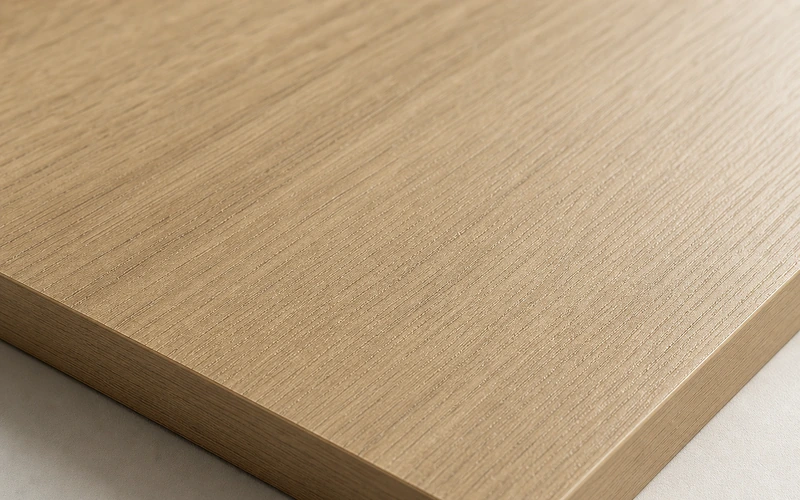
Manufacturers bond resin-soaked decor paper to a particleboard or MDF core. They press it with heat and moderate pressure in one step. The decorative layer measures 0.2 to 0.4 mm thick. The board leaves the factory finished on both sides.
Melamine panels ship in standard 4×8-foot sheets. Common thicknesses include 1/2, 5/8, and 3/4 inch. The core can be particleboard, MDF, or plywood. Particleboard keeps the price low; MDF and plywood cores give a smoother, denser, stronger edge.
Melamine serves as the box, or carcass, of most cabinets and wardrobes. The finished face needs no extra sealing on flat areas. Many solid colors and wood-grain patterns are available.
What Is HPL Laminate?
HPL laminate is a dense decorative sheet bonded to a substrate as a separate step. HPL stands for high-pressure laminate. It ships without a core attached.
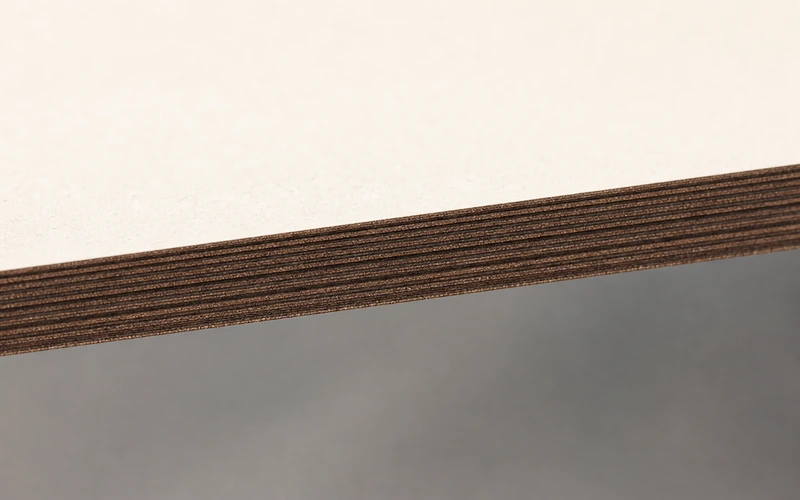
HPL contains six to eight layers of kraft paper, decor paper, and a clear overlay.These layers press together under 1,000 PSI or more. The process also uses heat near 140°C.
The finished sheet measures 0.7 to 1.5 mm thick. Fabricators glue the sheet onto plywood, MDF, or particleboard using contact cement.
HPL comes in several grades for different jobs. Horizontal HPL resists impact for worktops. Vertical HPL is thinner for wall panels. Postforming HPL bends to a curved edge. Compact HPL is a thick, self-supporting panel.
What Are the Differences Between Melamine Board and HPL Laminate?
HPL is denser, thicker, and more durable. Melamine is cheaper and faster to install. The two differ across the areas below.
The table below summarizes the core differences between the two materials:
| Factor | Melamine Board (TFL) | HPL Laminate |
| Structure | Finished panel, core included | Surface sheet, no core |
| Surface thickness | 0.2–0.4 mm | 0.7–1.5 mm |
| Manufacturing | Heat fuses paper to core | High pressure forms a sheet |
| Durability | Moderate | High |
| Cost | 30–50% lower | Higher |
| Installation | Cut and assemble | Glue, trim, and edge |
| Best use | Cabinet boxes, shelving | Worktops, doors, commercial |
Manufacturing Process
Pressure is the core difference in how each is made. Melamine fuses one decor layer to its core in a single step. It uses low pressure but high heat, near 180°C. HPL’s difference is pressure, not temperature. The panel leaves the factory finished on both sides.
HPL is pressed as a separate sheet from six to eight kraft-paper layers.The layers compress under 1,000 PSI or more. The process runs at roughly 140°C. The finished sheet bonds to a substrate later. This pressure gap drives most other differences between the two.
Thickness and Density
HPL is thicker and denser than melamine. HPL sheets run 0.7 to 1.5 mm before bonding. Melamine surfaces run 0.2 to 0.4 mm.HPL is thicker and denser than melamine. HPL is measured as a full sheet; melamine is measured as its surface layer only. HPL sheets run 0.7 to 1.5 mm before bonding. Melamine surfaces run 0.2 to 0.4 mm.
The extra kraft layers raise HPL’s density and hardness. Higher density means more impact and wear resistance. Melamine’s thin single layer offers less protection. Density also affects how each handles cutting and edge work.
Durability
HPL resists scratches and impacts better than melamine. Its high-pressure, multilayer build creates a harder surface. The surface withstands daily contact, dragging, and abrasion. Commercial projects usually specify HPL for this reason.
Melamine handles light to moderate use well. It performs in dry, low-impact spaces like closets and shelving. It chips and wears faster at exposed edges and corners. Sharp impacts can crack the thin decor layer.
Moisture Resistance
HPL resists surface water better than melamine. Neither material is fully waterproof. The decor surface repels spills on both products. The risk lies at the edges, not the face.
Exposed particleboard edges absorb water and swell on both materials. Edge banding or sealant protects the core. Melamine is more vulnerable in kitchens and bathrooms. HPL is the safer pick for wet, high-use areas.
Heat Resistance
HPL tolerates heat better than melamine. Its dense surface withstands hot pans and warm appliances longer. The phenolic resin core holds up under sustained heat. This makes HPL suitable for worktops near stoves.
Melamine can discolor or separate from the core under heat. The thin decor layer reacts faster to high temperatures. Direct contact with hot items risks marks or delamination. Heat sources call for HPL over melamine.
Cost
Melamine costs 30 to 50% less than HPL. The lower material cost suits large or budget projects. Melamine also installs faster, which cuts labor cost.
HPL adds both material and skilled-labor cost. The sheet needs bonding, trimming, and finishing. Many shops send HPL doors out for professional lamination. The higher cost can pay back through longer service life in commercial use.
Installation
Melamine cuts and assembles like plywood. Workers cut it with a carbide blade and score the finish first. The panel needs only edge banding to cover exposed cores. Both sides arrive finished, which speeds the build.
HPL needs more steps and skill. Workers apply contact cement to the sheet and substrate. They trim the edges with a router and laminate bit. HPL has a steeper learning curve than melamine. Sealed edges protect the core on both materials.
Surface Finishes
HPL offers more textures than melamine. Options include matte, gloss, embossed, stone, and metallic. HPL also reproduces patterns like granite, marble, and stainless steel. Its wood-grain finishes look more realistic.
Melamine offers mostly smooth or matte finishes. It comes in many solid colors and wood-grain patterns. The range covers most residential designs. HPL gives more choice for premium or custom looks.
Weight
Melamine is lighter than a finished HPL build. The lighter doors place less strain on hinges and hardware. This makes melamine common in mass-produced furniture. Lighter panels also lower shipping and handling cost.
HPL adds the weight of its bonded substrate. The total weight depends on the chosen core. A plywood or MDF core adds more mass than a particleboard. Heavier doors need stronger hinges and fixings.
Maintenance and Repair
Both surfaces wipe clean with a damp cloth. Neither needs sealing, waxing, or refinishing on flat faces. Neither can be sanded once the decor layer wears. Worn surfaces require replacement, not repair.
Damaged melamine usually means replacing the panel. The finish bonds permanently to the core. Damaged HPL requires re-laminating the sheet onto a substrate. Sealed edges extend the life of both materials.
When to Choose Melamine Board?
Melamine fits budget projects with light to moderate use. It works best for interior panels and cabinet boxes. It suits dry, low-impact spaces.
Melamine is the better choice in these cases:
- Cabinet carcasses and wardrobe interiors
- Shelving and office furniture panels
- Closets, pantry units, and laundry rooms
- Budget or fast-turnaround builds
Melamine relies on sealed edges for moisture control. Exposed particleboard edges absorb water and swell. Edge banding solves this in most builds. Melamine is not built for standing water or heavy daily wear.
When to Choose HPL Laminate?
HPL fits high-traffic, high-wear, and moisture-exposed surfaces. It works best for doors, worktops, and commercial interiors. It justifies its higher cost where durability matters.
HPL is the better choice in these cases:
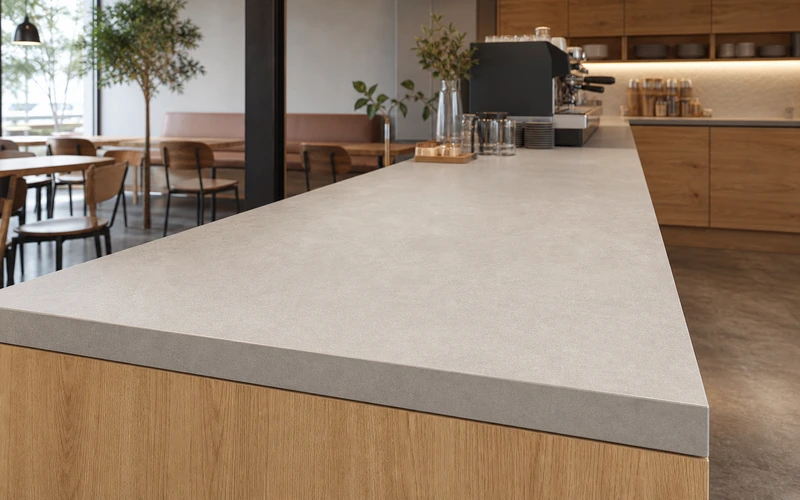
- Kitchen and bathroom worktops
- Cabinet doors and exposed faces
- Wall cladding and commercial fixtures
- High-traffic or wet areas
The table below maps common applications to the better-suited material:
| Application | Better Material |
| Cabinet carcass and wardrobe interior | Melamine |
| Cabinet doors and exposed faces | HPL |
| Kitchen and bathroom worktops | HPL |
| Shelving and office panels | Melamine |
| Wall cladding and commercial fixtures | HPL |
FAQs
Is Melamine Board the Same as Laminate?
No. Melamine is one type of laminate, called thermally fused laminate. The word laminate usually means HPL, a separate sheet. Both are laminates but differ in build and strength.
Is HPL Laminate Waterproof?
No surface laminate is fully waterproof. HPL resists surface water better than melamine. Exposed core edges still absorb moisture. Sealing edges is required in wet areas.
Which Lasts Longer, Melamine or HPL?
HPL lasts longer under heavy or commercial use. Melamine lasts many years in light residential use. Lifespan depends on substrate quality, edge sealing, and daily traffic.
Can HPL Be Applied Over Melamine?
It is possible but not standard. Melamine already has a finished surface. Adding HPL raises cost and risk. For full HPL performance, bond it to a bare substrate.
Which Is More Eco-Friendly, Melamine or HPL?
Both can be eco-friendly with certified cores and low-formaldehyde resins. FSC and CARB-compliant panels lower environmental impact. The surface type matters less than the certification.
Does Melamine or HPL Scratch More Easily?
Melamine scratches and chips more easily, mostly at edges. HPL’s denser surface resists scratches and abrasion. High-traffic projects usually specify HPL.
What Sizes and Thicknesses Are Standard?
Both ship in 4×8-foot panels. Melamine cores come in 1/2, 5/8, and 3/4 inch. HPL sheets run 0.7 to 1.5 mm before bonding to a core.
Can Melamine and HPL Be Used in One Project?
Yes. Many builds use melamine for hidden cabinet boxes and HPL for doors and worktops. This mix balances cost and durability. Matching decors keep the finished look consistent.
Learn More About Our Products?
Contact Now