

PVC Foam Board Uses: Innovative Solutions for Signage, Furniture, and More
PVC foam board serves as a lightweight, rigid plastic material used for signage, cabinets, furniture, construction panels, and displays due to its moisture resistance, easy fabrication, and smooth surface that accepts printing and finishes.
This guide covers what PVC foam sheet is made from, its specific uses across industries, how to select the right thickness and density for each project, and where the material should not be used. The information helps buyers choose appropriate specifications, avoid unsuitable applications, and understand why this material has replaced traditional options in many professional settings.
What Is PVC Foam Board?
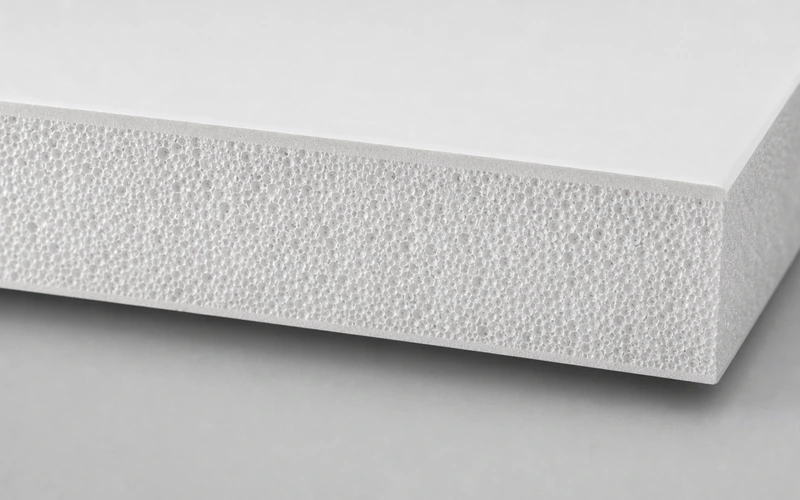
PVC foam board is a lightweight, rigid plastic sheet made from polyvinyl chloride resin mixed with foaming agents that create a closed-cell foam structure. Commercial grades run 0.45-0.68 g/cm³, roughly one-third to one-half the weight of solid PVC.
Manufacturers produce foam PVC board by heating PVC resin with chemical foaming agents to create millions of tiny, sealed air pockets throughout the material. These closed cells make the board lighter while keeping it strong and rigid.
Celuka and co-extruded boards carry a dense skin of 0.3-0.8mm over the foam core, giving high printability and paint adhesion. Free foam boards have a thinner skin and a more uniform density throughout.
Key characteristics of PVC foam board include:
- Moisture resistance below 0.5% water absorption (ASTM D570)
- Dimensional stability with minimal expansion or warping in temperature changes
- Chemical resistance to water, weak acids, alcohols, and most cleaning products
- Ease of fabrication with standard woodworking and plastic tools
PVC foam board is a thermoplastic, which means it softens when heated above 65-75°C. The material maintains its shape in normal service temperatures from -20°C to +60°C.
Standard sheets measure 1220×2440mm and 1220×3050mm, in thicknesses from 1mm to 45mm, with custom sizes on request. The board accepts vinyl graphics, digital printing, paint, and lamination without special surface preparation. Lead-free formulations are standard for furniture, bathroom, and printing work.
What Is PVC Foam Board Used For?
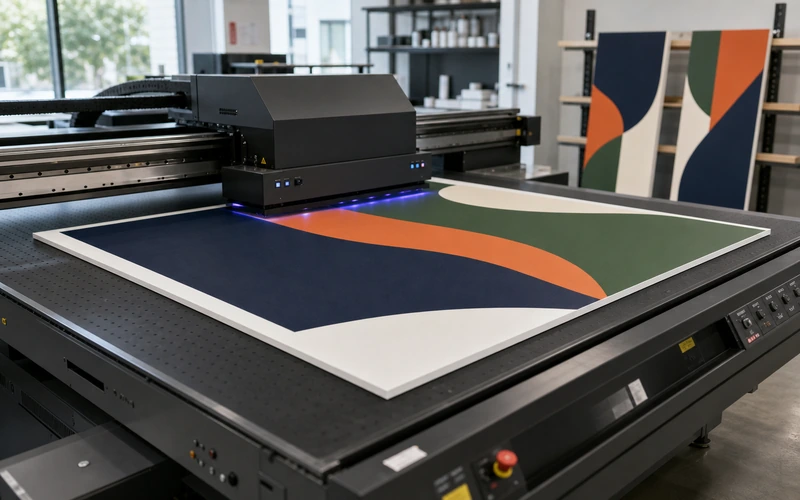
PVC foam board serves five primary markets: signage and displays (35% of applications), construction panels (30%), furniture and cabinetry (15%), transportation components (10%), and specialty uses (10%). The material’s closed-cell foam structure combines lightweight properties with rigid dimensional stability.
Signage and Display Applications include outdoor signs, point-of-purchase displays, trade show exhibits, menu boards, and real estate signs. The smooth surface accepts vinyl graphics, digital printing, and paint without special preparation. Standard white boards contain titanium dioxide pigment that resists UV degradation for 3-5 years outdoors.
Construction Uses cover wall panels, partition systems, ceiling tiles, window trim, and decorative molding. PVC foam board provides moisture resistance below 0.5% water absorption per ASTM D570 standards. The material maintains structural integrity from -20°C to +60°C, making it suitable for both interior and exterior installations.
Furniture and Cabinet Components benefit from the material’s ease of fabrication with standard woodworking tools. Common applications include cabinet doors, drawer fronts, shelving, decorative panels, and furniture backing. The polyvinyl chloride resin base offers chemical resistance to household cleaners and detergents.
Transportation and Partition applications use high-density boards (0.6-0.68 g/cm³) for RV interiors, trailer linings, and vehicle partition systems. These environments require the enhanced impact resistance and weather durability that denser, co-extruded foam PVC board provides.
Specialty and Prototyping Uses include architectural models, design prototypes, exhibition props, and temporary installations where lightweight rigidity and simple fabrication methods are essential.
What Thickness and Density Should You Choose for Each Use?
Signage and high-resolution graphics require 3mm to 5mm boards at 0.45–0.5 g/cm³ density. These thicknesses accept UV printing and vinyl application without warping. Real estate signs, retail displays, and event backdrops work best at 5mm because the material stands alone for short-term mounting.
Architectural models and prototypes use 3mm to 10mm boards at 0.45–0.5 g/cm³. Thinner boards (3mm) cut cleanly with a fine-tooth blade for detailed work. Thicker options (8–10mm) provide structural support for building facades and room dividers in scale projects.
Photo frame and packaging production runs perform well with 5mm to 10mm at 0.5 g/cm³. Frame backing and mounted prints require 5mm for easy cutting and shaping. Protective cases and packaging inserts need 8–10mm for impact resistance.
Cabinet construction demands 16–18mm boards at 0.6 g/cm³ minimum. This density holds screws and hinges reliably while resisting the moisture that swells particleboard. Kitchen cabinets, bathroom vanities, and wardrobe panels require this structural grade.
| Application | Thickness | Density |
| Signage, graphics, backdrops | 3–5mm | 0.45–0.5 g/cm³ |
| Models, frames, sculptures | 3–10mm | 0.3–0.5 g/cm³ |
| Frames, cases, inserts | 5–10mm | 0.5 g/cm³ |
| Cabinets, furniture | 18mm | 0.6 g/cm³ |
Shelving applications need 15–18mm at 0.6 g/cm³ for spans over 600mm. Lower density boards sag under moderate loads. Room dividers and partition walls function at 10mm when cosmetic only, but require 18mm when floor-to-ceiling or free-standing. Neither carries structural load.

Where Should PVC Foam Board Not Be Used?
PVC foam board fails in high-temperature applications above 60°C. The material softens at 65-75°C and loses structural integrity, making it unsuitable for areas near heat sources, industrial ovens, or automotive engine components.
Load-bearing structural applications exceed expanded PVC’s capabilities. The material’s low density (0.45-0.68 g/cm³) and modest flexural strength cannot support heavy loads or permanent structural elements in buildings, bridges, or flooring systems.
Avoid PVC foam sheet in these applications:
- Direct food contact surfaces (confirm compliance with your supplier before specifying)
- High-temperature environments (kilns, furnaces, heat ducts)
- Primary structural supports (beams, joists, load-bearing walls)
- Chemical exposure to strong solvents (toluene, acetone, chlorinated solvents)
- Cold-formed curves (the board needs heat to bend; forcing it cold cracks it)
- Long unsupported shelf spans (the board creeps and sags under sustained load)
Chemical resistance limits matter for specific environments. Aromatic hydrocarbons, ketones, and chlorinated solvents cause swelling, softening, or dissolution of PVC foam board. Industrial facilities using these chemicals need alternative materials.
The material performs poorly where certified fire ratings are critical. PVC foam board is self-extinguishing, but standard grades are not rated for Class A assemblies under ASTM E84. Commercial kitchens and laboratories should confirm the required standard before specifying.
Digital printing and outdoor signage work well on PVC foam sheet, but the material’s ease of fabrication and moisture resistance don’t compensate for its structural limitations. Projects requiring high impact resistance, load-bearing capacity, or extreme temperature tolerance need denser materials like solid PVC, aluminum, or engineered wood products.
FAQs
Is PVC Foam Board Waterproof?
Yes. PVC foam board is waterproof. Its closed-cell structure stops water entering the core, so the board will not swell, rot, or grow mould in kitchens, bathrooms, and other wet areas.
Can PVC Foam Board Be Used Outdoors?
Yes, with the right grade. Standard white board lasts roughly 3–5 years outdoors before yellowing, while UV-stabilised and co-extruded grades reach 7–10 years. Darker colours resist UV better than untreated white.
Can You Screw Into PVC Foam Board?
Yes. PVC foam board takes screws, nails, and hinges. Density decides holding power: specify at least 0.55 g/cm³ for cabinet hardware, and 0.6 g/cm³ or higher above 16mm thickness.
What Thickness of PVC Foam Board Is Best for Signs?
Use 3–5mm for printed and mounted graphics, 8–10mm for self-supporting panels, and 19mm or more for cut lettering. Thickness follows panel size and mounting method, not print quality.
Learn More About Our Products?
Contact Now