

HDF Door Skin vs PVC Door Skin: Comprehensive Comparison & Expert Selection Guide
HDF door skins use compressed wood fibers, while PVC door skins use plastic film—each serves different needs based on moisture exposure, budget, and desired finish.
Choosing between HDF and PVC door skins affects durability, cost, and performance in wet areas. HDF skins offer a smooth, paint-ready surface and take finishes well, but they can warp in bathrooms or kitchens without proper sealing. PVC skins resist water damage and clean easily, making them better for high-moisture spaces.
This guide explains what each material is, how they differ in real-world use, and when to pick one over the other. Readers will learn the specific performance traits, price ranges, and installation factors that determine which door skin works best for each room.
What Is an HDF Door Skin?
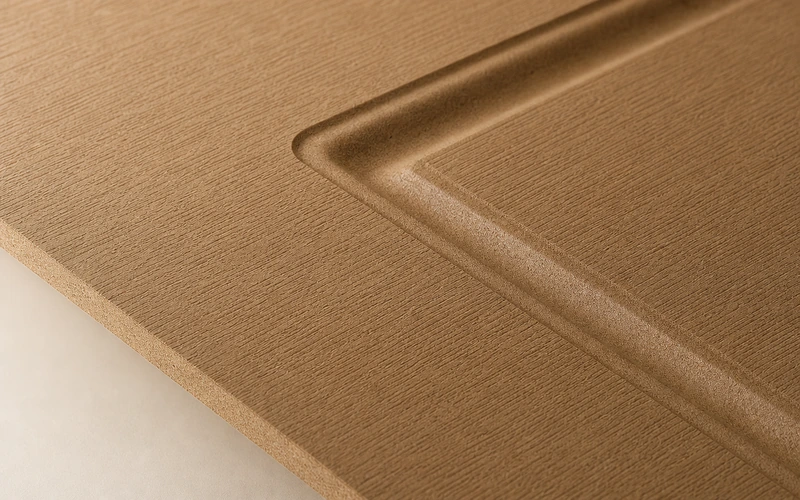
An HDF door skin is a thin panel made from high-density fiberboard that covers the surface of interior doors. Manufacturers compress wood fibers with resin under high heat and pressure to create a dense, smooth material.
HDF door skins range from 2.5mm to 4mm thick in most cases. They serve as the visible face layer on hollow core doors, solid core doors, and composite door structures. The material provides a flat, uniform surface ready for painting, laminating, or coating with PVC film.
Key characteristics include:
- Density of 800-1000 kg/m³
- Smooth surface on both sides
- Uniform thickness throughout the panel
- No natural wood grain patterns unless added through finishing
HDF door skins work best in climate-controlled interior spaces. Exterior applications require special waterproof treatments and construction methods beyond standard HDF specifications.
What Is a PVC Door Skin?
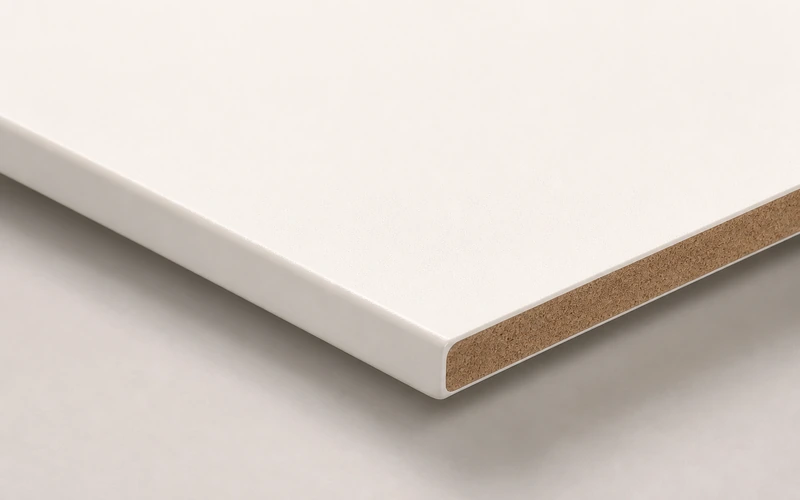
A PVC door skin is a thin decorative layer made from polyvinyl chloride film that covers the surface of doors. Manufacturers apply this plastic coating to base materials like HDF doors, MDF doors, or plywood door cores through heat and pressure. The result is a finished door surface that resists moisture and requires minimal maintenance.
PVC door skins differ from solid wood doors in both construction and material composition. Solid wood doors use natural timber throughout, while PVC-covered doors use engineered wood cores with plastic surface layers. This makes PVC door skins lighter and more affordable than traditional wood options.
Common Base Materials for PVC Door Skins:
- HDF (High-Density Fiberboard) cores
- MDF (Medium-Density Fiberboard) cores
- Plywood substrates
The PVC membrane bonds to the door core through a vacuum press process. This creates a seamless finish without visible joints or seams. The plastic layer provides protection against water damage, scratches, and daily wear.
Manufacturers produce PVC door skins in various colors, textures, and wood-grain patterns. The printed designs mimic natural wood, solid colors, or custom finishes without the maintenance requirements of real wood surfaces.
How Do HDF and PVC Door Skins Differ?
HDF and PVC door skins differ in base material, with HDF made from compressed wood fibers and PVC made from synthetic plastic polymer. These materials create distinct differences in moisture resistance, structural strength, heat tolerance, finishing options, and pricing.
Base Material & Structure
HDF door skins use compressed wood fibers bonded under high pressure and heat. The manufacturing process creates a dense, rigid panel with uniform thickness throughout. Wood fibers give HDF natural strength and allow the material to hold screws and fasteners securely.
PVC door skins consist of polyvinyl chloride plastic formed into thin sheets or films. Manufacturers apply PVC film over a substrate material to create the finished door panel. The plastic composition makes PVC flexible and moldable into various textures and patterns.
HDF panels typically measure 2.5mm to 4mm thick as standalone skins. PVC film ranges from 0.3mm to 0.6mm and requires backing material for structural support. HDF provides the structural base for composite doors, while PVC often serves as a decorative overlay on HDF or MDF cores.
Moisture & Water Resistance
PVC door skins resist water penetration completely due to their non-porous plastic surface. Water beads up and rolls off without absorption. This makes PVC suitable for high-humidity areas like bathrooms and kitchens.
HDF door skins absorb moisture when exposed to water or high humidity. The wood fiber composition swells when wet, leading to warping, delamination, and dimension changes. Untreated HDF can swell and delaminate under prolonged wet conditions.
Sealed or laminated HDF improves moisture resistance but never matches PVC performance. Edge sealing and surface coatings reduce water penetration in HDF doors. PVC requires no additional treatment for moisture protection.
Impact & Rigidity
HDF door skins provide superior rigidity and impact resistance compared to PVC film. The compressed wood fiber structure absorbs shock without permanent deformation. HDF maintains its shape under stress and returns to original form after minor impacts.
PVC film dents and creases under direct impact. The thin plastic layer offers minimal structural strength on its own. Sharp objects puncture PVC easily, creating permanent damage that cannot be repaired.
HDF door panels support their own weight and maintain flatness during installation. PVC film sags without proper backing material. A rigid HDF skin resists far more impact than thin PVC film, which relies on its backing panel to avoid denting.
Heat Tolerance
HDF door skins stay dimensionally stable across normal indoor temperature ranges without softening or deforming. Wood fibers hold their shape under everyday temperature fluctuations. HDF’s resin binder can emit low-level formaldehyde depending on its grade (E0, E1, or CARB).
PVC door skins can soften and deform near strong heat sources such as stoves, radiators, or direct sunlight in hot climates. This heat exposure may cause the film to bubble, wave, or warp. Once distorted, PVC surfaces usually cannot be restored.
When burned, PVC releases hydrogen chloride and other toxic fumes, while HDF chars and burns more like wood. For this reason, keep PVC surfaces away from open flames and intense, sustained heat.
Paintability & Repairability
HDF door skins accept paint, stain, and finish coatings directly on their surface. The porous wood fiber structure bonds with primers and paints mechanically. Scratches and dents in HDF sand smooth and refinish to match the original surface.
PVC door skins reject most standard paints and require special adhesion primers. The non-porous plastic surface prevents paint from bonding. Surface damage to PVC film cannot be sanded or filled without creating visible patches.
HDF allows color changes and style updates through refinishing. PVC maintains its factory color and texture permanently. Minor damage repairs blend into HDF surfaces, while PVC repairs remain visible under normal lighting.
Cost & Price
PVC door skins typically cost about 30% to 40% less than HDF door skins per square foot. A standard 3mm HDF door skin ranges from $8 to $15 per panel. PVC film over MDF core costs $5 to $9 per panel for comparable sizes.
The lower material cost of PVC reduces initial door panel expenses significantly. HDF requires higher manufacturing pressure and temperature, increasing production costs. PVC film production uses less energy and faster cycle times.
Long-term costs favor HDF in moderate climates due to durability and repairability. PVC replacement costs exceed HDF maintenance costs after 5 to 7 years in typical residential use. HDF doors maintain resale value better than PVC alternatives.
When Should You Choose an HDF Door Skin?
HDF door skins work best for interior doors that need a smooth, paintable surface. They perform well in painted flush doors, molded door panels, and laminated decorative doors for residential and commercial projects.
Builders should select HDF over PVC when the door requires paint or wood veneer finishing. The dense surface of HDF accepts paint better than PVC and creates a smoother base for decorative laminates. Projects in hotels, apartments, and offices benefit from this finishing flexibility.
HDF outperforms PVC in these situations:
- Doors that will be painted multiple times
- Projects requiring wood veneer application
- Interior doors in climate-controlled buildings
- Designs needing molded or embossed patterns
- Applications where surface smoothness matters for finishing quality
When Should You Choose a PVC Door Skin?
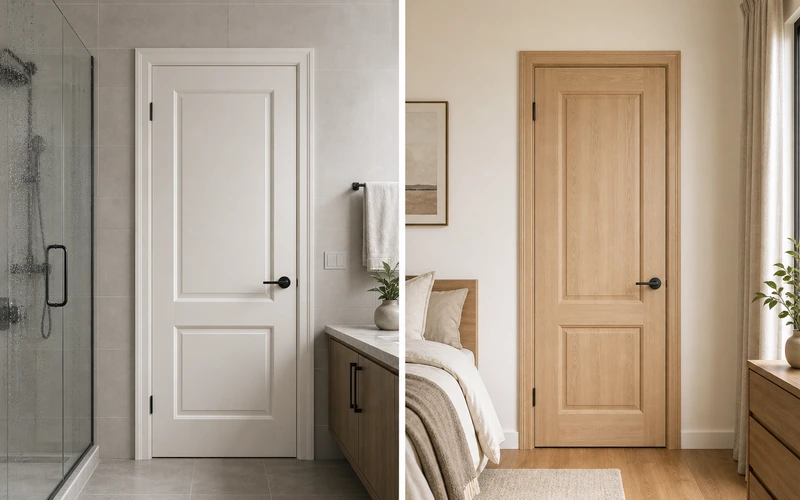
PVC door skins work best for spaces that need moisture resistance and low maintenance. Bathrooms, kitchens, and laundry rooms benefit from PVC’s waterproof surface that won’t warp or swell when exposed to humidity.
Budget-conscious projects favor PVC door skins because they cost 30-40% less than HDF options. The material requires minimal upkeep and cleans easily with a damp cloth.
PVC door skins excel in these situations:
- High-moisture areas where HDF doors would deteriorate
- Rental properties that need durable, easy-to-clean surfaces
- Commercial buildings with frequent cleaning requirements
- Projects with tight budgets that still need acceptable quality
FAQs
Is HDF or PVC Better for Bathroom Doors?
PVC is generally better for bathroom doors. Its non-absorbent film resists moisture, swelling, and rot, while HDF only withstands humidity when fully sealed. Melamine-coated HDF is an alternative, but exposed or unsealed HDF edges can delaminate in wet environments.
Can a PVC Door Skin Be Painted Over?
PVC door skins are not designed to be painted. Their smooth thermoplastic surface resists standard paint adhesion, so coatings often peel. If a color change is needed, replacing the skin is more reliable than repainting.
Are HDF Door Skins Waterproof?
No, HDF door skins are not fully waterproof. They are moisture-resistant, especially when sealed, but raw or cut edges absorb water and can swell. For constant wet exposure, PVC-faced or specifically water-rated panels are the safer choice.
How Long Does Each Door Skin Type Last?
Both last many years when correctly matched to their environment. Lifespan depends more on installation, sealing, and moisture exposure than on the material itself. A mismatched skin—unsealed HDF in a wet area—can fail within a few years.
What Door Skin Thickness Should You Choose?
Choose thicker skins for high-impact and exterior-facing doors. HDF moulded skins around 3–4 mm suit main and high-traffic doors, while thinner PVC films (around 0.3 — 0.6 mm) work for interior or contoured doors.
Does PVC Door Skin Contain Formaldehyde or Off-Gas?
The PVC film itself does not off-gas formaldehyde. However, the MDF or HDF core beneath it can, so check the substrate’s emission grade (E0, E1, or CARB Phase 2). PVC may also contain plasticizer additives, so request safety documentation.
Can You Apply a New Door Skin Over an Existing Door?
Yes, in many cases you can bond a new skin over a sound, flat existing door. The surface must be clean, dry, and structurally solid for proper adhesion. Badly warped or damaged doors usually need replacing rather than refacing.
Learn More About Our Products?
Contact Now