Particle Board vs MDF vs Plywood: Complete Comparison
Plywood is the strongest of the three panels, MDF gives the smoothest painted surface, and particle board offers the lowest cost. That short answer fits most projects, but the right board still depends on load, moisture, finish, and budget. This comparison comes from the technical team at SUMEC Building Material, a Chinese wood panel manufacturer and exporter that has supplied plywood, MDF, HDF, and particleboard since 1999.
The guide explains how each engineered wood panel is made. It then compares strength, screw holding, moisture resistance, surface finish, weight, cost, and formaldehyde ratings. It also shows which board suits cabinets, wardrobes, doors, and construction, and lists the mistakes buyers make most often.
Quick Comparison Table: Particle Board, MDF, and Plywood
The table below sums up how the three panels differ across the attributes that matter most in daily use.
| Attribute | Particle Board | MDF | Plywood |
| Raw material | Wood chips and shavings | Fine wood fibers | Thin wood veneers |
| Typical density | 600–680 kg/m³ | 700–800 kg/m³ | 500–700 kg/m³ |
| Strength | Low | Medium | High |
| Screw holding | Weak | Fair | Strong |
| Moisture resistance | Low | Low to medium | Medium to high |
| Surface smoothness | Fair | Very smooth | Grain visible |
| Weight | Light to medium | Heavy | Medium |
| Relative cost | Lowest | Middle | Highest |
| Common thickness | 9–25 mm | 2.5–25 mm | 3–30 mm |
In short, plywood wins on structure, MDF wins on finish, and particle board wins on price. Plywood is stronger than the other two even at a lower density, because strength comes from its cross-laminated veneers, not from density alone.
How These Three Engineered Wood Panels Are Made
All three are engineered wood, which means wood is broken down and then bonded back together with resin under heat and pressure. The size of the wood pieces is the key difference, and it explains almost every performance gap discussed later.
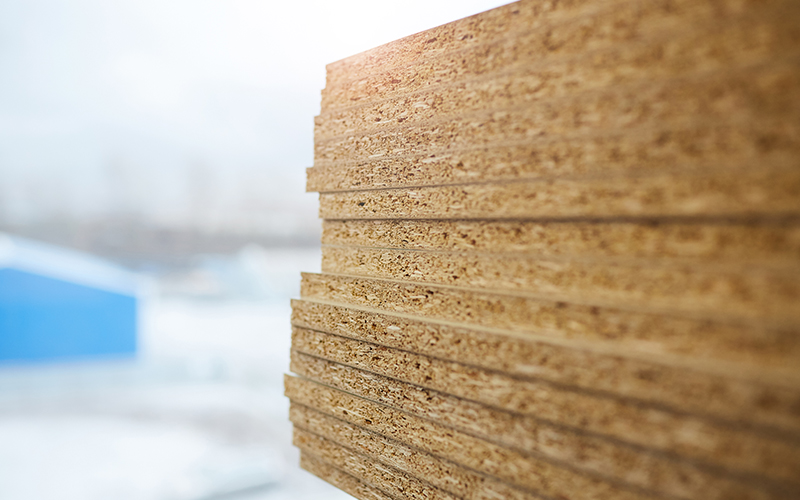
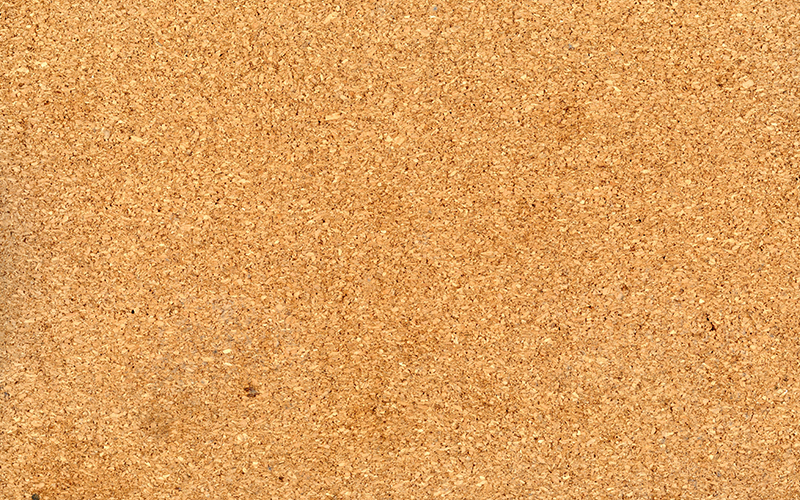
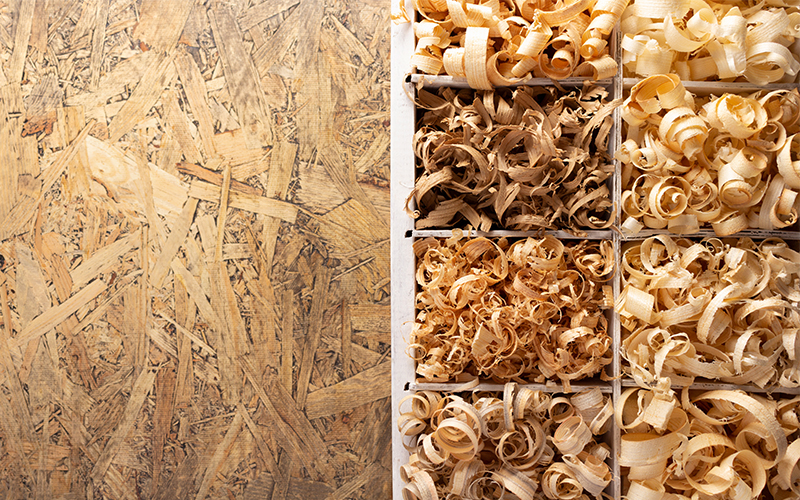
Particle board is made from wood chips, sawmill shavings, and sawdust pressed with resin into flat sheets. The mat is layered, so the surface holds finer particles than the core. The resin system varies by grade, and low-emission versions are produced for markets with strict limits. Also called chipboard, it is a widely used core for flat-pack furniture and shelving.
MDF is made by cooking wood chips into single fibers, then pressing those fibers with resin and wax under high heat. The fibers pack together with no voids or knots, which is why MDF machines and routes so cleanly. HDF uses the same process at higher pressure. Its dense, smooth face makes it the standard base for moulded and flush door skins.
Plywood is made by peeling logs into thin veneers and gluing them with the grain of each layer turned 90 degrees to the next. Wood is strong along the grain and weak across it, so alternating the layers balances strength in both directions. Panels usually use an odd number of plies, such as 3, 5, 7, or 9, which keeps the faces balanced and the sheet flat.
Strength and Screw Holding Compared
Plywood offers the highest bending strength and the best screw holding of the three panels. Its continuous veneers carry load across the full sheet, so a plywood shelf sags less than an MDF or particle board shelf of the same thickness. MDF sits in the middle. Its high density grips screws well, but the fibers split easily near an edge, so pilot holes are needed.
Particle board is the weakest of the three. Its coarse chips crumble around the screw thread, and screws often loosen after a cabinet is taken apart and rebuilt. Thickness changes the picture as well. An 18 mm particle board panel performs far better than a 12 mm one, which is why most cabinet makers avoid thin particle board in load-bearing parts. Panel thickness and fixing method deserve as much attention as the board type itself.
Moisture Resistance and Panel Stability
Plywood handles moisture better than MDF or particle board because its glue lines run through the full panel. Standard interior plywood still needs to stay dry, but weather-resistant grades bonded with phenolic resin, such as film faced plywood used in concrete formwork, can be washed and reused many times.
MDF absorbs water slowly and then swells, and that swelling does not go back down when the panel dries. Particle board reacts fastest of all, because water travels between the loose chips and breaks the resin bond. In every case, edges are the weak point. Sealed edge banding and a proper surface finish do more for moisture performance than the board type alone.
Surface Finish, Paint, and Machining Performance
MDF gives the best painted finish of the three boards because its surface has no grain, knots, or voids to telegraph through the coating. It also routes and profiles cleanly, so MDF panels suit CNC-cut door fronts and decorative wall units.
Particle board is not smooth enough for direct paint, so it is almost always covered. Melamine paper and HPL laminate hide the chip texture well and add wear resistance. Plywood is chosen when real wood grain should show. Face veneers such as okoume, sapele, or EV white can be sanded and lacquered, or the panel can be melamine faced when a uniform color is needed. In practice, the finish decision usually settles the board decision.
Cost, Weight, and Total Landed Cost
Particle board is the cheapest of the three boards, MDF sits in the middle, and plywood costs the most. The gap comes from the raw material. Particle board uses mill residue, while plywood needs peeler logs and much more hand sorting.
Weight moves in a different order. MDF is the heaviest because it is the densest, so a full pallet of 18 mm MDF adds real freight cost and makes wall cabinets harder to hang. Plywood is lighter than MDF at the same thickness. For import buyers, the useful number is total landed cost, not board price. Transport damage, edge chipping, and higher hardware grades can erase the saving on a cheap panel.
Formaldehyde Emissions and Panel Certifications
Formaldehyde level depends on the resin system, not on whether a panel is particle board, MDF, or plywood. Any of the three can be produced to a low emission grade. Buyers should check the standard named on the test report rather than the board type. The main references are listed below, and each covers a different market.
- TSCA Title VI (United States): caps emissions at 0.09 ppm for particleboard, 0.11 ppm for MDF, and 0.05 ppm for hardwood plywood.
- CARB Phase 2 (California): uses the same limits and is often quoted together with TSCA Title VI.
- E1 (Europe, EN 13986) and E0/ENF (China, GB/T 39600): grade panels by chamber emission, with E0 stricter than E1 and ENF the strictest.
- FSC: certifies that the wood comes from responsibly managed forests.
SUMEC’s plywood is certified to ISO 9001, FSC, CARB/EPA, and CE, and panels can be produced to the emission grade the destination market requires.
Choosing the Right Panel by Application
The best board changes with the job. The lists below give a first choice, a workable second option, and one thing to avoid across four common applications.
Kitchen and bathroom cabinets
- First choice: plywood, for carcasses, because it resists occasional leaks and holds hinge screws.
- Good option: moisture-resistant MDF, for painted doors and drawer fronts.
- Avoid: standard particle board anywhere near a sink or dishwasher.
Wardrobes, shelving, and flat-pack furniture
- First choice: melamine faced particle board, for dry bedroom and office units, where cost per square meter drives the design.
- Good option: plywood, for long book shelves, since it resists sagging under constant load better than fiberboard.
- Avoid: thin particle board on long unsupported spans; increase thickness or add a mid support instead.
Doors, wall panels, and decorative interiors
- First choice: HDF door skins, for moulded and flush doors, because the dense surface takes paint and print evenly.
- Good option: fancy plywood, for veneered wall panels and reception joinery.
- Avoid: raw MDF on exterior-facing surfaces without a sealed coating.
Construction and concrete formwork
- First choice: film faced plywood, for slab and column forms, because the phenolic film allows repeat pours.
- Good option: structural plywood, for hoarding, site boxes, and temporary flooring.
- Avoid: standard MDF and particle board, which are interior panels; for structural site work, choose a plywood or OSB grade rated for the load.
Common Mistakes When Specifying Wood Panels
The most costly mistake is buying on board price alone and ignoring the specification behind it. Several errors show up again and again in project files.
- Comparing quotes without fixing thickness tolerance, so an 18 mm panel is measured against a 17.5 mm one.
- Assuming all engineered wood is the same, when density, resin, and glue class change performance completely.
- Skipping edge banding, which lets moisture enter the one place every panel is weakest.
- Ordering to a local habit instead of the destination standard, then failing customs on emission documents.
- Choosing particle board for load-bearing shelves to save cost, then paying for warranty replacements.
FAQ
Is plywood stronger than MDF and particle board?
Yes. Plywood has the highest bending strength and screw holding because its veneers are cross-laminated. MDF ranks second, and particle board ranks last due to its loose chip structure.
Can MDF be used in a bathroom?
Only moisture-resistant MDF, and only with fully sealed edges and faces. Standard MDF swells permanently once water reaches the fibers, so plywood is the safer carcass material in wet rooms.
Is particle board always a poor choice?
No. Melamine faced particle board performs well in dry, low-load uses such as wardrobe interiors, office desks, and shelving backs, where its low cost and flat surface are real advantages.
Which board is best for painting?
MDF is best for painting. It has no grain, knots, or voids, so paint dries to an even surface. Plywood needs grain filling, and particle board needs a laminate instead.
Which board suits large export orders?
Plywood suits most export orders because it resists transit damage and holds fasteners after assembly. Particle board works for price-driven programs when packaging and structure are engineered for it.
Conclusion
Particle board, MDF, and plywood are not competing grades of one product. They are three different panels built for three different jobs. Plywood is the structural choice, MDF is the finishing choice, and particle board is the budget choice for dry, light-duty interiors. Matching the panel to the load, the moisture level, the finish, and the destination standard prevents almost every common failure. To review full specifications, thickness ranges, and certification options, visit SUMEC Building Material.
Learn More About Our Products?
Contact Now