MDF vs HDF: Density, Strength & Application Differences Explained
The core difference between MDF and HDF is density: medium-density fiberboard ranges from 600–800 kg/m³, while high-density fiberboard reaches 800–1,100 kg/m³—a single variable that cascades into strength, moisture resistance, screw-holding, machinability and cost. Both are engineered wood panels bonded with resin and wax under heat and pressure, but each suits very different jobs.
Drawing on SUMEC’s many years of fiberboard manufacturing and exports to over 100 countries, this guide compares composition, key engineering properties (IB, MOR, density, swell), typical applications and emission grades (E1, E0, CARB P2), so readers can specify the right panel for the project.
What Is MDF (Medium-Density Fiberboard)?
MDF is an engineered wood product made from wood fibers mixed with resin and formed into panels under high temperature and pressure. The material uses softwood residuals, hardwood residuals, or recycled wood fibers broken down into fine particles.
MDF has a density between 600 and 800 kg/m³. This density makes it less dense than HDF but denser than particle board. The smooth, consistent surface accepts paint and finishes well.
Key components of MDF include:
- Wood fiber from softwood or hardwood sources
- Resin binder to hold fibers together
- Wax for moisture resistance
- Recycled wood fibers in some products
What Is HDF (High-Density Fiberboard)?
HDF is an engineered wood product made from wood fibers compressed at high temperature and pressure to create a dense, strong board. Factories produce HDF by breaking down wood into fine fibers, mixing them with resin binder, and pressing them into sheets at temperatures around 180-220°C.
The density of HDF ranges from 800 to 1100 kg per cubic meter. This makes HDF roughly 30–50% denser than standard MDF, depending on the specific grades compared.
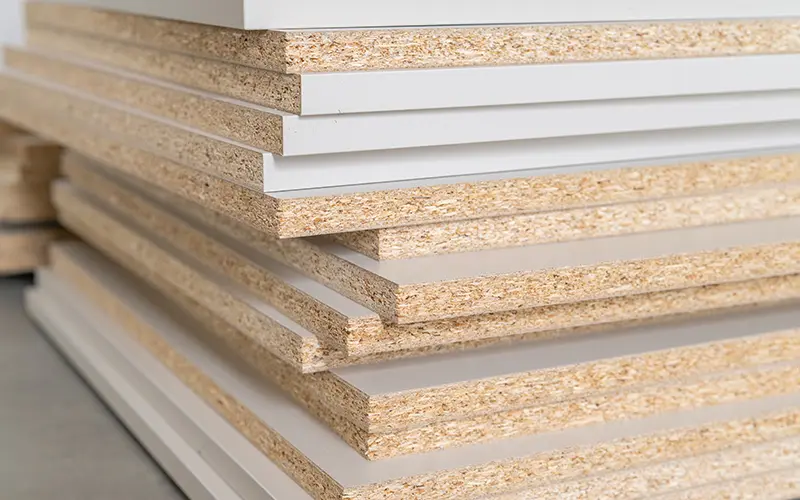
Key Properties of HDF:
- Density: 800-1100 kg/m³
- Thickness range: 3-8mm
- Resin content: 10-20%
- Internal bond strength: 1.8 N/mm²
The material does not have natural wood grain patterns. It provides uniform strength in all directions across the board.
What Are The Key Differences Between MDF And HDF?
MDF and HDF differ primarily in density, which affects their strength, moisture resistance, and best uses. HDF is denser and stronger but harder to work with, while MDF is lighter, more affordable, and easier to shape.
Density and Weight
HDF has a density between 800 and 1100 kg/m³. MDF ranges from 600 to 800 kg/m³. This 200 to 440 kg/m³ difference makes HDF noticeably heavier and more compact.
The higher density in HDF comes from using more wood fiber during pressing. Both materials use wood fiber mixed with resin binder, but HDF packs more fiber into the same space through high temperature and pressure in the factory.
A standard 4×8 foot HDF sheet weighs approximately 96 pounds. The same size MDF sheet weighs around 70 pounds. This weight difference affects handling and installation requirements.
Internal Bond Strength
HDF provides superior internal bond strength compared to MDF. The denser fiber structure creates stronger connections between wood particles. This makes HDF more resistant to breakage and impact damage.
HDF can support heavier loads without sagging or breaking. MDF works well for lighter applications but may flex or fail under significant weight. HDF’s internal bond strength can reach roughly two to three times that of standard MDF, depending on grade and thickness.
This strength difference matters most in high-traffic areas and structural applications. HDF maintains its shape and integrity better over time. MDF performs adequately for decorative uses where structural demands are lower.
Moisture Resistance
HDF resists moisture better than MDF. The denser structure limits water absorption and reduces swelling. HDF maintains its shape in humid conditions where MDF would warp.
MDF absorbs water quickly through its edges and surface. Under 24-hour water immersion, standard MDF can swell 12–17% in thickness, while HDF typically stays below 10%. HDF typically swells less than 10 percent under similar conditions.
Neither material is waterproof without treatment. Both use resin to bind the wood fiber, but the gaps between fibers in MDF allow more water penetration. Some manufacturers produce moisture-resistant versions of both materials with added water repellents.
Workability and Tooling Demands
MDF cuts and shapes more easily than HDF. Standard woodworking blades work well with MDF. HDF requires carbide-tipped blades and slower cutting speeds to prevent burning and blade wear.
The softer nature of MDF allows for intricate designs and detailed routing. HDF’s density makes it harder to create complex shapes. Drill bits dull faster when working with HDF compared to MDF.
Both materials produce fine dust during cutting. This dust contains resin and wood fiber particles that require proper ventilation and dust collection. Industrial fabricators use enclosed dust extraction systems to handle both materials safely at scale.
MDF accepts screws adequately but with less holding power than solid wood or HDF; pre-drilling is recommended for both fiberboards to prevent splitting. The denser structure of HDF holds fasteners more securely. Pre-drilling is recommended for both materials to prevent splitting.
Surface Finish and Paintability
Both MDF and HDF provide smooth surfaces without knots or grain patterns. MDF has a slightly smoother surface texture due to its finer fiber structure. This makes MDF ideal for painted finishes that require a flawless appearance.
HDF accepts paint well but requires proper priming. Its denser surface absorbs less primer than MDF. MDF is more porous and needs two coats of primer to seal the surface before painting.
The edges of MDF are particularly porous and absorb paint unevenly without sealing. HDF edges are denser and require less preparation. Both materials can be sanded smooth with fine-grit sandpaper before finishing.
Veneers and laminates bond well to both surfaces. The smooth, uniform texture provides excellent adhesion for surface treatments.
Application
MDF and HDF overlap in many interior uses, but the right choice shifts once load, wear or humidity come into play. Below is where each board performs best:
- Laminate flooring, door skins and wall panels — HDF, for its density and impact resistance in high-traffic areas.
- Kitchen cabinets, painted doors and drawer fronts — MDF, for its smooth, paint-ready surface and lower cost.
- Baseboards, architraves and crown moulding — MDF, for clean routing and crisp profiles.
- Desk tops, shelving and table surfaces — HDF, for load-bearing strength across spans.
- Carved or curved furniture details — MDF, for easy shaping without chipping.
- Interior partitions and office dividers — MDF for standard walls; HDF when partitions must hold fixtures or take impact.
- High-end veneer substrates — HDF, for a flat, dense base that won’t telegraph through finishes.
Cost And Affordability
HDF typically commands a 20–50% price premium over MDF of the same thickness and size. The cost gap reflects HDF’s higher resin and fiber content per cubic meter plus the greater pressing energy required to reach high density. Exact pricing depends on thickness, order volume, emission grade and destination market—request a current quotation for project-specific figures.
What Factors Need To Be Considered When Choosing Between MDF And HDF?
Project location drives material choice because humidity and temperature directly affect board stability. Coastal areas with 70-90% relative humidity require HDF or moisture-resistant grades to prevent edge swelling. Dry inland regions allow standard MDF without performance loss.
Load requirements determine which density works. HDF handles repeated screw cycles in door hinges and drawer slides better than MDF. MDF suffices for decorative panels and low-stress applications like wall cladding.
Budget constraints must account for total costs, not just material price:
- HDF costs 20-50% more per sheet than MDF
- Machining HDF requires carbide tooling and slower cutting speeds
- MDF reduces labor time with faster routing and sanding
Finish requirements influence selection. MDF provides smoother surfaces for paint and laminate application. HDF accepts veneer well but shows tool marks more easily during sanding. Quality varies between suppliers regardless of origin, so verify density, emission grade and third-party certifications (ISO 9001, FSC, CARB) before purchase.
When Should You Choose MDF?
MDF works best for interior projects that need a smooth finish and detailed work. The material is less dense than HDF, making it easier to cut, shape, and work with standard tools.
Best Applications for MDF:
- Kitchen and bathroom cabinets
- Interior trim like baseboards and crown molding
- Furniture with detailed designs
- Painted surfaces that need a smooth texture
- Office partitions and wall panels
The material excels in controlled indoor environments. Factories press wood fibers together using high temperature and pressure to create uniform sheets without knots or grain patterns. Many manufacturers in China and other countries now use recycled wood fibers in production, reducing material costs.
Like all resin-bonded wood panels, MDF emits trace formaldehyde; specifying E1, E0 or CARB P2 grades keeps emissions well within indoor air-quality limits.
When Should You Choose HDF?
HDF works best for projects that need high durability and resistance to wear. Floors in high-traffic areas benefit from HDF’s dense structure, which comes from pressing wood fibers at high temperature and pressure during manufacturing. The factory process compresses these fibers with resin binder more tightly than MDF, creating a board that handles weight and frequent use better.
Choose HDF for these applications:
- Laminate flooring in commercial spaces or busy homes
- Door skins for interior and protected entry doors
- Furniture pieces that support heavy loads
- Wall panels in areas prone to impacts
HDF resists moisture better than MDF because its tight fiber structure leaves less room for water absorption. The wood fiber content, which can include both fresh and recycled wood fibers, gets compressed to a density of 800 to 1100 kg/m³. This density makes HDF suitable for rooms with higher humidity levels.
Skip HDF when:
- Budget constraints are tight
- Projects require detailed carving or shaping
- Installation involves only light-duty indoor use
- Frequent cutting and modifications are needed
FAQs
Can HDF be used outdoors?
No, HDF should not be used outdoors without full sealing. Although denser than MDF, it is neither waterproof nor exterior-rated, and repeated wet-dry cycles cause delamination within months. Sealed HDF may work in covered spaces, but direct rain will destroy it regardless of coating.
Which holds screws better?
HDF holds screws better than MDF, as its higher density grips threads more tightly. MDF needs pilot holes to prevent splitting, while HDF accepts screws with less preparation. Choose HDF for heavy loads or repeated disassembly; MDF suffices for cabinet doors and shelving.
Is HDF stronger than plywood?
No, HDF is not stronger than plywood for most structural uses. Plywood’s cross-laminated veneers give it higher bending strength and better moisture tolerance. HDF offers a smoother, denser surface ideal for flat substrates, while plywood performs better in framing, sheathing and load-bearing furniture.
Are MDF and HDF safe indoors?
Yes, MDF and HDF are safe indoors when certified to E1, E0 or CARB P2 emission grades, which release minimal formaldehyde. Uncertified panels may off-gas more in poorly ventilated rooms. Cutting and sanding both materials produces fine dust, so respiratory protection is essential during fabrication.
Which is more sustainable?
Both are sustainable, since they use wood residuals and recycled fibers rather than whole trees. MDF needs less pressing energy; HDF uses more but lasts longer. HDF also weighs 20–30% more per square meter, increasing shipping emissions—so local sourcing and FSC certification matter for both.
Learn More About Our Products?
Contact Now