Moisture-Resistant (Green) MDF: Detailed Uses & Key Specifications
Moisture-resistant MDF is a specialized type of medium-density fiberboard that uses moisture-resistant resin to withstand humid conditions better than standard MDF. The material, often called green MDF or MR MDF, is made with a moisture-resistant resin and wax emulsion that reduce water absorption and swelling in damp environments. The green color serves only as a visual identifier and provides no moisture protection itself.
This guide covers the manufacturing differences between green MDF and standard MDF, the specifications that define quality moisture-resistant boards, appropriate uses for the material, and storage requirements. Readers will learn when moisture-resistant MDF provides the best solution and when alternative materials work better.
What Is Moisture-Resistant (Green) MDF?
Moisture-resistant MDF is a type of engineered wood board made with water-repellent resins that protect it from humidity and damp conditions. It differs from standard MDF through its manufacturing process, which adds moisture-blocking chemicals during production.
The board earns the nickname green MDF from its dyed core. This green color serves as a visual marker that identifies the board as moisture-resistant. The dye itself does not provide any protective properties.
Green MDF board is not waterproof. It resists humidity and brief moisture contact but should not be used in areas with standing water or constant wetness. The board works well in kitchens, bathrooms, and other indoor spaces where humidity levels fluctuate.
MR board maintains the same smooth surface as regular medium-density fiberboard. This makes it easy to cut, route, paint, and finish. The slightly higher density can dull cutting tools faster than standard MDF boards.
Why Is Moisture-Resistant MDF Green?
The green color in moisture-resistant MDF is a dye added during manufacturing for identification purposes only. The dye itself provides no protection against moisture. It simply allows workers, suppliers, and installers to quickly distinguish moisture-resistant MDF sheets from standard MDF sheets on job sites and in warehouses.
Not all moisture-resistant MDF is green. Some manufacturers leave the boards their natural brown color. Larger MDF panels (14′ x 4′ and up) often skip the dye entirely. The color is a market convention, not a technical requirement.
How Is Moisture-Resistant MDF Different From Standard MDF?
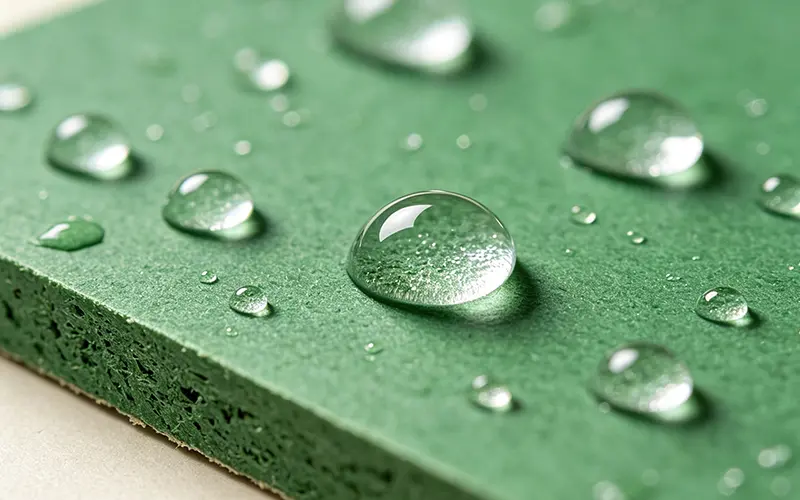
Most moisture-resistant mdf sheets have a green core that makes them easy to spot.
Performance differences between moisture-resistant MDF and standard MDF:
| Feature | Standard MDF | Moisture-Resistant MDF |
| Resin Type | Urea-formaldehyde | Melamine-urea-formaldehyde |
| Density | Lower | Higher |
| Moisture Tolerance | Swells and warps easily | Resists swelling in humid conditions |
| Best Use | Dry interior spaces | Kitchens, bathrooms, humid areas |
| Cost | Lower | 15-30% more expensive |
Moisture-resistant MDF uses different resin than standard MDF. The resin in MR MDF contains water-repellent additives that help the board resist humidity and moisture damage.
Standard MDF boards are made with conventional urea-formaldehyde resin. This resin works fine in dry indoor spaces. Moisture-resistant MDF uses a moisture-resistant resin combined with a wax (paraffin) emulsion. Together they bond the wood fibers more tightly and slow water penetration into the board.
The tighter fiber structure in MR MDF makes it denser than standard mdf boards. This density helps it hold up better when exposed to steam or occasional splashes.
Both types accept paint, laminate, and other finishes equally well. The smooth surface on moisture-resistant MDF works just as well for painted cabinets or laminate applications. Some manufacturers also produce melamine mdf with moisture-resistant properties for added protection in cabinet interiors.
Neither type is fully waterproof. MR MDF resists humidity and brief moisture contact but still needs edge sealing and proper finishing for maximum durability.
What Specifications Define Moisture-Resistant MDF?
Moisture-resistant MDF contains higher resin content and water-repellent additives that differentiate it from standard MDF. Moisture-resistant grade is defined by measurable performance—resin content, density, thickness swell and internal bond—not by color.
Key technical specifications include:
- Thickness range: 2.5–18 mm (other thicknesses available on request)
- Standard panel sizes: 1220×2440 mm and 915×2135 mm
- Moisture content at delivery: 8–12%
- Formaldehyde emission grade: E2, E1, E0 or CARB P2, depending on requirement
- Density: typically 680–800 kg/m³ for moisture-resistant grade
- 24-hour thickness swell: markedly lower than standard MDF, tested to EN 622-5
Internal bond strength: meets the load-bearing humid-grade thresholds of EN 622-5
Testing standards measure thickness swell and internal bond strength after controlled water exposure. These values determine whether a board qualifies as moisture-resistant grade. Panels must meet minimum performance thresholds to carry the MR designation.
Where Is Moisture-Resistant (Green) MDF Used?
Moisture-resistant MDF works best in indoor spaces with high humidity or occasional moisture exposure. The material handles steam and dampness better than standard MDF, which swells and warps when wet.
Common Applications:
- Cabinet doors and frames
- Window boards and sills
- Baseboards and architrave
- Interior door sets
- Built-in shelving
- Wall paneling
- Furniture for humid rooms
Kitchens use green MDF board for cabinet doors, drawer boxes, and wall paneling. Steam from cooking and sink splashes require materials that resist moisture damage. MR MDF costs less than plywood while delivering a smooth surface for paint finishes.
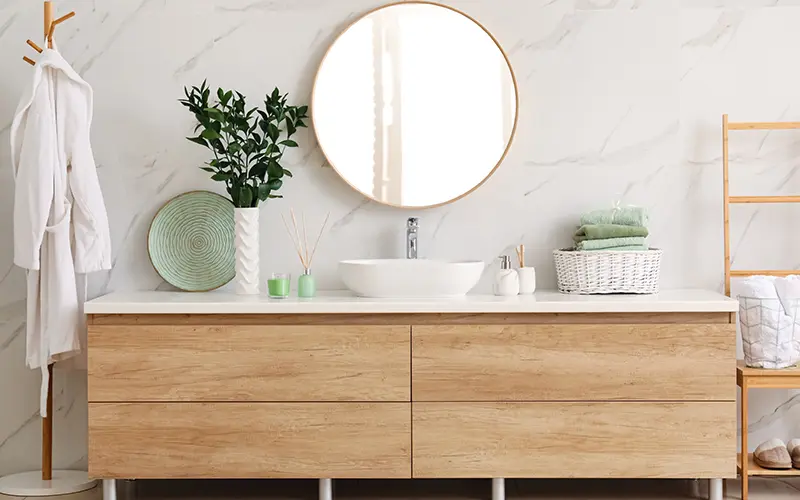
Bathrooms rely on moisture resistant MDF for vanity cabinets, storage units, and decorative trim. The material performs well in areas with steam and humidity but should not contact standing water or direct splashes. Standard MDF fails quickly in these conditions.
Commercial spaces install moisture-resistant MDF in office restrooms, restaurant kitchens, gym facilities, and retail displays. The green core helps installers identify the right material during construction.
Moisture-resistant MDF is engineered for humid interior conditions only; its performance does not extend to direct water contact or outdoor exposure. Green MDF board handles indoor humidity between 60-80% without degrading.
Standard MDF breaks down when exposed to moisture levels above 60% for extended periods. MR MDF maintains its structure and shape in the same conditions. Marine plywood or exterior-grade materials suit applications with constant water exposure.
How Should Moisture-Resistant MDF Be Stored And Handled?
Moisture-resistant MDF must be stored flat on dry supports to prevent warping and moisture damage. Stack sheets horizontally on bearers that are lifted off the floor.
Storage Requirements:
- Place bearers at 800 mm centers for boards 15 mm thick or thicker
- Use at least three bearers per stack
- Space bearers closer together for thinner boards (50 times the board thickness)
- Keep all bearers the same thickness and align them vertically between layers
Place polythene sheeting on damp floors before stacking. This blocks rising moisture from reaching the green MDF board. The storage area needs good airflow and low humidity levels around 50% relative humidity.
Protection Measures:
Cover the top of each stack with one or two scrap boards. This shields the stack from short-term changes in temperature or humidity. Wrap full pallets in plastic sheeting if transport or storage involves very damp or very dry conditions.
Store boards with edges flush to prevent damage to corners. Keep individual sheets protected from weather during transport and on job sites. While MR MDF handles moisture better than standard MDF, it still needs protection from direct water exposure.
Small numbers of boards can stand vertically if they are well supported and nearly upright.
Never leave sheets exposed to rain or standing water. Even green MDF board will swell and lose their structural integrity with prolonged water contact.
FAQs
Is green MDF more expensive than standard MDF?
Yes, green MDF typically costs 15–30% more than standard MDF, though exact pricing depends on thickness, order volume and destination market. The premium reflects the moisture-resistant resin and wax used in production, which limit 24-hour swelling to roughly 7–12% versus 15–17% for standard MDF.
Can moisture-resistant MDF be used outdoors?
No, moisture-resistant MDF fails outdoors. Rain, sunlight, and temperature swings break down even premium green MDF within 6–12 months. It handles indoor humidity only, not direct water exposure. Outdoor projects need WPC, marine plywood, or pressure-treated timber instead.
Does MR MDF still need to be painted?
Yes, MR MDF needs painting, laminating, or veneering. Its moisture-resistant core protects internally, but unfinished faces and edges still absorb water at nearly standard-MDF rates. Apply two primer coats plus paint, and edge-band every cut edge to prevent swelling.
Is moisture-resistant MDF safe for indoor air quality?
Generally yes, when it meets in E1, E0 or CARB P2 emission grades. Green MDF emits formaldehyde, but premium boards test below 0.12 mg/m³. Off-gassing fades within 3–6 months; ventilation and finishes reduce it. Request emission certificates before purchase.
How long does moisture-resistant MDF last in a bathroom?
With proper edge sealing and placement away from direct water, moisture-resistant MDF performs reliably for years in bathroom vanities and cabinetry. For splash-prone or constantly wet zones, waterproof film-faced plywood or WPC panels are the better choice.
Learn More About Our Products?
Contact Now