
Exporting Wood-Based Panels: Why Buyers Value These “Hidden Performance Indicators”?
Competition in the global building materials foreign trade sector is gradually shifting from superficial comparisons of surface finishes to in-depth rivalry over material performance. Construction and service environments vary drastically across overseas regions, and end customers keep raising standards for delivery quality. Reliance merely on decorative surface effects can hardly build sustainable competitive edges for products. Within buyers’ product evaluation frameworks, the substrate’s adaptability to diverse service conditions has gradually become a core benchmark for measuring suppliers’ overall strength. It also serves as a vital factor shaping channel reputation and securing steady repeat orders.
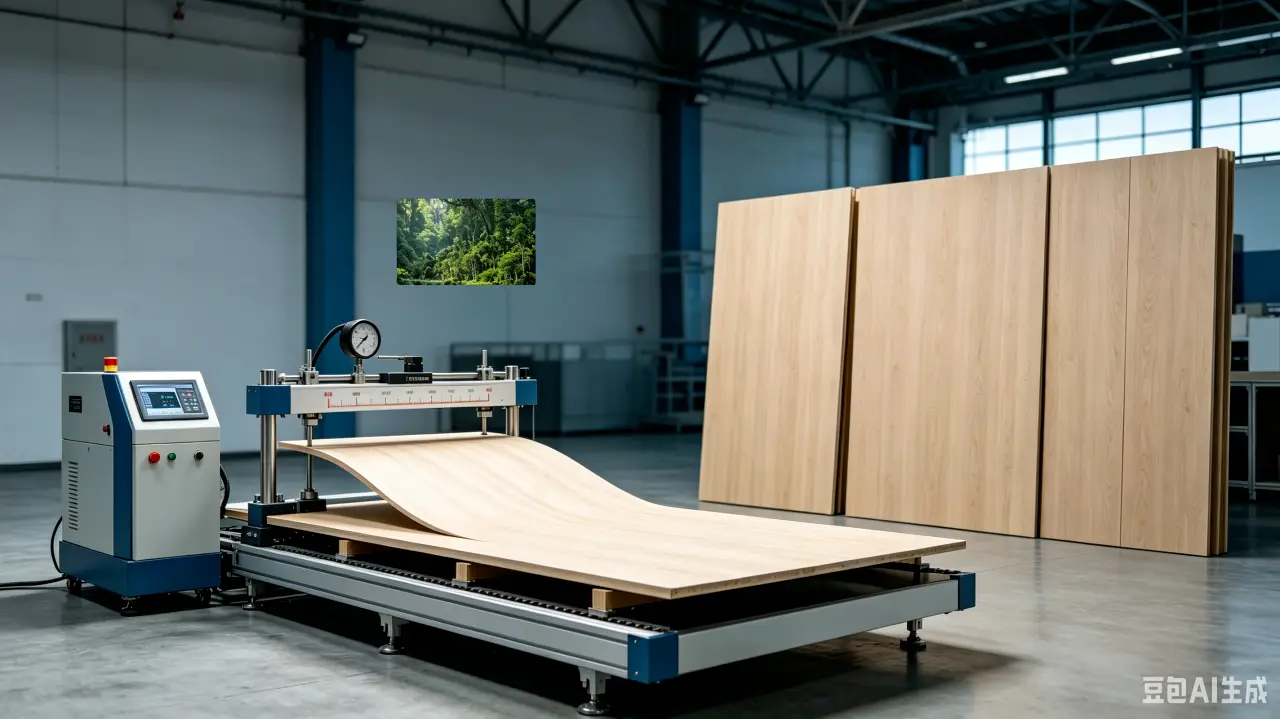
In markets with vastly different climatic conditions, including Southeast Asia, the Middle East and Northern Europe, there is diminishing room to differentiate products solely through surface craftsmanship. When selecting panels, overseas purchasers routinely verify hidden indicators one by one, such as density, bending resistance, screw holding power and weather resistance.
Density: Higher Does Not Equal Better; Application Adaptability Is Paramount
The industry once laboured under the misconception that higher density equates to superior quality. In actual product selection, however, density must be assessed comprehensively alongside intended applications, transportation modes and on-site processing techniques.
Low-density substrates: Lighter per unit weight, effectively reducing load limits for ocean freight containers. Suitable for interior soft furnishings in arid regions and consolidated container shipments for small-batch retail orders.
Medium-density substrates: Featuring relatively even stress distribution. Widely applicable to most standard household cabinets worldwide and enjoying strong versatility in foreign trade markets.
High-density substrates: Demonstrating stable compression and wear resistance. They are frequently prioritised by buyers for commercial fit-outs, humid coastal areas and regions with drastic temperature fluctuations.
Rather than isolated density figures, consistent and uniform density structure carries greater reference value. Panels with erratic density variations are prone to localised stress concentration during subsequent processing and load-bearing, which may trigger quality defects.
Bending Resistance & Dimensional Stability: Standard Evaluation Criteria for Large-Size Custom Panels
Seasonal cycles of humidity and dryness exert persistent micro-deformation stress on panel structures. Substrates with compact structures and stable modulus of rupture are less likely to develop visible warpage when used for floor-to-ceiling cabinets and large feature walls.
Taking inland cities in parts of the Middle East with extreme day-night temperature differences and year-round high humidity across Southeast Asia as examples, buyers routinely request technical parameters including bending durability and linear expansion coefficient when issuing inquiries.
Screw Holding Power: A Core Factor Determining Hardware Fastening Stability
Loose cabinet hardware can be attributed not only to hardware quality itself, but also to the substrate’s capacity to grip fasteners.
Panels with evenly distributed fibres and no internal voids or delamination experience milder declines in gripping strength after repeated screw installation and removal. In contrast, loosely structured substrates tend to suffer enlarged screw holes and loose hinge base plates after repeated disassembly and assembly.
For manufacturers undertaking engineering orders and integrated furniture exports, screw holding performance — including retention capacity after repeated disassembly — is normally incorporated into incoming material inspection protocols, instead of relying solely on standalone figures from factory test reports.
Commonly Verified Associated Indicators in Foreign Trade Procurement
Beyond the core indicators above, the following parameters frequently appear on buyers’ checklists:
• Thickness swelling upon water absorption: Mainly used to assess water resistance for kitchen, bathroom and coastal projects;
• Glue grade: WBP adhesives deliver strong resistance against delamination under hot and humid ocean shipping conditions, winning greater recognition from purchasers;
• Batch consistency: Fluctuations in key indicators (density, moisture content, screw holding power, etc.) among batches of identical specifications constitute a critical hidden factor influencing overseas buyers’ willingness to place repeat orders.
Ultimately, competition for exported wood panels hinges on how well substrate performance matches application scenarios. Increasingly rational buyers are pushing suppliers to shift from extensive to refined operation. Against this backdrop, SUMEC Wood Industry continuously focuses on substrate uniformity of density, structural stability and weather resistance. With customised substrate solutions, we help customers tackle challenges posed by diverse environments, ranging from high humidity in Southeast Asia to extreme temperature swings in the Middle East, jointly consolidating long-term competitiveness in foreign trade channels.