
Types of Wood: Hardwood, Softwood & Engineered Wood Overview
Choosing the right wood material is very important for home renovations, custom furniture, construction projects and DIY crafts. Many new learners make a simple mistake: they think hardwood and softwood are named for how hard they feel. In fact, the two types of natural wood are divided by tree species, not hardness.
Today, engineered wood is the most popular material for home and construction projects worldwide. It has stable quality, reliable performance and eco-friendly features. It is also the core product line of SUMEC Building Material.
This article will briefly introduce hardwood and softwood, and focus mainly on engineered wood. It covers clear industry standards, formaldehyde emission levels and basic physical data. You will fully understand the advantages of SUMEC’s main products: Plywood, MDF, HDF, Particleboard and OSB.
First, let’s clarify a basic rule. Hardwood comes from leafy trees that lose leaves in winter. It has a porous wood structure and unique grain. Softwood comes from evergreen trees that stay green all year. It grows fast and has straight, neat grain.
Both natural woods have obvious weaknesses. Their moisture content is unstable. They easily expand, shrink or warp when humidity changes. Their quality also varies in different batches, and high-grade natural wood costs a lot.
Engineered wood, also called composite wood, fixes all these problems. It is man-made by pressing wood veneers, fibers or wood particles with safe glue under high temperature and pressure. All SUMEC engineered wood follows strict EN European standards and ASTM American standards. It has stable size, fixed mechanical strength and ultra-low formaldehyde emissions, making it the best replacement for natural wood.
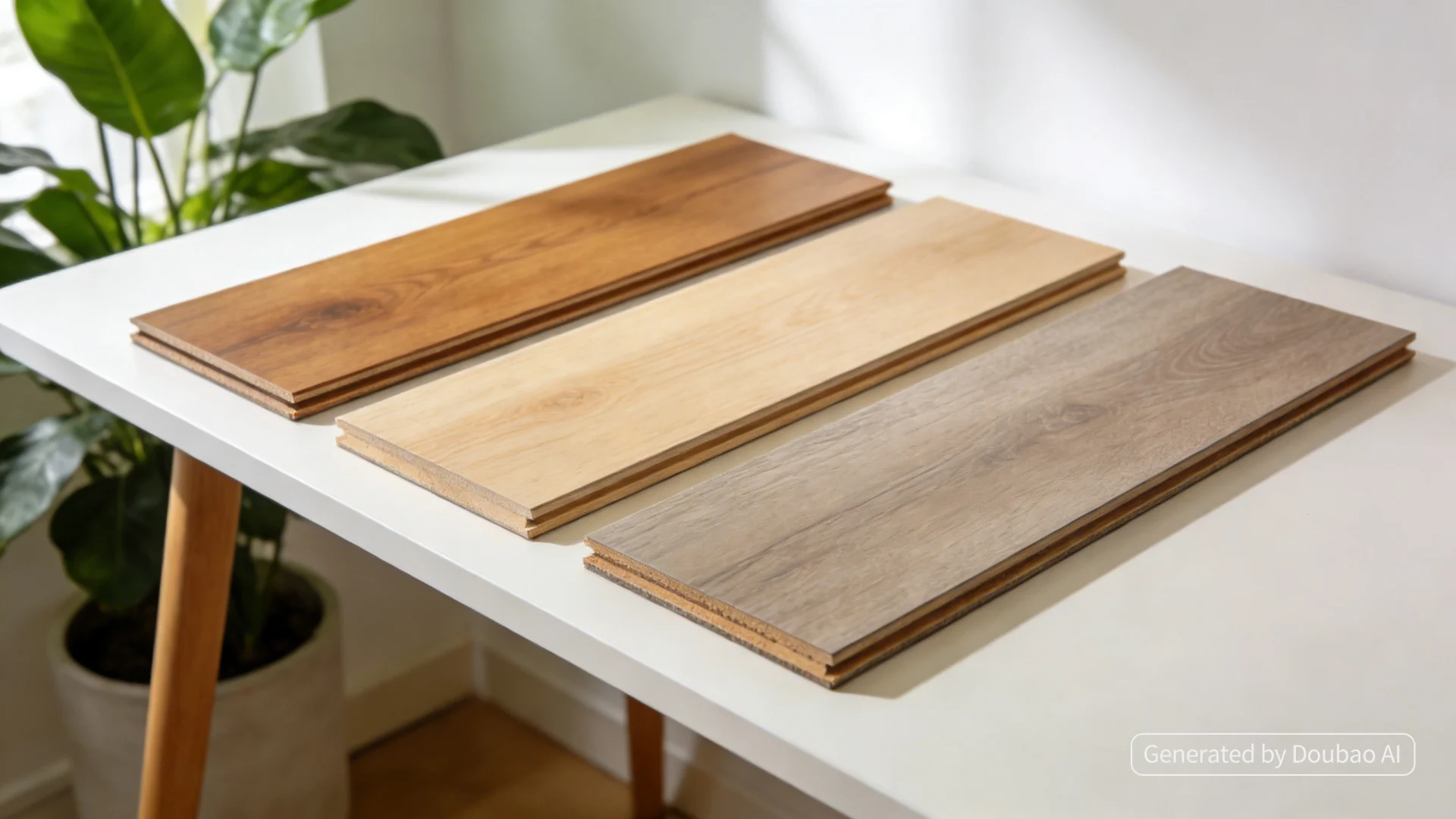
Table of Contents
- Basic Introduction to Hardwood & Softwood
- Engineered Wood & SUMEC Product Advantages
- Industry Standards & Formaldehyde Emission Grades
- Differences Between Three Wood Types
- Pros & Cons of Each Wood Type
- FAQ
- Practical Wood Selection Guide
Basic Introduction to Hardwood & Softwood
Hardwood
Hardwood grows slowly and has a dense texture with beautiful unique grain. Common types include Oak, Maple, Walnut, Mahogany and Balsa.
Main Uses: High-end solid wood furniture, luxury interior decoration and fine crafts.
Main Weaknesses: Unfixed density and unstable moisture content. It easily deforms in humid environments. It is expensive and not suitable for large-scale engineering projects.
Softwood
Softwood comes from fast-growing evergreen trees such as Pine, Cedar, Spruce, Douglas Fir and Redwood. It is light, easy to cut and low-cost with sufficient supplies.
Main Uses: Building frames, cheap furniture, outdoor wood structures and paper raw materials.
Main Weaknesses: Low structural strength. It dents and scratches easily. It has no fixed formaldehyde emission standard and needs extra anti-corrosion treatment for indoor use.
Engineered Wood & SUMEC Product Advantages
Engineered wood is a standardized man-made wood panel. It is produced and tested according to mainstream industry standards including EN 312, EN 622 and ASTM D1037. It greatly reduces the deformation problems of natural wood with stable physical and environmental performance.
All engineered wood products from SUMEC Building Material meet EU and North American standards. Every product has fixed density, bending strength and stable moisture content. All products passCARB P2, EPA TSCA Title VI and CE international eco-friendly certifications. The detailed features of each product are listed below:
- Plywood
Follows the EN 314-1 bonding strength standard. It uses cross-layer veneer structures. Its density ranges from 550–700 kg/m³, with a stable moisture content of 8%–12% and bending strength above 30MPa. SUMEC plywood uses low-formaldehyde glue with strong and stable bonding force. It is widely used for building enclosures, cabinet substrates and outdoor auxiliary projects. - MDF (Medium-Density Fiberboard)
Meets the EN 622-5 fiberboard standard. It has a density of 600–800 kg/m³, moisture content of6%–10% and elastic modulus between 2500–3500MPa. It has a super smooth surface that is perfect for painting and fine carving. It is the ideal material for custom cabinet doors and interior decoration. - HDF (High-Density Fiberboard)
Complies with high-grade EN 622-5 requirements. Its density is over 800 kg/m³, with bending strength of 35–45MPa and a 24-hour thickness swelling rate below 12%. It has high hardness and strong impact resistance. It is the core base material for flooring, wall panels and other high-traffic decorative parts. - Particleboard
Follows the EN 312 P4-P7 load-bearing standard. It has a density of 650–750 kg/m³, moisture content of 7%–11% and edge screw holding strength over 800N. SUMEC particleboard has even internal structure and low expansion rate. It is suitable for budget-friendly furniture and partition boards. - OSB (Oriented Strand Board)
Tested by the ASTM D1037 standard for wood panel performance. It is made of oriented wood strands with a density of 620–700 kg/m³ and wet bending strength above 18MPa. It has great water resistance and stable structure. It is commonly used for building frames, subfloors and roof boards.
Industry Standards & Formaldehyde Emission Grades
1. Core Industry Implementation Standards
EN 312: European standard for particleboard. It rules mechanical performance, thickness swelling and different load-bearing grades (P1-P7).
EN 622: European standard for MDF and HDF fiberboards. It defines density classification, size tolerance and surface quality.
ASTM D1037: North American testing standard for all wood panels. It tests bending strength, nail holding power, aging resistance and water swelling performance.
EN 310 / EN 317: Test standards for wood panel bending strength, elastic modulus and water swelling rate.
2. Formaldehyde Emission Grades & Standard Values
Formaldehyde emission is the key standard for indoor wood panel safety. SUMEC products follow all mainstream international grading rules:
E2 Grade: ≤30mg/100g. Only usable indoors after full surface sealing.
E1 Grade: ≤8mg/100g or ≤0.124mg/m³. It is the basic mandatory standard for indoor use in the EU.
E0 Grade: ≤3mg/100g or ≤0.5mg/L. It is a high-end eco-friendly grade for premium indoor spaces.
CARB P2 / EPA TSCA Title VI: The strictest North American standard. Emission ≤1.8mg/100g, much safer than regular E0 grade.
All SUMEC wood panels reach CARB P2 + E0 dual eco-friendly grades and pass CE certification (EN 13986 construction standard). They have no formaldehyde over-release risks and are safe for bedrooms, children’s rooms and high-standard commercial spaces.
Differences Between Hardwood, Softwood
| Key Aspect | Hardwood | Softwood |
| Source & Standard | Natural leafy tree, no unified industrial standard | Natural evergreen tree, unstable unstandardized data |
| Physical Parameters | Density 450–900kg/m³ (unfixed), unstable moisture content | Low density 400–600kg/m³, weak bending strength |
| Dimensional Stability | Shrinks or warps easily with humidity changes | Absorbs moisture and deforms easily, poor weather resistance |
| Environmental Grade | No fixed grade, uncontrollable free formaldehyde | No unified emission standard |
| Cost & Quality Consistency | High cost, large quality differences between batches | Low cost, unstable batch quality |
Pros & Cons of Each Wood Type
| Wood Type | Pros | Cons |
| Hardwood | Premium natural grain, wear-resistant, can be sanded and refinished many times | Unstable physical data, high price, needs regular maintenance to avoid deformation |
| Softwood | Low cost, rich raw materials, easy to cut and process | Low structural strength, easy to damage, no fixed environmental protection standard |
| Engineered Wood (SUMEC) | Follows EN/ASTM industry standards, stable density and strength, anti-deformation, cost-effective, CARB/EPA/CE certified with ultra-low CARB P2/E0 formaldehyde emission, complete product series | Thin surface veneer limits refinishing times; artificial composite with less natural wood texture |
FAQ: Scenario-based SUMEC Panel Selection
Q1: What wood is best for living room flooring and custom furniture?
A: For high-traffic living rooms, chooseSUMEC HDF (over 800kg/m³ density, 35–45MPa bending strength) for flooring. For cabinets and furniture, pick SUMEC MDF or Plywood. They have stable 6%–10% moisture content, E0 eco-friendly grade and meet EN industry standards, with far more stable batch quality than natural wood.
Q2: Which material fits outdoor decks, fences and building frames?
A: For outdoor projects, SUMEC OSB (tested by ASTM D1037) has great water resistance and stable wet strength. For building framing,SUMEC OSB and Plywood follow the EN 13986 construction standard, with better load-bearing performance than ordinary softwood.
Q3: What panels are suitable for DIY bookshelves and budget furniture?
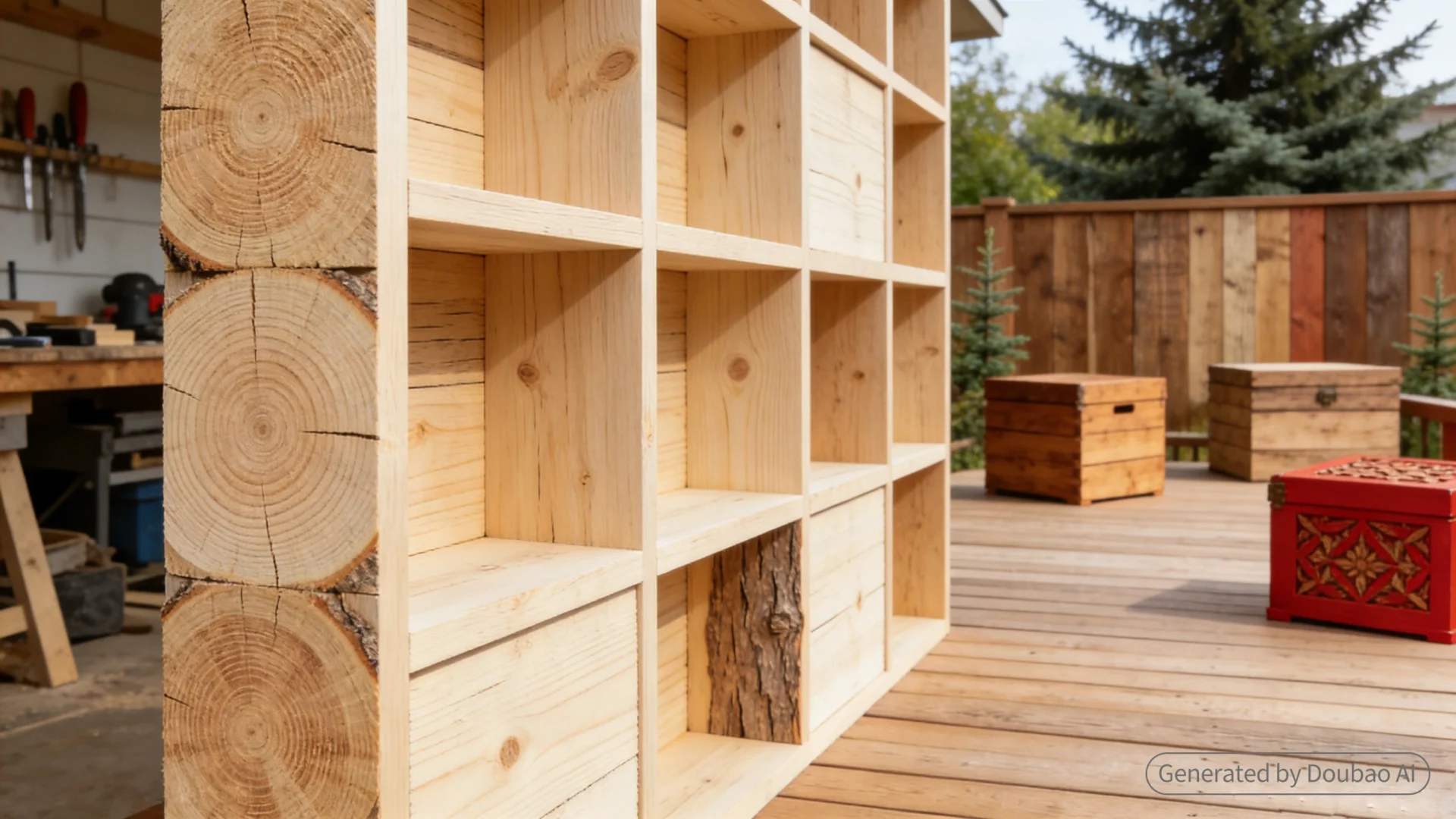
A:SUMEC Particleboard and MDF are the best choices. Particleboard meets EN 312 P4 grade with stable screw holding power. MDF has even density and is easy to machine. Both reach E1/E0 eco-friendly grades and fit indoor budget projects perfectly.
Q4: Can SUMEC engineered wood be used in humid bathrooms and basements?
A: Yes. SUMEC Plywood, OSB and HDF follow the EN 317 standard to control water swelling rate. Their moisture content stays stable at 6%–12%. They will not expand or deform in humid spaces, unlike unstandardized natural wood.
Q5: Are SUMEC panels safe for long-term indoor use?
A: Absolutely safe. All SUMEC panels pass CARB P2, EPA TSCA Title VI and CE certifications. Their formaldehyde emission meets E0 super grade and strict North American standards, following EU EN 717-3 test rules. They are safe for family rooms, children’s spaces and commercial closed environments.
Practical Wood Selection Guide & SUMEC Solutions
The best wood choice depends on your usage scenario, standard requirements, physical performance and eco-friendly grade. You can follow this simple guide:
- High-traffic indoor spaces (flooring & cabinets): SUMEC HDF / MDF / Plywood (EN 622/EN 314 standard, E0/CARB P2 grade)
- Building structures & outdoor projects: SUMEC OSB / Plywood (ASTM D1037/EN 13986 standard, 8%–12% stable moisture content)
- Budget furniture & DIY crafts: SUMEC Particleboard / MDF (EN 312 P4 grade, stable physical parameters)
- High-humidity spaces (bathroom & basement): SUMEC moisture-resistant Plywood / OSB (EN 317 low swelling standard)
Natural hardwood and softwood always have unstable performance and unstandardized quality. In contrast, SUMEC Building Material engineered wood fully meets global EN 312, EN 622 and ASTM D1037 standards. It has fixed, reliable physical data and top-level international eco-friendly certifications. It is the most trustworthy standardized material for global home renovation, furniture manufacturing and construction engineering projects.
Learn More About Our Products?
Contact Now