
3/4-Inch Plywood: Thickness, Tolerances, and Performance Guide
Plenty of projects call for 3/4-inch plywood, but grab a tape and you’ll notice the sheet usually runs thinner. That gap leads to fit headaches, mistakes in load calculations, and wasted time—especially when nobody explains the reason behind it.
Plywood sticks to industry sizing, not what you’d expect from the label. In standard construction plywood, “3/4 inch” is just a nominal size. The real thickness usually lands around 23/32 inch, or about 0.703 inches.
After pressing, mills sand the panels to hit flatness and grading targets, which removes a bit of material. So, when you’re joining, spanning, or fastening, it’s the real thickness that matters—not what the sticker says.
Let’s dig into why nominal and actual sizes don’t match up, how 3/4-inch plywood stacks against 18 mm panels, and what that thickness means for strength. We’ll also look at grades, common uses, and the kind of mistakes that can mess up a floor or cause inspection headaches.
The “Missing” Thickness: Nominal Vs. Actual Size
It’s easy to assume 3/4 plywood should measure exactly 0.75 inch. In reality, plywood uses a nominal thickness label, but the sheet itself runs thinner—what’s called the actual thickness.
What Is The Actual Thickness?
The actual thickness of 3/4 plywood is usually 23/32 inch, which is about 0.718 inch or 18.26 mm. Some imported panels hit 18 mm exactly.
You’ll see this difference in most plywood thickness charts, whether it’s hardwood or softwood. That “3/4 inch” is more of a category than a measurement.
Common thickness comparison
| Nominal Thickness | Actual Thickness (in) | Metric (mm) |
| 3/4 inch | 23/32 inch | 18.26 mm |
| 3/4 inch (metric) | — | 18.0 mm |
For anyone building, dados and rabbets should match the actual thickness, not the nominal size.
Why Is It Thinner? (The Manufacturing Process)
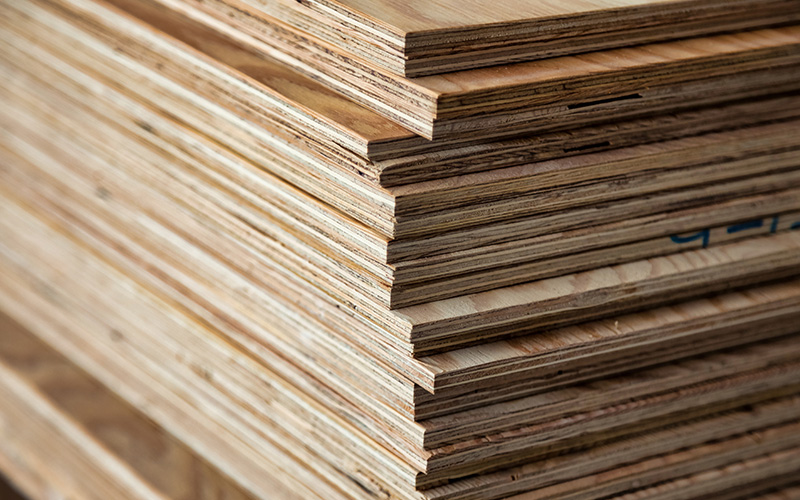
Plywood starts out thicker than it ends up. Mills glue up veneer layers and press them under heat. That process leaves them a bit oversized.
Then, manufacturers sand both faces to get the right flatness and finish. Sanding takes off material evenly, which helps with bonding, finishing, and panel fit. That step shaves down the thickness by a little, but it’s pretty consistent.
Drying matters too. As wood fibers lose moisture, they shrink. The alternating grain keeps the panel stable, but it still thins out a bit.
Most shops, builders, and hardware makers base their systems on the actual thickness—not the label.
3/4″ (Imperial) vs. 18mm (Metric): Are They Interchangeable?
3/4-inch plywood and 18mm plywood look pretty similar, but the sizes don’t quite line up. 3/4 inch equals 19.05mm, while 18mm is about 0.71 inches. That leaves a difference of 1.05mm.
| Nominal size | Metric value | Typical actual thickness |
| 3/4 inch | 19.05mm | ~18.2–19.0mm |
| 18mm | 18.0mm | ~17.5–17.8mm |
Mills sand panels after pressing, so the actual thickness often comes out thinner than the label. That’s why two sheets with the same name might still not match up.
Are they interchangeable? Sometimes. For cabinets or shelves, lots of folks swap them because glue and fasteners still hold. The small loss in thickness means a slight drop in stiffness, since thicker panels resist bending better. On long spans, 18mm may sag a touch more.
Precision work is another story. Joinery cut for 3/4 inch can feel loose with 18mm. Dados and grooves need exact widths, and CNC routers show the mismatch right away. That means extra setup, shims, or tweaking tool paths.
Plans matter. U.S. plans usually assume 3/4 inch. Metric plans expect 18mm. Matching the plan saves headaches later.
Structural Properties & Load Capacity
3/4 inch plywood gets used for floors, shelves, and work surfaces. Its load and stiffness depend on span, support spacing, panel rating, and how the load spreads out.
Weight Bearing Capabilities
3/4 inch plywood handles load by pounds per square foot (psf), not a single number. For residential floors, builders usually design for 40 psf live load plus 10 psf dead load. With good support, a panel handles foot traffic and furniture without trouble.
Most structural 3/4 inch plywood uses 5 to 7 wood plies and exterior-grade glue. The layers spread out the stress, so the panel resists cracking under even loads.
If you put a 4×8 sheet (32 sq ft) under a 50 psf load, it supports about 1,600 lb—but only if the framing does its job. If the load gets concentrated, capacity drops unless you spread the weight.
Stiffness & Deflection
Stiffness decides how much 3/4 inch plywood bends. Too much bend means bounce or sag, even if the panel doesn’t break. In real life, stiffness matters more than brute strength for floors and shelves.
Panels carry span ratings like 32/16, 40/20, or 48/24. Those numbers match roof and floor joist spacing. Subfloors feel firmer with 16-inch on-center joists than 24-inch, even using the same plywood.
Deflection grows fast as the span gets longer. Halving the span cuts bending way down. Adding blocking or tightening up joist spacing usually helps more than just adding thicker plywood.
Common Applications And Grading
Builders reach for 3/4-inch plywood when a project needs stiffness and support. It’s a go-to for subfloors, wall sheathing, and roof decks. The cross‑laminated plies keep bending in check, so floors don’t bounce as much.
Furniture makers like it for cabinets, shelving, and work surfaces. The alternating grain layers fight racking, so cabinet boxes stay square and screws hold tight.
Softwood plywood (fir or pine) is common in construction. Many panels use exterior-rated adhesive, marked with an “X”, which shrugs off short-term moisture. That lets you install it before the building is fully dried in.
Hardwood plywood works for visible furniture parts. Birch plywood uses even veneers, giving a smooth face for paint or clear finishes. Baltic birch plywood goes further with lots of thin plies and almost no voids. That makes the edges strong, so you can leave them exposed.

Grading affects surface and price:
| Grade | Typical Use | What It Means in Practice |
| A or B | Cabinet-grade plywood | Smooth faces for paint or veneer |
| C or D | Shop or structural use | Knots and patches get covered |
Marine plywood uses waterproof glue and tight core tolerances. That means it resists delamination in wet spots—think boat interiors or damp basements.
Critical Mistakes To Avoid
Lots of projects go sideways when builders treat 3/4-inch plywood as a fixed size. Most sheets measure about 23/32 inch (0.72 in.), not 0.75 inch. Sanding and glue shrink the panel, so parts cut for a full 3/4 inch won’t fit right. That leads to loose joints or visible gaps.
Ignoring thickness tolerance causes more grief. Standard plywood varies ±1/32 to ±1/16 inch across a sheet, depending on grade and mill. Veneer thickness and press pressure can change during production, so you end up with panels that might twist cases or stress fasteners.
Mixing sheets from different mills or regions is risky. Domestic and imported panels follow different tolerances. Combining them can throw off dados or shelves enough to need shimming or extra work.
Critical errors to watch for:
- Designing parts at exact 3/4 inch without checking actual thickness
- Mixing plywood from different brands or origins in one assembly
- Cutting joinery before measuring sheet-to-sheet variation
- Ignoring the stated tolerance range on structural parts
| Mistake | Measured Reality | Practical Result |
| Assume 0.75 in. | ~0.72 in. | Loose joints |
| Ignore tolerance | ±1/16 in. | Poor alignment |
| Mix sources | Uneven thickness | Assembly stress |
Conclusion / Summary Checklist
3/4‑inch plywood uses a nominal label, not an exact size. Most sheets come in at about 23/32 inch (0.72 in.).
Thickness can swing by ±1/32 to ±1/16 inch across a panel. This means parts cut to a fixed plan might not fit flush without some tweaking.
Plywood gets its stability from cross‑laminated veneers. Each layer runs at right angles to the next, so swelling and shrinkage stay in check.
Panels stay flatter than solid wood when humidity shifts, which is especially handy for cabinets and shelves.
Core type plays a big role in strength and consistency.
- Softwood core sheets cost less but have bigger thickness swings.
- Hardwood or Baltic birch cores cut down on voids and keep tolerances tighter.
Voids? Not really what you want if you care about clean joints and neat edges.
Before you design or buy, run through this checklist:
- Measure actual thickness with calipers, not just a tape.
- Design joints to the real size, not the nominal 0.750 in.
- Match dado and rabbet cuts to each sheet’s real thickness.
- Check grade and core type for any exposed edges.
- Let panels acclimate to your shop’s humidity before cutting.
Frequently Asked Questions
What are the typical weight capacities for 3/4 inch plywood?
There’s no single weight capacity for 3/4 inch plywood. It depends on span length, grade, and how you support the panel.
For example, a 23/32-inch plywood panel supported every 16 inches usually handles about 40 pounds per square foot live load and 10 pounds per square foot dead load. That works for walking and furniture when it’s over proper framing.
Point loads are trickier. A heavy object on a small spot can bend or crush the panel if you don’t spread the weight.
Can 3/4 inch plywood be used effectively for flooring purposes?
Builders often use 3/4 inch plywood as a subfloor. Most codes allow 23/32-inch plywood over joists spaced 16 inches on center.
The layered veneer structure spreads loads out in different directions. That means less flex underfoot, especially if you glue and screw the panels to the joists.
But it’s not a finished floor. You’ll want to install tile, hardwood, or something else on top for durability.
How does the weight of a 4×8 sheet of 3/4 inch plywood affect its usage?
A 4×8 sheet of 3/4 inch plywood usually weighs between 60 and 70 pounds. The exact number depends on wood species, glue, and moisture.
Honestly, it takes two people to move these safely most of the time. That matters for job planning, especially if you’re hauling sheets upstairs or working solo.
Heavier panels tend to feel more stable after installation. The extra mass helps cut down vibration in floors and platforms.
What factors determine the point load capacity of 3/4 inch plywood?
Point load capacity comes down to thickness, veneer quality, and core construction. Panels with more plies and fewer voids stand up to crushing forces better.
Support spacing makes a difference too. When supports sit closer together, bending stress drops.
If a load sits near a joist, you’ll see less deflection than if it’s stuck in the middle of a span.
Load distribution matters a lot. Pads or plates help by spreading the force out, which lowers the risk of surface damage or panel failure.
Learn More About Our Products?
Contact Now