
Types of Plywood Cores: Structure, Materials, and Performance Differences
In plywood manufacturing, the core plays a central role in determining a panel’s structural behavior, stability, and processing performance.
While face veneers define surface appearance and finishing quality, the plywood core defines how the panel performs under load, during machining, and throughout its service life.
Understanding the different types of plywood cores requires more than listing materials.
Core types are distinguished by internal structure, material composition, and manufacturing purpose, each of which directly influences strength, flatness, and application suitability.
This article explains plywood core types from a manufacturing and specification perspective, focusing on structure, performance, and practical application.
What Is a Plywood Core?
A plywood core is the internal structural layer of a plywood panel, positioned between the face and back veneers.
It provides structural support, distributes internal loads, and determines key performance characteristics such as strength, dimensional stability, and machinability.
Unlike surface veneers, which primarily serve aesthetic and finishing functions, the core is responsible for:
- Maintaining panel rigidity
- Controlling warping and deformation
- Supporting fasteners and joinery
- Enabling consistent manufacturing tolerances
From a production standpoint, the plywood core functions as the structural backbone of the panel.
Variations in core material and construction method lead to measurable differences in performance, even when identical face veneers are used.
How Plywood Cores Are Classified ?
Plywood cores are not categorized arbitrarily.
They are classified based on material attributes, construction methods, and manufacturing objectives, allowing manufacturers and specifiers to align core selection with performance requirements.
Classification by Core Material Composition
Plywood cores can be classified according to the primary materials used within the core.
Different materials introduce distinct density profiles, bonding behavior, and mechanical properties.
Common material categories include:
- Veneer-based materials
- Solid wood elements
- Engineered wood materials such as fiber- or particle-based substrates
Each material category affects how the panel responds to load, moisture, and machining processes. In manufacturing practice, the performance of these core materials—especially their resistance to moisture exposure—is closely tied to the adhesive system used to bond internal layers, rather than material selection alone.
Classification by Structural Construction Method
Beyond material choice, plywood cores are also distinguished by how internal layers are constructed.
Core construction methods include:
- Layered configurations
- Strip-based assemblies
- Composite structures combining multiple material types
Structural construction directly influences stiffness, internal stress distribution, and dimensional consistency.
Classification by Manufacturing Purpose
From a production perspective, plywood cores are often designed to prioritize specific manufacturing outcomes.
Core designs may emphasize:
- Surface flatness for veneering or lamination
- Load distribution for structural or semi-structural use
- Balanced performance to optimize material efficiency
This purpose-driven classification explains why multiple core types exist for similar end uses.
In practice, however, plywood cores are not defined by a single attribute alone. Instead, commonly recognized core types represent combinations of material composition, structural construction, and manufacturing purpose.
The following section outlines the main plywood core types as they are identified and specified in industry practice.
Main Types of Plywood Cores
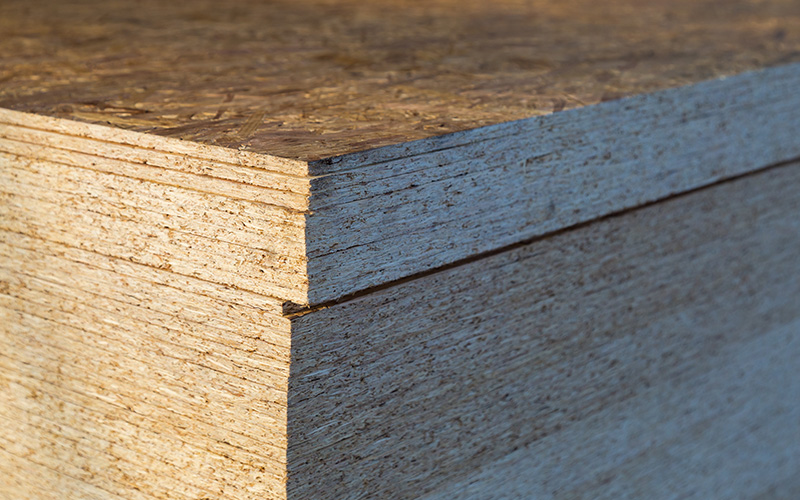
Based on material composition and construction method, plywood cores can be grouped into several primary types. Each core type reflects a different balance between structural performance, surface quality, and manufacturing efficiency.
Veneer Core Plywood
Veneer core plywood is a type of plywood core made entirely from cross-laminated wood veneers, forming the central structural layer of the panel. Each veneer layer is oriented perpendicular to adjacent layers, creating a balanced internal configuration.
This structure provides uniform strength distribution while maintaining a favorable strength-to-weight ratio.
Because the core is composed entirely of veneers, material transitions remain consistent from surface to center.
From a manufacturing perspective, veneer core plywood:
- Supports stable panel geometry
- Responds predictably during machining
- Maintains compatibility with a wide range of face veneers
Veneer core constructions are commonly specified where balanced strength and structural reliability are required.
Lumber Core Plywood
Lumber core plywood is a plywood core type that uses solid wood strips as its central core material, with veneer layers bonded to both sides.
This strip-based construction improves screw-holding capability and enhances rigidity, particularly in wider panels.
Solid wood elements alter internal load transfer compared to fully layered veneer cores.
From a specification standpoint, lumber core plywood:
- Enhances fastener retention
- Reduces deflection across wide surfaces
- Supports internal structural continuity
Lumber core panels are frequently used for doors, partitions, and wide-format furniture components.
MDF Core Plywood
MDF core plywood is a plywood core construction in which medium-density fiberboard forms the internal core between surface veneers.
Unlike layered veneer structures, MDF cores exhibit homogeneous density throughout the panel.
This uniformity provides superior surface flatness, making the panel well-suited for veneering and lamination processes.
The absence of internal grain variation contributes to predictable machining behavior.
From a manufacturing perspective, MDF core plywood:
- Supports smooth surface finishing
- Reduces veneer telegraphing
- Enables consistent pressing and bonding
MDF core constructions are commonly specified where surface quality and dimensional consistency are prioritized.
Combination (Combi) Core Plywood
Combination core plywood is a plywood core type that integrates veneer layers with engineered wood materials within the same core structure.
This hybrid design balances structural strength and surface flatness by assigning different materials to specific internal layers.
The result is a core optimized for multiple performance criteria.
From a production standpoint, combi core plywood:
- Optimizes material usage
- Balances mechanical performance and processing efficiency
- Supports versatile specification requirements
Particle Board Core Plywood
Particle board core plywood is a plywood core type that uses particle-based engineered wood as the internal core material beneath surface veneers.
This structure prioritizes material efficiency and internal uniformity, while exhibiting different mechanical behavior compared to veneer or lumber-based cores.
From a manufacturing and specification perspective, particle board core plywood:
- Provides consistent internal density
- Supports cost-controlled production
- Is suitable for non-structural panel applications
Performance Differences Between Plywood Core Types
Although all plywood cores serve the same structural role, core construction methods result in distinct performance characteristics.
These differences arise from internal structure, material density, and layer interaction.
Strength and Load Distribution
Core structures differ in how internal forces are distributed across the panel:
- Veneer cores distribute load through cross-laminated layers
- Lumber cores transfer load through solid wood elements
- Engineered cores distribute stress uniformly due to consistent density
Strength performance depends on core structure and loading conditions, rather than material type alone.
Dimensional Stability
Dimensional stability describes a panel’s ability to maintain shape over time.
- Alternating veneer layers reduce directional movement
- Homogeneous engineered cores minimize internal stress concentration
- Hybrid cores balance movement control across materials
Core selection directly influences warping resistance and long-term consistency.
Weight and Density Characteristics
Different core types result in varying weight and density profiles:
- Veneer cores offer balanced strength-to-weight ratios
- Solid wood elements increase localized density
- Engineered cores provide predictable mass distribution
These characteristics affect handling, transportation, and processing.
Machining and Processing Behavior
Plywood cores also differ in machining response:
- Veneer cores provide predictable grain interaction
- Lumber cores improve fastener engagement
- Engineered cores support smooth cutting and surface preparation
Processing behavior is closely linked to internal core composition.
Plywood Core Selection for Different Applications
In manufacturing and specification contexts, plywood core selection is determined by how panels are processed, assembled, and mechanically stressed in service.
Rather than relying on a single core type, industry practice shows that specific core constructions are commonly specified according to dominant performance requirements in each application.
Furniture Manufacturing
Furniture manufacturing involves extensive machining, edge profiling, and surface finishing, all of which place repeated and localized stresses on plywood panels.
To perform reliably under these conditions, furniture components require a core structure that remains balanced during processing and provides predictable machining behavior.
Veneer core plywood is widely used in furniture production because its cross-laminated structure distributes machining forces evenly and supports structural consistency.
Where surface flatness and finish quality are the primary concern, MDF core plywood is frequently specified due to its uniform density and smooth veneering performance.
Commonly specified core types:
- Veneer core plywood
- MDF core plywood (for surface-critical furniture components)
Cabinet Panels and Casework
Cabinet panels and casework depend on panel flatness, joint accuracy, and long-term dimensional stability, as even minor deformation can affect alignment and operation.
These applications therefore require cores that provide consistent internal support and reliable fastening behavior.
Commonly specified core types:
- MDF core plywood
- Veneer core plywood
- Combination core plywood
MDF core plywood is commonly selected for cabinet panels because its homogeneous structure supports flatness and precise assembly.
Veneer core and combination core plywood are often used when additional structural reinforcement or improved fastener holding is required.
Doors and Partitions
Doors and interior partitions typically involve wide panel spans and repeated mechanical loading, especially around hinges and hardware.
Under these conditions, internal rigidity and fastening support become more critical than surface considerations alone.
Commonly specified core types:
- Lumber core plywood
- Combination core plywood
Lumber core plywood is widely specified for doors and partitions because its solid wood strip construction enhances stiffness and supports hardware attachment across large surface areas.
Combination core plywood is also used where balanced structural support and acceptable surface quality are both required.
Interior Construction Panels
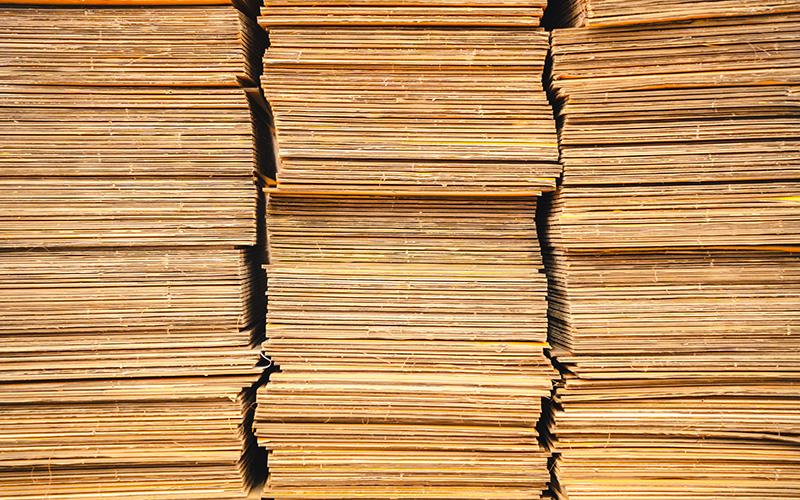
Interior construction panels are specified primarily for structural reliability and installation performance within framed systems.
Panels used in these contexts must distribute loads effectively while maintaining dimensional stability under variable site conditions.
Commonly specified core types:
- Veneer core plywood
- Combination core plywood
- Particle board core plywood (for non-structural applications)
Veneer core and combination core plywood are frequently specified for interior construction due to their balanced mechanical behavior and predictable installation performance.
In non-structural interior uses, particle board core plywood is also used where material efficiency is a priority.
FAQ
Does plywood core affect strength and stability?
Yes. The plywood core directly affects both strength and dimensional stability because it defines how loads are distributed and how internal stresses are managed.
Strength and stability result from the interaction between core material, structure, and manufacturing method, not from a single material property.
Is solid core plywood always stronger than veneer core plywood?
No. Solid core plywood is not inherently stronger than veneer core plywood in all situations.
Solid wood elements and cross-laminated veneers distribute loads differently, and perceived strength depends on application context and structural requirements, not material solidity alone.
Learn More About Our Products?
Contact Now