
Best Plywood for Furniture: Types, Grades, Thickness & More
Furniture lasts longer when builders pick plywood that fits the space, load, and moisture level. For furniture, the best plywood is BWP (marine grade) for kitchens and bathrooms, MR grade for dry indoor rooms, and BWR grade for light moisture, with thickness chosen by load—typically 12–18 mm for cabinets and 18–25 mm for beds and tables.
This choice matters because plywood uses cross‑layered veneers. These layers reduce warping and hold screws better than many solid boards.
Plywood works well for furniture since its layered build spreads stress across the sheet. Cross‑graining helps limit expansion and shrinkage.
That means doors stay square and shelves stay flat. In practice, you get fewer cracks, tighter joints, and steadier panels over time.
This guide breaks down plywood types, grades, and thickness with clear use cases. It also compares plywood with MDF, covers standard sheet sizes, and shows how to pick the right panel for each piece.
Why Plywood Is The Preferred Choice For Modern Furniture
Plywood fits modern furniture because its structure improves stability. Manufacturers bond thin wood veneers with the grain set at right angles.
This layout limits expansion and shrinkage. Shelves and doors stay aligned even when humidity changes seasonally.
Plywood supports heavy use by balancing strength and weight. A 19 mm hardwood-core plywood panel can carry loads similar to thicker solid wood.
This lets designers create slimmer furniture profiles without weak joints or sagging surfaces. The material also accepts many finishes without extra processing.
Factory-sanded faces with calibrated thickness allow direct lamination or veneer pressing. Designers achieve clean edges and flat surfaces with less on-site correction.
Plywood adapts well to different rooms because of grade options. MR, BWR, and BWP grades use specific resin systems that control moisture exposure.
The same material can work in bedrooms, kitchens, and bathrooms—if the correct grade is chosen. Cost control also plays a role here.
Plywood uses fast-growing timber species arranged in veneers. This reduces reliance on large solid wood sections and helps keep pricing consistent.
Key practical reasons designers choose plywood:
- Cross-laminated veneers reduce warping and surface cracks
- Multiple grades match dry, damp, or wet spaces
- Uniform thickness supports modular and built-in furniture
- Wide sheet sizes reduce joints and visible seams
Common Types of Furniture-Grade Plywood
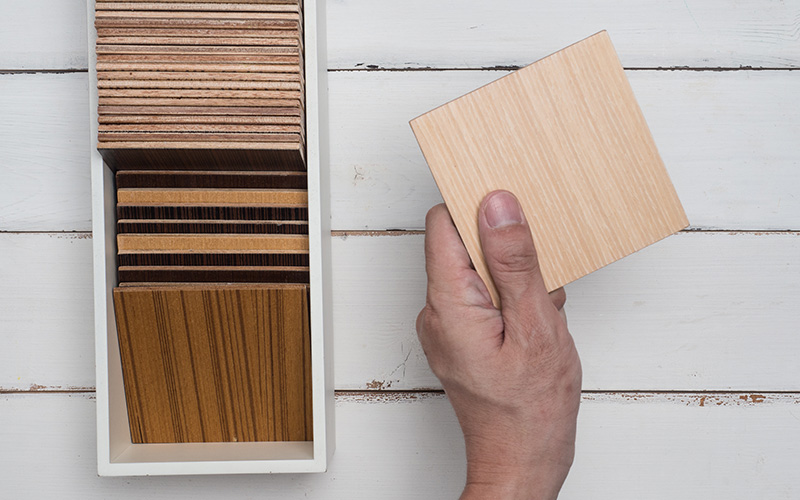
Furniture-grade plywood includes five main types categorized by face veneer quality, moisture resistance, and structural density to suit different environments.
- Hardwood Plywood: Uses durable veneers like birch or maple for a smooth surface, best for visible cabinet doors and tabletops.
- Commercial Plywood: Known as MR (Moisture Resistant) grade, this type handles humidity in dry interior zones like bedrooms and living rooms.
- Marine Plywood: Engineered with waterproof resin (BWP/BWR) to prevent delamination, making it essential for kitchens and bathrooms.
- Laminated Plywood: Features a pre-applied decorative surface that resists scratches, ideal for low-maintenance modular furniture.
- Structural Plywood: Prioritizes screw-holding power over appearance, serving as the strong internal framework for heavy cabinets.
Hardwood Plywood For Furniture
- Definition: Hardwood plywood uses hardwood face veneers bonded to a layered core. This gives it a smooth, sanded plywood surface for visible furniture parts.
- Why it matters: The hardwood face resists dents better than softwood plywood. Species like birch and maple have tighter grain, so edges stay cleaner and there are fewer surface marks as time goes on.
- Key varieties:
- Birch plywood: Often Baltic birch, known for uniform plies and strong screw holding. Common in cabinet boxes and drawers.
- Maple plywood: Lighter in color with a closed grain. Paint goes on evenly.
- Sande plywood: A lighter hardwood option when weight is a concern.
- Typical uses: Table tops, cabinet doors, shelves, and veneered plywood panels.
Commercial, Or Interior Plywood
- Definition: Commercial plywood, also called MR (Moisture Resistant) plywood, uses urea-based adhesives for dry interior spaces.
- Performance limits: MR grade slows moisture absorption but doesn’t block water. It handles normal indoor humidity but fails in wet areas.
- Core structure: Often uses mixed hardwood or softwood plywood cores. This lowers cost but reduces uniform strength.
- Best use cases:
- Living room furniture: TV units, side tables, and bookcases.
- Bedroom storage: Wardrobes and bed frames away from water sources.
- Surface prep: Pairs well with laminates or veneers after sanding.
Marine Plywood For Kitchen And Bathroom
- Definition: Marine plywood, sold as BWP or BWR grade, uses phenolic resin adhesives that resist prolonged water exposure.
- Why it works: The waterproof glue and dense core prevent layer separation. Panels stay flat even near sinks or steam.
- Material makeup: Uses hardwood veneers with fewer core gaps, which improves edge strength.
- Where it fits:
- Kitchens: Base cabinets, sink units, and pantry carcasses.
- Bathrooms: Vanity units and storage near showers.
- Cost factor: Marine ply costs more than commercial plywood because of resin type and stricter bonding standards.
Laminated Plywood For Modular Furniture
- Definition: Laminated plywood comes with a factory-bonded decorative laminate on one or both faces.
- Functional benefit: The laminate layer adds scratch and stain resistance. The surface handles daily cleaning without extra polish.
- Common formats:
- Pre-finished plywood: Cuts down on-site work and installation time.
- Matte and gloss laminates: Used to match modern interiors.
- Best applications: Modular kitchens, wardrobes, and office storage.
- Design note: The core can be MR, BWR, or marine ply, depending on moisture needs.
Structural Plywood For Cabinet Carcasses
- Definition: Structural plywood forms the internal box, or carcass, of cabinets and load-bearing furniture.
- Primary requirement: High screw-holding strength, which comes from thicker plies and denser cores. Hinges and slides stay tight over time.
- Material choices:
- Birch plywood: Chosen for its uniform layers.
- Softwood plywood: Used when cost matters and surfaces stay hidden.
- Focus over finish: Surface appearance matters less than dimensional stability and load rating.
- Typical uses: Base cabinets, tall storage units, and shelving systems that carry weight.
Plywood Grading System Explained: Cabinet Vs. Furniture Grade
The plywood grading system ranks each sheet by face quality, not by strength. Grades use letters A, B, C, and D to describe surface knots, patches, splits, and sanding level.
Each face gets its own letter, which is why labels like A/B or B/C appear on the edge. Grade affects how the surface looks after paint or stain.
An A-grade face allows only small pin knots and smooth repairs. This means less prep time and a more even finish on visible parts.
Cabinet grade plywood usually falls in the A/B or B/B range. The front face stays clean, while the back allows minor patches.
Cabinets look neat on exposed sides without the higher cost of A-grade on both faces. Furniture grade plywood often uses A/A or A/B panels.
Both faces stay smooth and uniform, which matters for tables, shelves, and panels seen from all angles. Consistent veneers absorb stain more evenly and reduce color blotching.
Lower plywood grades like C or D allow open knots and visible voids. These grades work for hidden parts but not fine furniture, since repairs can show through paint or veneer.
Moisture ratings also affect grade choice. MR grade plywood uses interior glue, so it fits dry rooms only.
BWR grade plywood and BWP grade plywood use water-resistant or waterproof glue. That means better stability in kitchens, baths, or humid climates.
What Thickness Of Plywood Is Best For Furniture
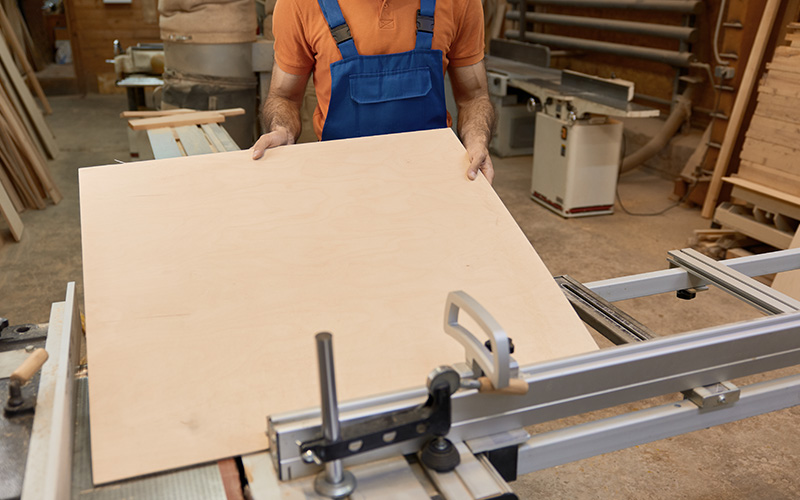
Plywood thickness affects how furniture handles weight, fasteners, and daily use. The right choice depends on span length, load, and how parts connect—not just thickness alone.
Recommended Thickness For Cabinets, Beds, And Shelves
Each furniture type puts stress on plywood in a different way. Cabinets rely on side panels to hold hinges and screws.
Thicker panels resist screw pull-out because they provide more wood layers for the threads to bite into. Doors stay aligned over time.
Beds face constant point loads from body weight. Panels need to spread that load across a wider area.
When plywood is too thin for the span, it bends. Bending leads to creaks and loose joints, which shortens service life.
Shelves fail most often by sagging. Sag increases as span length grows because the panel flexes under weight.
Using plywood sized to the span limits deflection. This keeps books and dishes level and helps prevent cracks at the supports.
Common Plywood Thickness Chart (mm & Inch)
The sizes below reflect common global standards used in furniture and cabinetry.
| Thickness (mm) | Thickness (Inch) | Typical Uses |
| 3–6 mm | 1/8″–1/4″ | Drawer bottoms, back panels, curved parts |
| 12 mm | 1/2″ | Cabinet backs, light shelves, partitions |
| 18–19 mm | 3/4″ | Cabinet boxes, shelves, bed frames |
| 25 mm | 1″ | Wide shelves, tabletops, heavy loads |
Thicker panels add stiffness since added layers increase resistance to bending. With the right thickness for the load and support spacing, long spans stay flat and strong.
Standard Plywood Sizes & Sheet Dimensions
Plywood size covers surface area, while thickness affects depth. A 4 × 8 ft sheet works for wall or cabinet panels, and thickness changes how stiff and strong it feels.
So, size impacts layout, and thickness controls strength.
Most furniture plywood shows up in just a handful of factory sizes. These match common tools and shop setups, which makes cutting and planning way easier.
Thickness stays the same no matter the sheet size. Furniture panels usually use 12 mm, 15 mm, or 18 mm plywood.
A bigger sheet doesn’t mean more strength unless you also go thicker.
Manufacturers list sizes as nominal, not exact. Actual sheets often measure a few millimeters less because of trimming and sanding.
This small difference can matter when cutting plywood. It can throw off tight joints, drawer fit, and edge alignment.
Knowing sheet dimensions helps when planning materials. Designers can nest parts on a full sheet before cutting, which cuts down waste and keeps extra seams off visible furniture surfaces.
Plywood Vs MDF For Furniture
Plywood and MDF have different structures, and that changes how they work in furniture. Plywood uses thin wood veneers glued in crossed layers. MDF is made from fine wood fibers mixed with resin and pressed into sheets.
Plywood’s cross-grain layers give it real strength. Shelves, beds, and cabinets made from plywood hold weight without sagging.
MDF bends more under load since it lacks that layered grain. This limits its use for weight-bearing parts.
Moisture also separates the two. Plywood resists moisture better because each veneer layer acts as a barrier. So, it fits kitchens and damp areas, while MDF can swell and lose its shape if it gets wet.
Weight and surface finish play a role in handling and looks. MDF weighs more because of its dense fiber structure, so large panels feel heavier and awkward to move. On the plus side, its smooth surface takes paint really well, so it’s great when you want a flat, painted finish.
Plywood works for frames, shelves, and furniture that needs to handle weight or moisture. MDF fits painted panels, moldings, and indoor furniture where weight and water aren’t big issues.
How To Choose Plywood For Furniture
It all starts with the application. What’s the plywood for? Load-bearing furniture like wardrobes or bookshelves needs thicker sheets.
Wet areas, such as kitchens or bathrooms, require water-resistant grades. Visible edges or final finish also matter.
Plywood grade matters most.
MR grade uses urea-formaldehyde glue, which works fine in dry indoor rooms. Beds, desks, and cabinets away from water usually use this. BWR grade uses phenol-formaldehyde resin, so it handles steam and cleaning in kitchens. BWP grade uses marine adhesives, which resist water for longer—handy for sinks and utility areas.
Thickness controls strength and shape.
Thicker plywood bends less due to its multi-layered construction. For furniture, standard thicknesses are 12–16 mm for cabinet shutters, 18–19 mm for structural carcasses and frames, and 25 mm for heavy shelves to prevent sagging.
Pick the right thickness so shelves and panels hold weight without sagging.
Surface quality affects the finish.
A-grade faces have fewer knots and patches, so paint, laminate, or veneer sits flat. Visible panels look clean after finishing.
Check treatment and certification.
Termite-treated, kiln-dried boards resist insects and warping because low moisture keeps problems in check. Many buyers lean toward premium plywood from brands like Greenply—certified products stick to set standards.
Frequently Asked Questions
Which plywood is best for kitchen furniture?
Boiling Water Proof (BWP) plywood fits kitchen furniture because it uses phenol‑formaldehyde resin. This glue resists water, so panels keep their shape near sinks and stoves.
Certified plywood with an ISI mark adds another layer of control. That certification checks glue type, core gaps, and bonding strength.
BWP plywood treated for termites and borers helps too. It cuts down on hidden pest damage inside kitchen cabinets, where you might not notice until it’s too late.
What thickness plywood is best for cabinets?
Most people choose 18 mm plywood for cabinet carcasses. The extra thickness lets screws bite in better and really holds everything together.
Hinges and runners tug at the panel edges, so a thicker panel cuts down on tear‑out and sagging. You’ll notice doors open more smoothly and stay level, which just feels right.
Back panels usually get 6 mm to 9 mm plywood. That keeps the weight down but still braces the cabinet box well enough.
This thinner sheet doesn’t need to bear much load—it’s mostly there to stop the cabinet from racking.
Shelves that carry heavy stuff generally call for 18 mm plywood or even thicker. Thicker shelves just don’t bend as much, so you won’t see them dip over time, even with a lot of weight.
Learn More About Our Products?
Contact Now