
China’s Particleboard Industry: Steady Scale Expansion, Green and Intelligent Transformation Driven
As one of the core categories of wood-based panels, China’s particleboard industry has undergone profound changes from rapid expansion to quality upgrading in recent years. The industry scale exceeded 100 billion yuan, the growth rate of production capacity slowed down, and the structure continued to optimize. Environmental protection upgrading and intelligent manufacturing have become the main development lines, driving the industry to advance steadily toward greening, high-end and clustering.
Rational Adjustment of Production Capacity and Continuous Concentration of Industrial Pattern
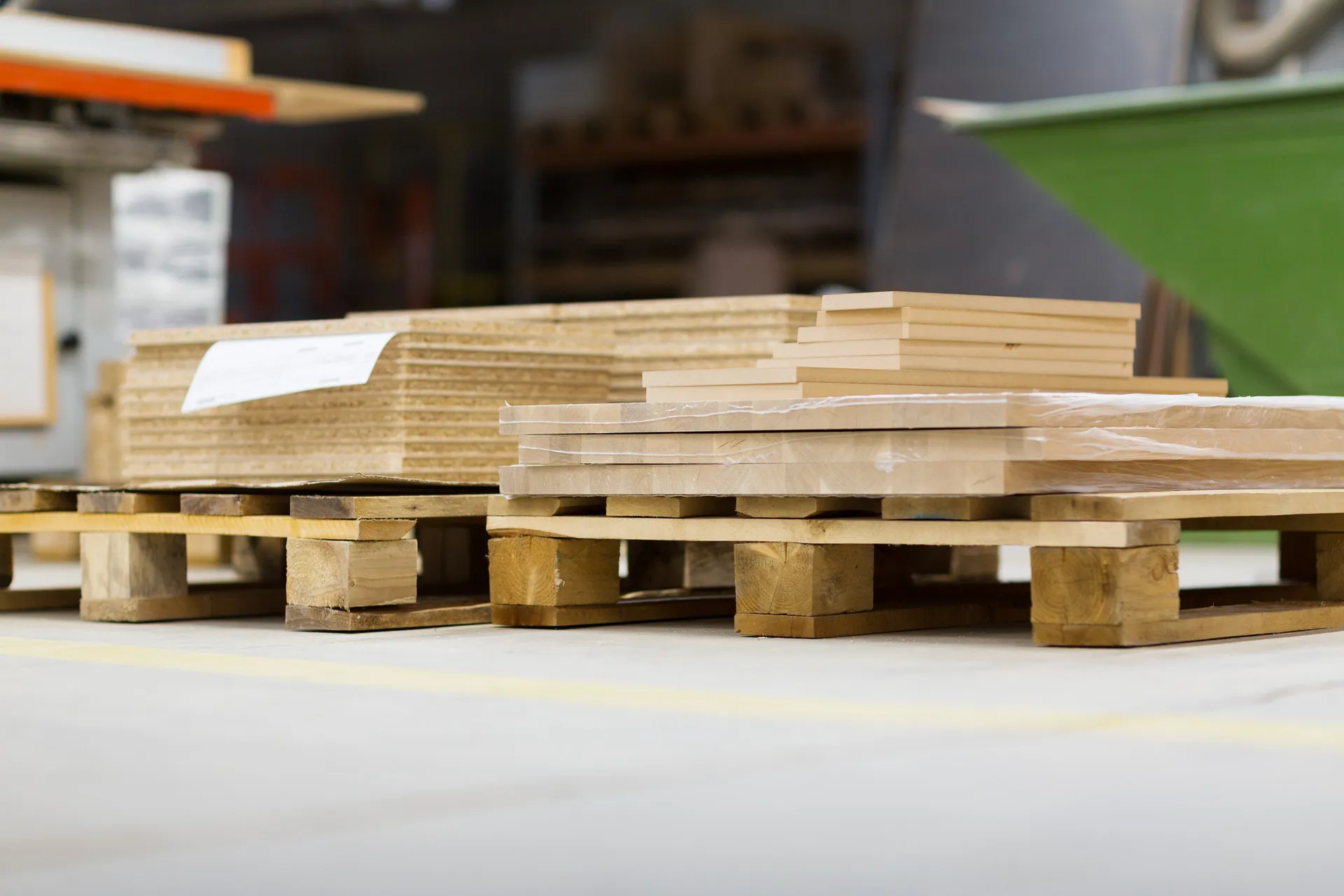
After years of rapid expansion, China’s particleboard industry has entered a period of rational adjustment. The industry reached a production capacity peak in 2024, with 39 new production lines put into operation and a newly added capacity of 15.05 million cubic meters. By the end of the year, the total national capacity reached 64.15 million cubic meters, a year-on-year increase of 21.7%. In 2025, the expansion pace slowed markedly, with only 12 new production lines and an added capacity of 5.05 million cubic meters, down nearly two-thirds year on year. It indicates the industry has bid farewell to blind capacity expansion and shifted to quality and benefit-oriented development.
In terms of capacity distribution, industrial agglomeration is prominent. Shandong, Guangxi, Jiangsu and Henan together account for more than 65% of the national total capacity. Shandong ranks first with 13.93 million cubic meters, while Guangxi relies on its fast-growing eucalyptus resources and becomes a major hub for new capacity growth. By the end of 2025, China’s particleboard output exceeded 106 million cubic meters, and its market share rose from 18.4% in 2020 to 27.5%, ranking it the fastest-growing category among wood-based panels. Meanwhile, industrial concentration keeps rising, with the top ten enterprises occupying 39% of the market. Leading enterprises such as Wanhua Hexiang, Daxiang Saint-Ex and Ningfeng New Materials lead industrial upgrading by virtue of technological and scale advantages.
Comprehensive Upgrade of Environmental Standards, Formaldehyde-free Panels Become Mainstream
Driven by the dual goals of carbon peaking and carbon neutrality as well as consumption upgrading, environmental protection has become the core competitiveness of the particleboard industry. New national standard GB 18580-2025 has comprehensively raised formaldehyde emission limits, forcing the phase-out of backward capacity. Market demand for ENF-grade panels surged, with its market share exceeding 65% in 2025, up 23% year on year, making formaldehyde-free production the industry standard.
Technological innovation supports environmental upgrading. Breakthroughs have been made in the research and application of formaldehyde-free adhesives. The fourth-generation MDI ecological adhesive of Wanhua Chemical and bionic formaldehyde-free adhesives from major manufacturers achieve nearly zero formaldehyde emission, with some products as low as 0.007mg/m³. At the same time, panel performance has been improved, with lightweight high-strength particleboards achieving a density below 0.60g/cm³ and bending strength over 14MPa, balancing environmental performance and practicality. Environmental upgrading has forced backward small enterprises out of the market; more than a thousand non-compliant manufacturers have been phased out since 2024, lifting the industry’s overall environmental compliance rate above 92%.
In-depth Penetration of Intelligent Manufacturing, Dual Improvement in Efficiency and Quality
Intelligent manufacturing has become a core engine for quality improvement and efficiency growth in the particleboard industry. Continuous pressing lines are rapidly replacing traditional multi-layer pressing lines. From 2023 to 2025, 57 new continuous pressing lines were launched, accounting for 74.2% of total capacity by the end of 2025. Featuring stable quality, small thickness tolerance and high efficiency, such production lines reduce panel density by 5% while maintaining mechanical properties, greatly improving product consistency and market adaptability.
Digital transformation is fully advanced with rising popularity of smart factories and fully automated production lines. Full-process automatic control covers raw material screening, particle preparation, hot pressing forming and finished product inspection, lifting product qualification rate above 98.5%. The application of big data and IoT has been deepened, enabling real-time production monitoring and parameter optimization, cutting energy consumption by 12%–15% and raising per capita output by over 30%. Industry-university-research collaboration yields remarkable results; key technologies such as refined particle manufacturing and energy-saving hot pressing continue to make breakthroughs, pushing the industry toward high-end intelligent manufacturing.
Future Trends: Led by Green and High-end Development, Empowered by Integrated Innovation
Looking ahead, China’s particleboard industry will continue to upgrade along four major directions: greening, high-end, intelligentization and internationalization. In the short term, capacity expansion will remain prudent, focusing on eliminating backward capacity and improving capacity utilization, which is expected to reach 85% in 2026. In the long run, the proportion of formaldehyde-free and functional products will keep rising, with ENF-grade panels expected to account for over 80% of the market. High-end products such as lightweight high-strength panels and oriented strand boards will become new growth drivers.
Industrial chain integration will deepen further, accelerating the popularization of the integrated model of “panel + design + installation” to enhance terminal added value. The industry will continuously increase R&D investment, focusing on breakthroughs in bio-based adhesives, low-carbon production processes and intelligent equipment, transforming from scale advantage to technological and brand advantage. Globally, China’s particleboard industry will rely on the Belt and Road Initiative to continuously explore emerging markets, raise the proportion of high-end exports, and realize the leap from product export to brand export.