

Plywood Thickness Guide How to Choose the Right Size for Any Job
Plywood is a widely used basic building material. Thickness directly determines its load-bearing capacity, stability, and application scenarios. Choosing the right thickness is key to ensuring project quality and controlling costs. This article starts with plywood’s basic definition and key advantages, clearly outlines the specifications of its three main thickness types, and explains its wide range of uses—from home renovations to industrial production—by matching different thicknesses to specific projects accurately. It also includes an analysis of price differences between different thicknesses and answers common questions through practical Q&As, offering a comprehensive plywood thickness selection guide for all kinds of needs.
Table of Contents
- What Is Plywood?
- 3 Core Plywood Thickness Types
- 4 Application Scenarios of Plywood
- Matching Plywood Thickness to Specific Projects
- Q&A
- Conclusion
What Is Plywood?
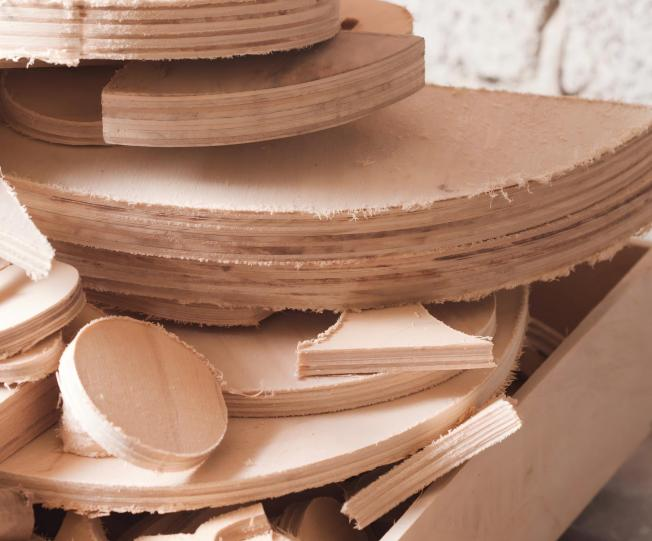
According to the national standard GB/T 9846-2015 Plywood, plywood is a board made by gluing a set of veneers. The grain directions of adjacent veneers are perpendicular to each other when assembling the blank. Usually, its face veneers and inner veneers are symmetrically arranged on both sides of the central layer or core.
This “cross-gluing” structure is not random. It is a scientific design proven by long-term practice. Wood itself has anisotropy—its strength and shrinkage rate differ greatly along the grain (parallel to the grain) and across the grain (perpendicular to the grain). A single solid wood board tends to warp and crack due to this anisotropy when temperature and humidity change. Plywood, however, offsets the internal stress of wood by arranging the grains of adjacent veneers perpendicularly, which significantly improves the dimensional stability of the board.
Besides strong stability, plywood has many other advantages. First, it has high strength. The cross structure maintains good load-bearing capacity both along and across the grain. Its bending strength and modulus of elasticity are usually better than solid wood boards of the same thickness. Second, it has high material utilization. Plywood uses small-diameter wood and fast-growing timber—such as poplar and pine—as main raw materials. It converts wood into veneers through rotary cutting, which greatly improves the utilization rate of wood resources and conforms to the concept of green environmental protection. Third, plywood has good processability. It can be sawn, planed, drilled, and glued according to needs, fitting various construction scenarios.
3 Core Plywood Thickness Types
Plywood comes in a variety of thickness specifications. Different countries and regions have their own standards for plywood, based on local usage habits and processing abilities. But overall, plywood thickness ranges from ultra-thin to extra-thick. In China, according to industry standards and common market products, plywood thickness mainly has three categories: ultra-thin, regular, and thick. They cover multiple specifications from 0.3mm to over 30mm, among which products with 1.5mm-18mm are the most widely used.
1. Ultra-Thin Plywood
This type of plywood is mainly made by gluing multiple layers of extremely thin veneers. It can be as thin as 0.3mm, with common specifications including 0.3mm, 0.5mm, 0.8mm, 1.0mm, and 1.2mm. It features good flexibility and light weight, and is mainly used in scenarios with strict requirements on board thickness and weight. Because the veneers are extremely thin, the production process requires high wood grain uniformity and processing precision. So it is usually made of wood with fine texture, such as birch and basswood.
2. Regular Plywood
Regular plywood is the most popular type on the market. It has a wide thickness range and works for most uses. Common sizes are 1.5mm, 2.0mm, 3.0mm, 4.0mm, 5.0mm, 6.0mm, 9.0mm, and 12mm. This kind of plywood usually has an odd number of layers, like 3, 5, or 7 layers.Plywood with an odd number of layers (like 3, 5, or 7) has matching top and bottom surfaces. This makes the board more stable and stops it from warping because of uneven stress. According to the national standard GB/T 9846.2-2004 (Plywood – Part 2: Dimensions, Deviations and Marking), different thicknesses of plywood can have a small allowable difference. For instance, plywood that’s ≤4mm thick can vary by ±0.2mm, and 5mm-12mm thick plywood can vary by ±0.3mm.
3. Thick Plywood
Thick plywood usually starts from 15mm in thickness. Common specifications include 15mm, 18mm, 20mm, 25mm, and 30mm. In some special scenarios, extra-thick plywood of 40mm or 50mm is also used. This type of plywood has 9 or more layers. Thick plywood has lots of veneer layers and a thick core, so it’s super strong for carrying weight and stays stable. It’s mainly used for load-bearing structures and heavy furniture. When making thick plywood, manufacturers usually pick strong wood like pine or poplar for the core layer—this makes sure the whole board can hold heavy things well.
Besides thickness, you also need to pay attention to the panel size of plywood. The common panel size is 1220mm×2440mm (4 feet × 8 feet). This is an internationally accepted standard size, fitting most construction and processing needs. Some manufacturers can also customize plywood with special panel sizes according to customer needs, but the customization cost is high and the delivery cycle is relatively long.
4 Application Scenarios of Plywood
Plywood has great all-around performance, so it’s used in nearly every area of production and daily life. You’ll find it everywhere—from small details in home renovations to structural support for large projects. Based on different uses, it can be roughly split into four categories: construction and renovation, furniture manufacturing, packaging and transportation, and industrial production. Each scenario has specific requirements for plywood’s thickness and performance.
Construction and Renovation Field
Plywood is a must-have basic material for construction and renovation. It’s mainly used for wall decoration, floor underlayment, ceiling work, and making door/window casings. For example, the base of wall panels and TV background decor in wall projects usually need plywood that’s stable and easy to work with. For ceilings, we pick medium-thin plywood because it’s light and doesn’t weigh the ceiling down too much. Floor underlayment needs some strength and resistance to wear to support the flooring on top. Also, weather-resistant plywood is used for outdoor decor—like sunroom walls and balcony enclosures. This type of plywood usually uses phenolic resin adhesive, which can stand up to wind, rain, and UV rays, so it lasts longer.
Furniture Manufacturing Field
Furniture making is one of the biggest uses for plywood. A lot of plywood goes into cabinet furniture—like wardrobes, bookcases, and shoe cabinets—and also upholstered and solid wood furniture, such as sofas, bed frames, and dining tables. Compared to solid wood boards, furniture made with plywood is less likely to warp or crack, and it’s cheaper too. It’s especially good for making large panels and side panels. For example, wardrobe side panels need to be thick enough to hold the weight of clothes without bending. Drawer bottom panels can use thinner plywood to make the whole piece lighter.
Packaging and Transportation Field
In packaging and shipping, plywood is mainly used to make shipping boxes, pallets, and container floors. This use needs plywood to be strong and able to stand up to bumps—so it can keep the goods inside safe during transport. For example, thick plywood is often used to pack heavy machinery. It can hold the equipment’s weight and handle the jolts during shipping. Medium-thin plywood is used for electronic products. It gives good protection while keeping things light. Also, plywood pallets can be reused, which fits with the trend of green packaging.
Industrial Production Field
Plywood is used in lots of different industrial jobs—like making cabin partitions for ships, interior panels for cars, soundboards for musical instruments, and panels for billboards. Different industrial uses have very different requirements for plywood’s performance. For example, marine plywood needs to be waterproof and corrosion-resistant. Plywood for musical instruments has high demands for the wood’s sound quality and grain appearance. Plywood for billboards needs a smooth surface, easy-to-paint finish, and some ability to stand up to the weather.
Matching Plywood Thickness to Specific Jobs
Ultra-Thin Plywood: Fits Lightweight and Flexible Needs
• Decorative panel base
0.3mm-0.5mm plywood serves as the base for thin wood veneers and fire-resistant panels. It is attached to the surface of walls and furniture to play a supporting and fixing role. Its extremely thin thickness does not increase the overall volume and weight, ensuring a smooth decorative effect.
• Musical instrument parts
0.8mm-1.2mm birch or basswood plywood is often used to make soundboards and side panels of musical instruments such as guitars and violins. Its uniform grain and good flexibility can transmit sound well and ensure the acoustic performance of the instrument.
• Model making
The production of detailed models—such as architectural models and industrial models—usually requires thin and easy-to-cut plywood. The 0.5mm-1.0mm specification can meet the structural needs of the model and facilitate detailed cutting and splicing.
• Packaging lining
For the packaging of precision instruments and electronic products, 0.3mm-0.8mm plywood can be used as lining material. It plays a buffering and protective role to avoid damage to the goods due to collision during transportation.
Regular Plywood: Fits Home Renovation and Ordinary Furniture
• 1.5mm-3mm
It acts as the back panel for wall decoration—such as the base of gypsum boards and wallpapers—to enhance the smoothness and adhesion of the wall. It is also used as the back panel of furniture and the side panel of drawers. These parts have low load-bearing requirements, so thin plywood can meet the structural needs and reduce the weight of furniture. It can also be used to make small crafts such as storage boxes and photo frames.
• 4mm-6mm
Plywood is great for cabinet partitions—like the middle shelves in bookcases and wardrobes—since it can hold the weight of clothes or books. It also works as the sealing panel for ceiling keels, making the ceiling more solid and looking nicer. Plus, it’s used as the base panel for indoor partitions. If you pair it with sound insulation cotton, it can block some noise. According to the Residential Decoration and Renovation Project Construction Specifications, when using 4mm-6mm plywood for indoor light partitions, you need to fix it to keels to keep it stable.
• 9mm-12mm
It is used as the door panel of furniture and the side panel of cabinets. These parts need a certain degree of strength to avoid deformation during use. It is the base panel for stair steps. Before laying solid wood steps or tiles, using 9mm-12mm plywood as the base can enhance the load-bearing capacity of the steps. It is also the base panel for kitchen and bathroom countertops. With waterproof treatment, it can provide a stable foundation for subsequent countertop laying.
Thick Plywood: Fits Load-Bearing Structures and Heavy-Duty Scenarios
• 15mm-18mm
It forms the main structure of heavy furniture—such as the columns of wardrobes and the bed beams of bed frames. These parts are the load-bearing cores of furniture and need thick plywood to ensure strength. It is the base of indoor door leaves. When matched with solid wood lines and panels, the wooden doors made are stable and durable. It is also the floor underlayment. When laying solid wood floors or composite floors, 15mm-18mm plywood can be used as the underlayment, especially suitable for scenarios with poor floor flatness. It can effectively adjust the floor height and ensure the flatness of floor laying.
• 20mm-25mm
It is the load-bearing partition in construction and renovation—such as the indoor partitions of shopping malls and office buildings—which needs to bear the weight of certain personnel and items. 20mm-25mm plywood is an ideal choice. It is the layer board of large shelves. For shelves used to store heavy goods in warehouses, the layer boards need to be made of thick plywood to ensure load-bearing safety. It is also the floor base for stage construction. The stage needs to bear the activities of actors and the weight of props, so 20mm-25mm plywood can be used as the base floor with anti-slip panels.
• 30mm and above
Extra-thick plywood (30mm or more) is used as load-bearing structures in industrial settings—like ship cabin partitions and container floors. These uses need plywood to be super strong and weather-resistant, and 30mm+ thickness fits the bill perfectly. It also works as the base for heavy equipment, such as machine tools and generators. Extra-thick plywood helps spread out the equipment’s weight and protects the ground underneath. Besides that, it’s used in outdoor landscape projects—like park benches and wooden boardwalk floors. After anti-corrosion treatment, 30mm+ plywood can stand up to tough outdoor conditions and last longer.
Q&A
Many people encounter specific problems during actual purchase and use. The following answers the most common questions to help you further clarify your selection ideas.
Q1: Should I use 15mm or 18mm plywood for wardrobe cabinets during renovation?
A1: Both thicknesses work. The choice depends on the height of the wardrobe and load-bearing needs. If the wardrobe is less than 2.4m high and mainly used to store light items like clothes, 15mm plywood is sufficient and more cost-effective. If the wardrobe is over 2.4m high or needs to store many heavy items like down jackets and quilts, 18mm plywood is recommended. It has better strength and stability and can prevent the cabinet from deforming due to excessive load. In addition, regardless of the height, 18mm plywood is recommended for the columns and cross braces of the wardrobe to enhance the overall structural stability.
Q2: What should I pay attention to besides thickness when using plywood outdoors?
A2: For outdoor plywood, you need to focus on two points besides choosing the right thickness (usually 20mm or more). First, weather resistance—you should choose special outdoor weather-resistant plywood. This type of plywood uses phenolic resin adhesive—it’s great at resisting water, corrosion, and UV rays, so it can stand up to outdoor wind, rain, high temperatures, and low temperatures. Another thing to note is surface treatment: outdoor plywood surfaces need anti-corrosion treatment and painting. This helps make it even more weather-resistant and extends its service life. Do not use ordinary indoor plywood outdoors; otherwise, it will easily swell, crack, and rot in a short time.
Q3: How to judge whether the thickness of plywood meets the standard?
A3: The most direct method is measurement with a caliper. Measure the plywood at different spots—like the four corners and the center—then take the average. This way, you can make sure the thickness difference stays within the range allowed by national standards. Also, you can roughly tell the thickness by weight: for plywood of the same material and size, the thicker one will be heavier.
Q4: Can I stack thin plywood to replace thick plywood?
A4: We don’t recommend this practice. Even if stacked thin plywood ends up the same total thickness as a single thick plywood sheet, the stacked version is way less structurally stable. Thick plywood is made by cross-gluing multiple veneers—its internal stresses cancel each other out, giving it great stability. But when you stack thin plywood, it’s usually just simple gluing. Adjacent sheets might have the same grain direction, so they can’t balance stress effectively. This makes them prone to delaminating and warping when temperature or humidity changes.
Conclusion
Choosing plywood thickness is basically about “matching needs to performance”. From ultra-thin 0.3mm sheets to extra-thick ones over 30mm, every thickness has its own specific uses. There’s no absolute “good” or “bad”—only “suitable” or “unsuitable”.
Also, no matter which thickness you choose, always prioritize product quality. Buy from regular manufacturers that meet national environmental and quality standards.
We hope this guide helps you stop stressing about plywood thickness. If you have other questions about plywood, feel free to leave a comment, and we’ll discuss them together!
Learn More About Our Products?
Contact Now