설명
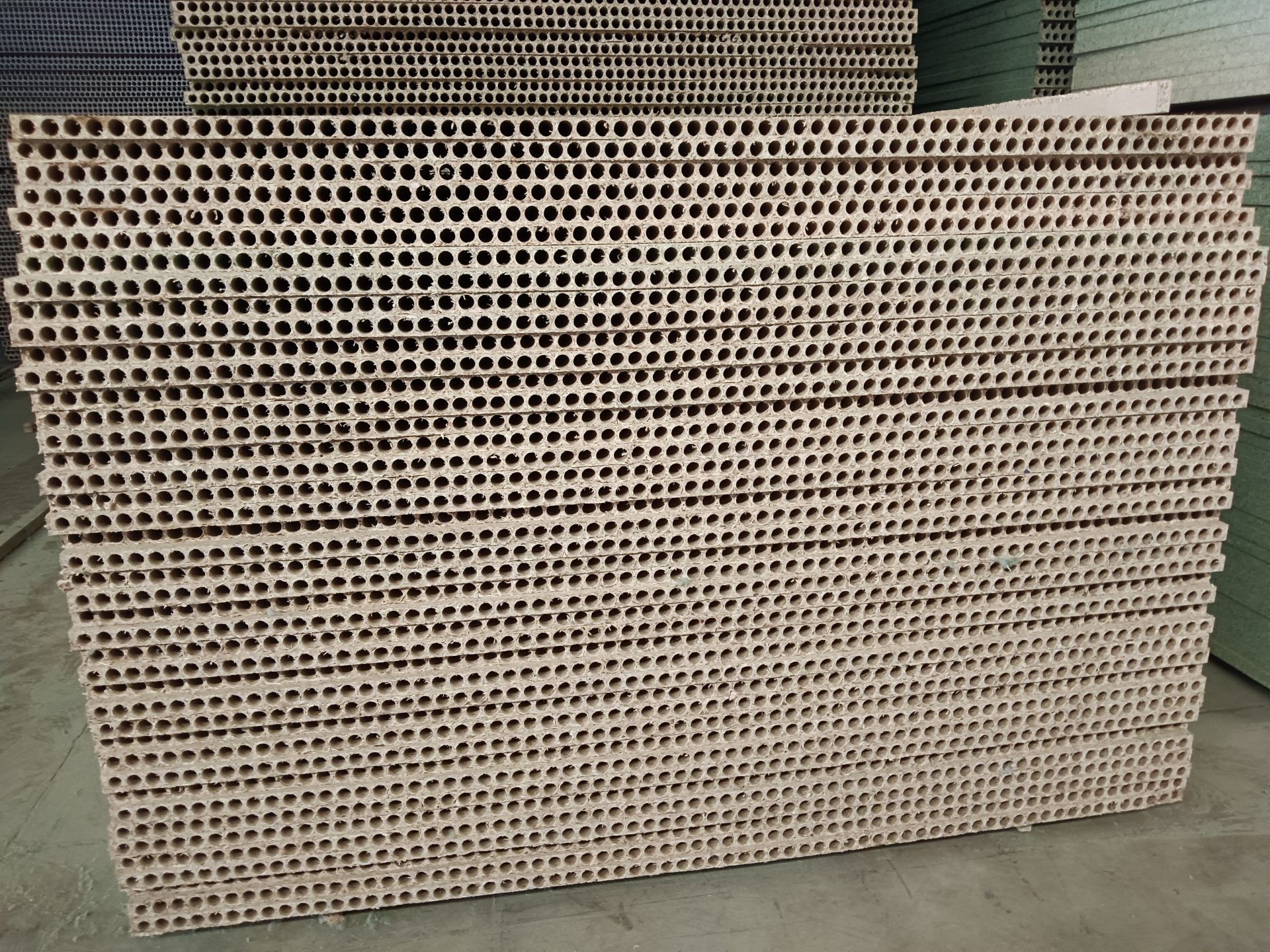
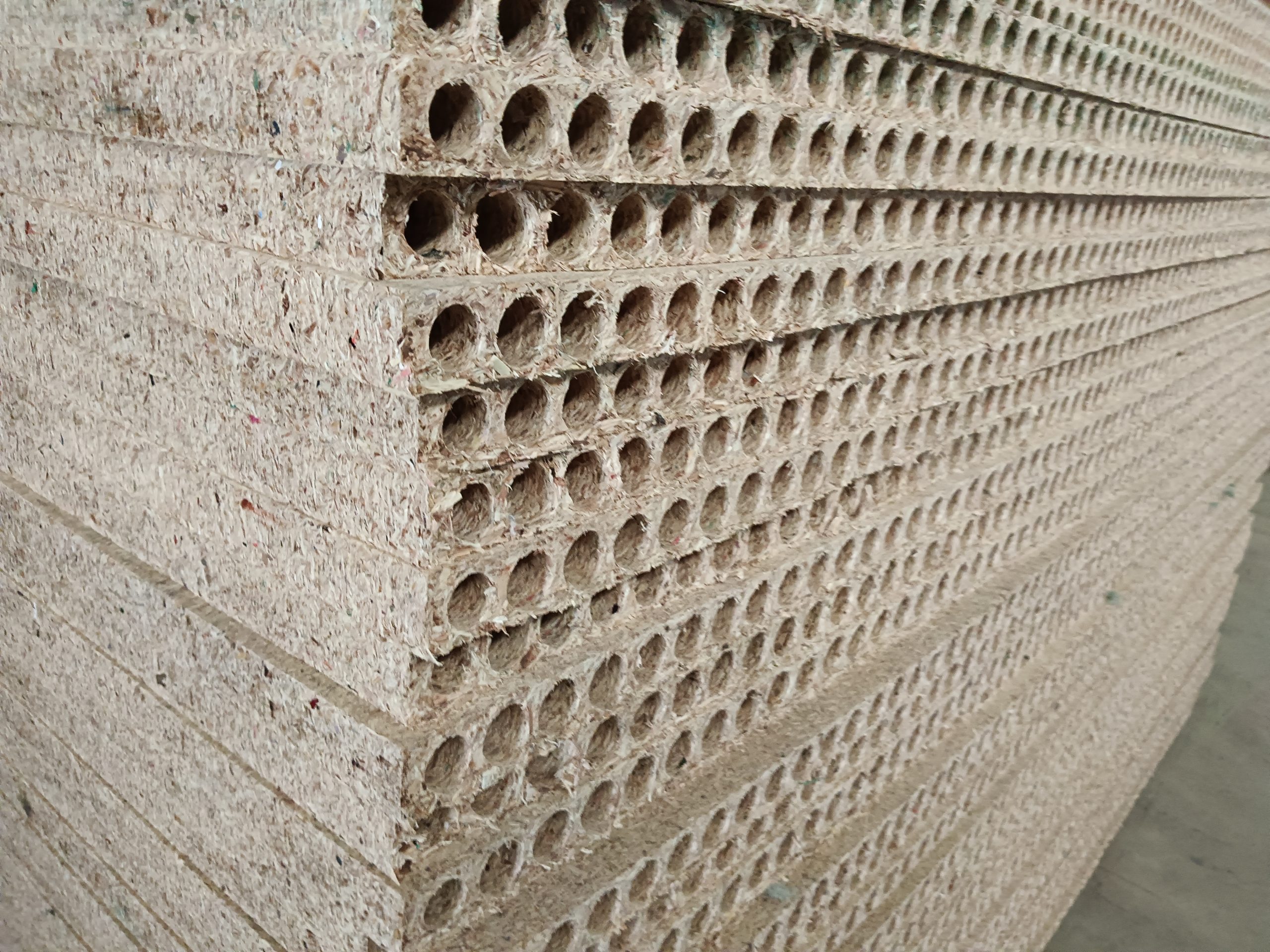
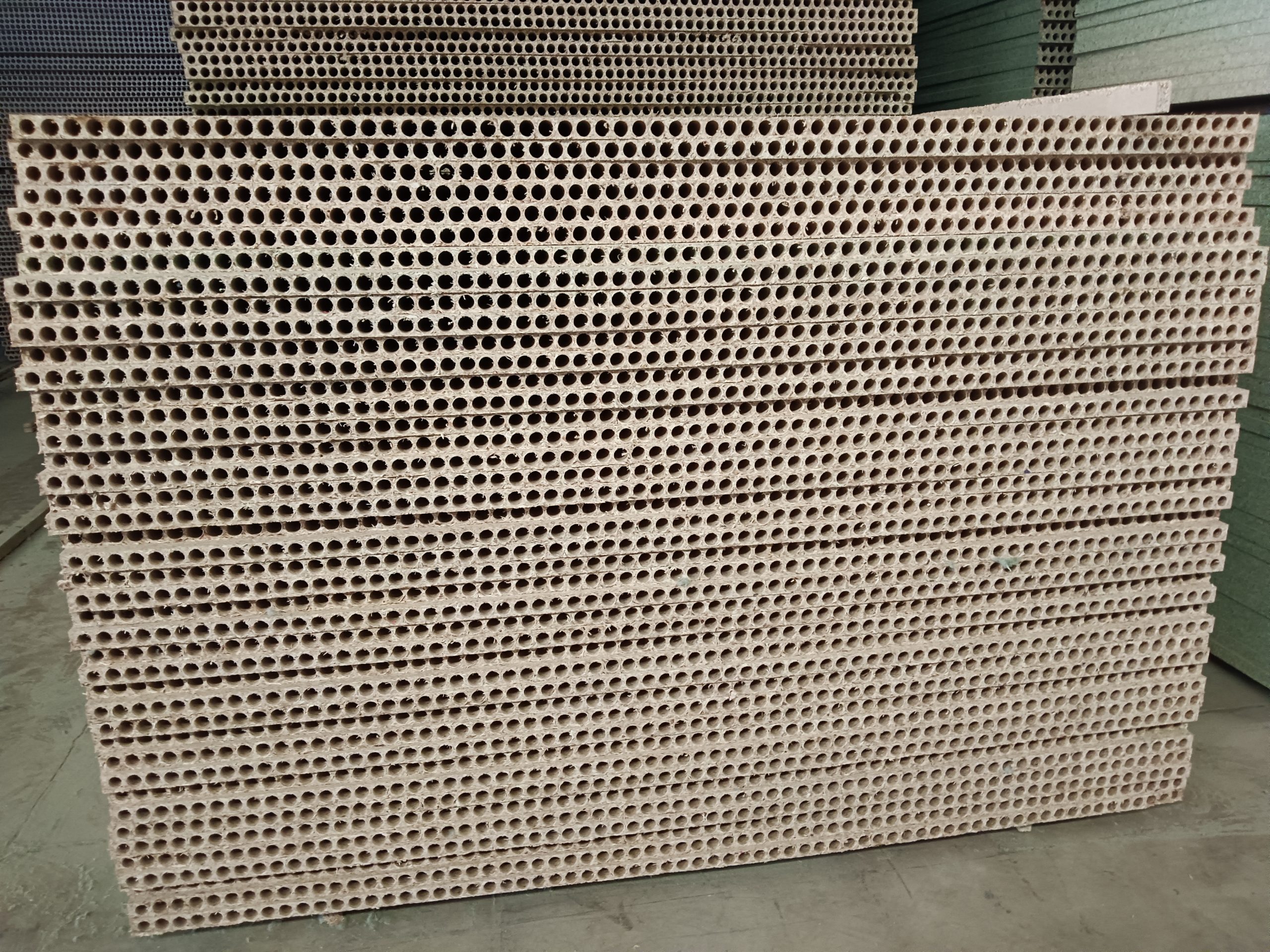
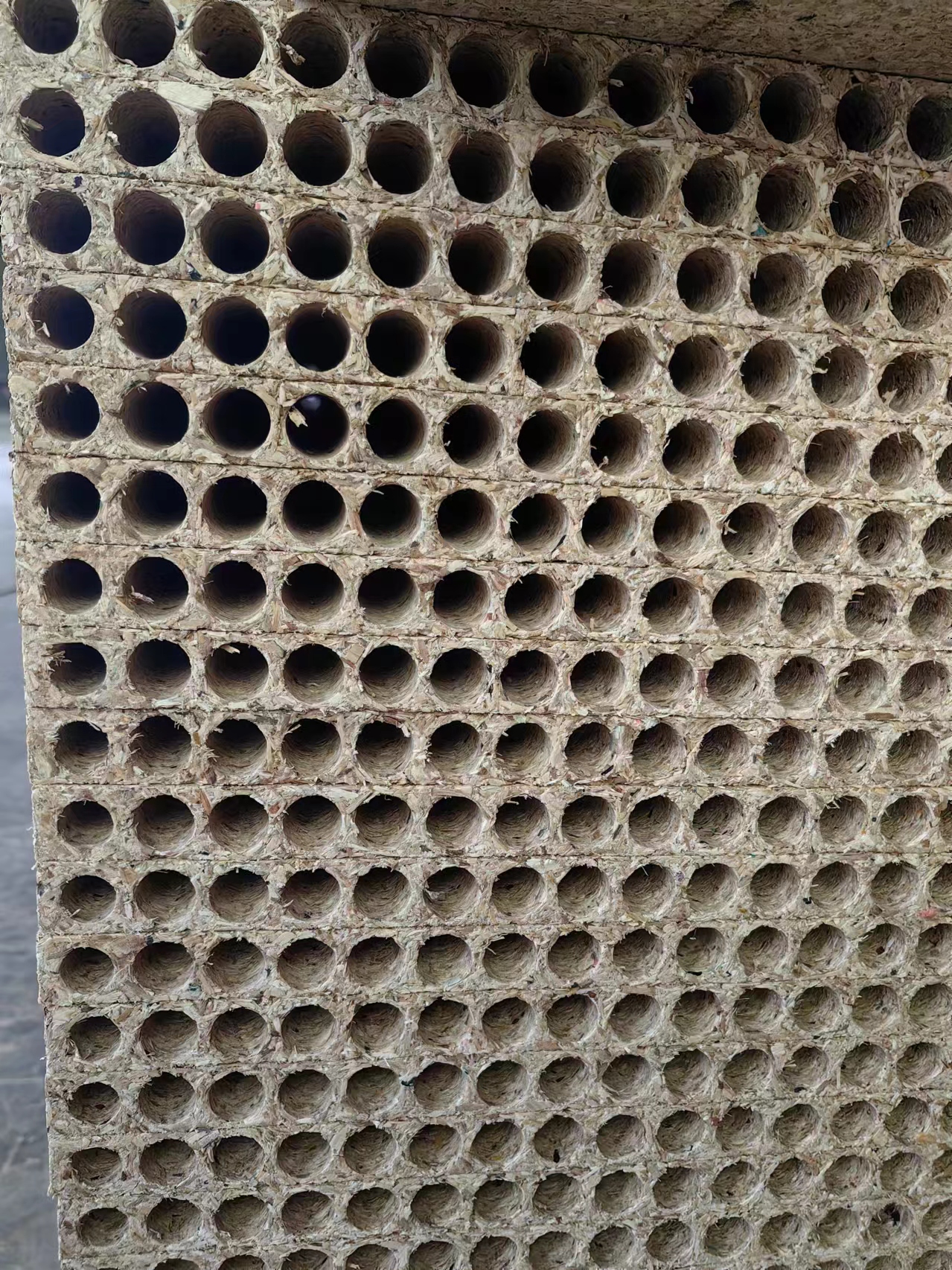
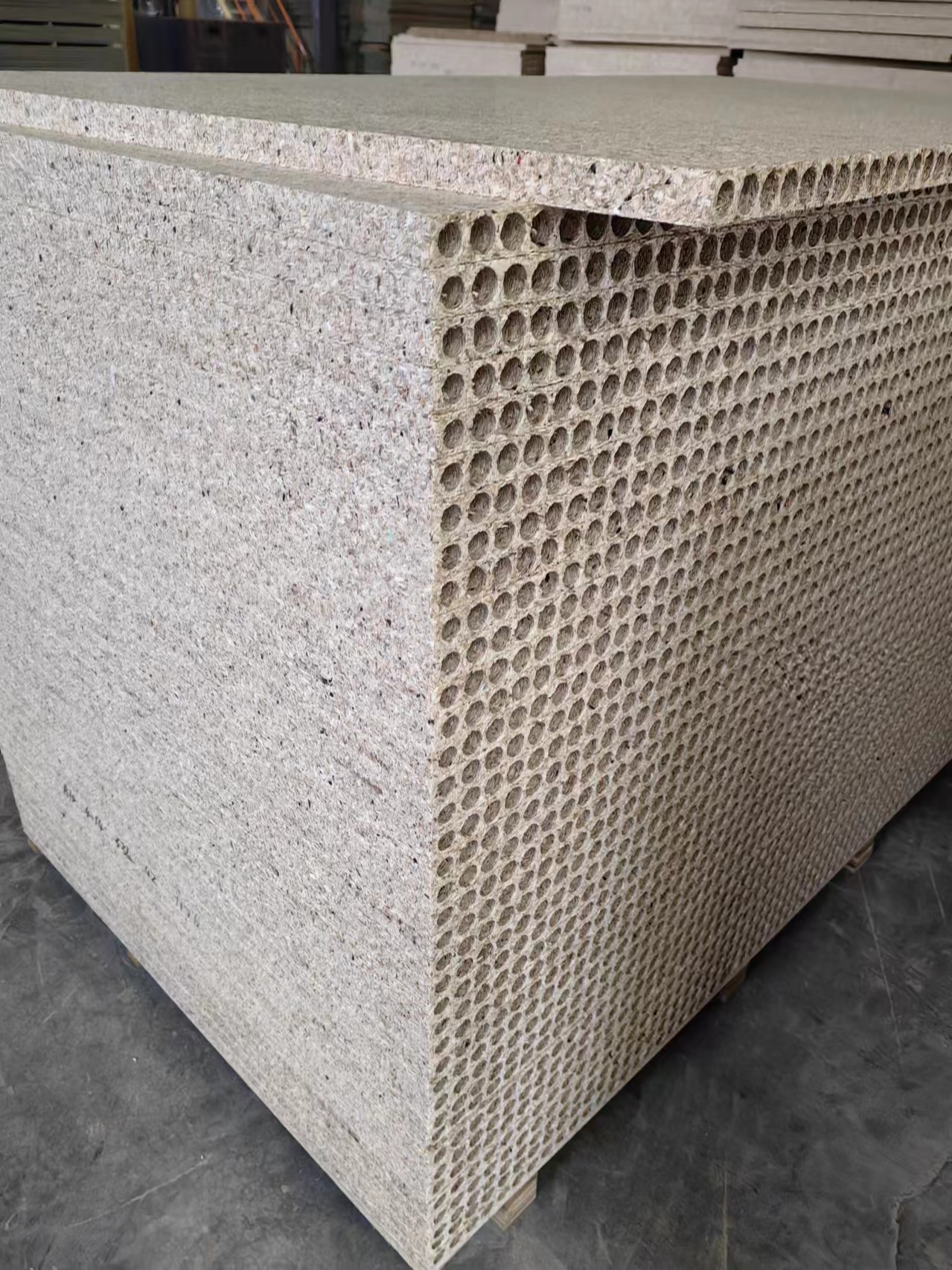
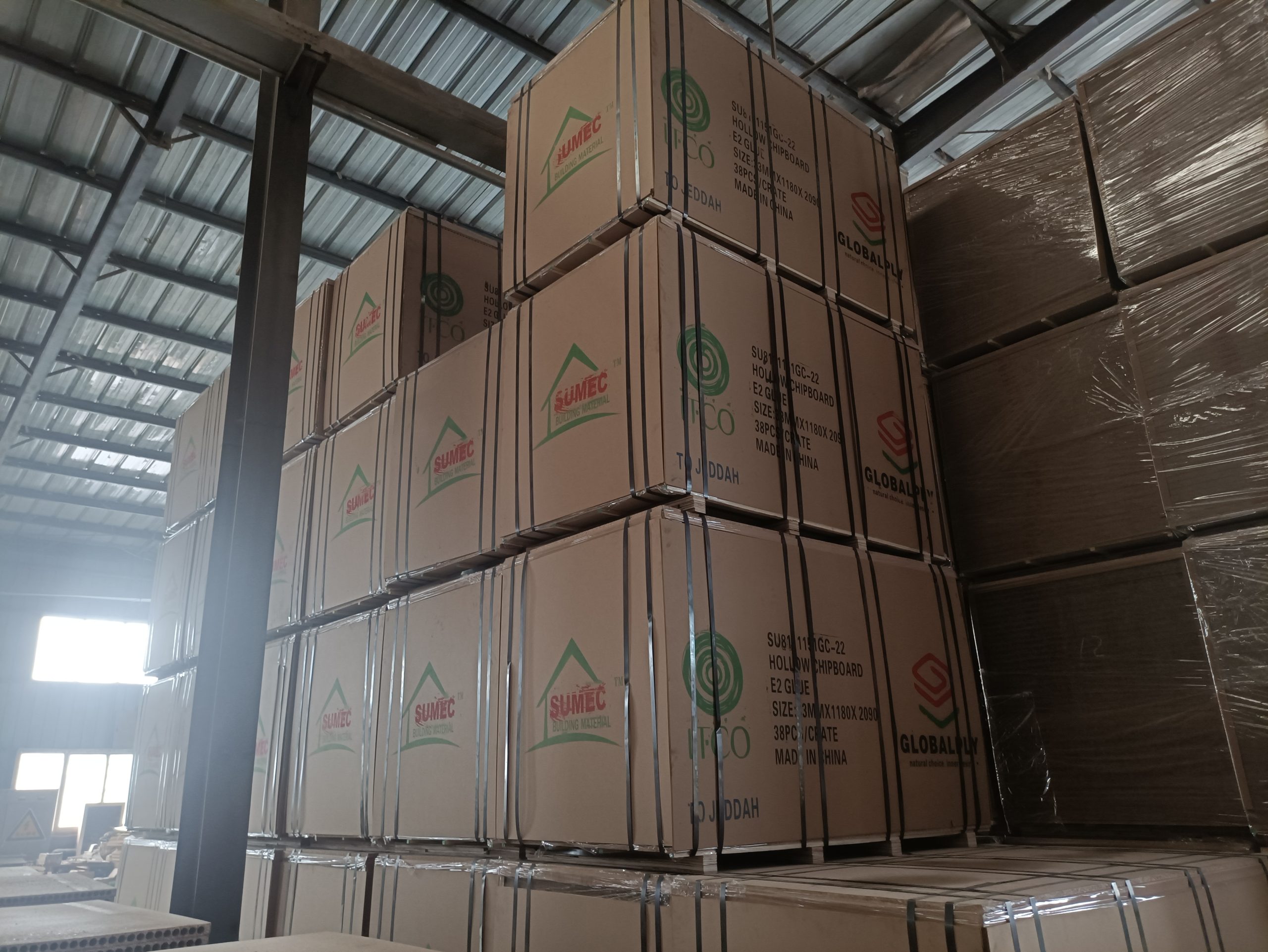
중공 칩보드는 수지와 혼합된 목재 칩을 패널로 압착하여 만든 공학 목재 제품입니다. 강도와 가벼움의 균형을 이루는 경량 중공 튜브형 코어가 특징이며, 설치가 간편합니다. 중공 구조로 되어 있어 방음과 단열 효과도 뛰어납니다. 도어 코어, 경량 가구, 인테리어 파티션 등에 널리 사용됩니다.
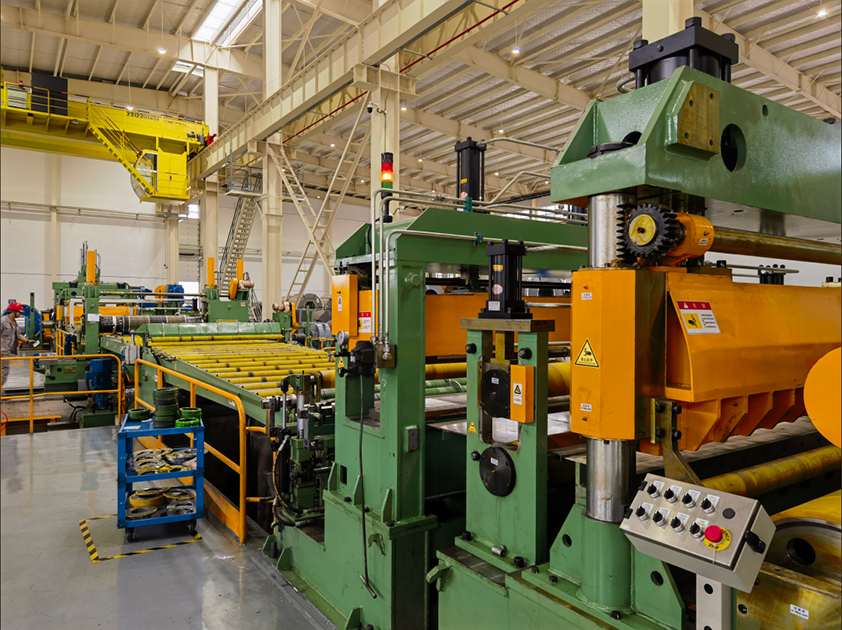
생산 프로세스
원재료 준비
- 목재 통나무, 제재소 찌꺼기, 재활용 목재 등의 원자재를 수집합니다.
- 불순물(예: 금속, 돌)을 제거하고 통나무를 떼어냅니다.
- 치퍼를 사용하여 재료를 작은 조각(길이 2~5cm)으로 자릅니다.
섬유 생산g
- 우드칩을 160~180°C의 소화조에서 20~30분간 쪄서 리그닌이 부드러워지도록 합니다.
- 부드러워진 칩을 제세동기(기계적 또는 열-기계적 공정)를 사용하여 미세한 섬유로 갈아줍니다.
섬유 건조
- 회전식 건조기에서 섬유를 건조시켜 수분 함량을 8-12%로 낮춥니다.
- 건조된 섬유를 분리하고 스크린하여 큰 입자를 제거합니다.
접착 및 첨가제 적용
- 섬유와 합성 수지(주로 요소-포름알데히드 수지)를 섬유 무게의 8-12%의 비율로 혼합합니다.
- 필요에 따라 왁스 에멀젼(방수용)과 경화제를 추가합니다.
- 블렌딩 시스템을 통해 접착제의 균일한 분포를 보장합니다.
매트 성형
- 섬유-수지 혼합물을 성형 기계로 옮깁니다.
- 두께와 밀도를 조절하여 연속적이고 균일한 느슨한 매트를 만듭니다.
프리프레싱
- 프리프레스 기계로 느슨한 매트를 압축하여 부피를 줄이고 안정성을 높입니다.
- 후속 공정에서 더 쉽게 다룰 수 있도록 반경화 슬래브를 형성합니다.
핫 프레싱
- 미리 압축된 슬래브를 다층 핫 프레스로 옮깁니다.
- 고온(180~220°C)과 압력(2.5~4MPa)을 3~10분간 가합니다.
- 열이 수지를 경화시키고 섬유를 단단한 기판으로 압력 결합합니다.
냉각 및 트리밍
- 냉각 랙이나 팬을 사용하여 뜨거워진 보드를 실온으로 식힙니다.
- 톱을 사용하여 가장자리를 표준 치수(예: 2440×1220mm)에 맞게 다듬습니다.
샌딩
- 멀티 헤드 샌딩 머신을 사용하여 보드의 양쪽 표면을 샌딩합니다.
- 부드러움과 정확한 두께(일반적으로 3-30mm)를 구현합니다.
품질 검사 및 포장
- 보드에 결함(예: 균열, 고르지 않은 밀도, 표면 결함)이 있는지 검사합니다.
- 품질 표준에 따라 적격 보드를 등급을 매깁니다.
- 보관 또는 배송을 위해 보드를 쌓고 포장합니다.
품질 관리 및 포장