
The Market Value and Industry Evolution of Anti-slip Plywood in Securing Safety Lines
In fields with strict requirements for floor anti-slip performance, such as construction, transportation, warehousing and logistics, Anti-slip Plywood is gradually becoming one of the core materials to ensure operational safety. As a functionally upgraded category of traditional plywood, the market rise of Contreplaqué antidérapant stems not only from the continuous improvement of safety standards in downstream industries but also from the iterative innovation of material technology. Its development trajectory profoundly reflects the transformation trend of the functional wood products industry from “basic application” to “precision adaptation”. With the growing popularity of safety concepts, the diverse values of Anti-slip Plywood are constantly being explored, driving a steady growth trend in its market demand.
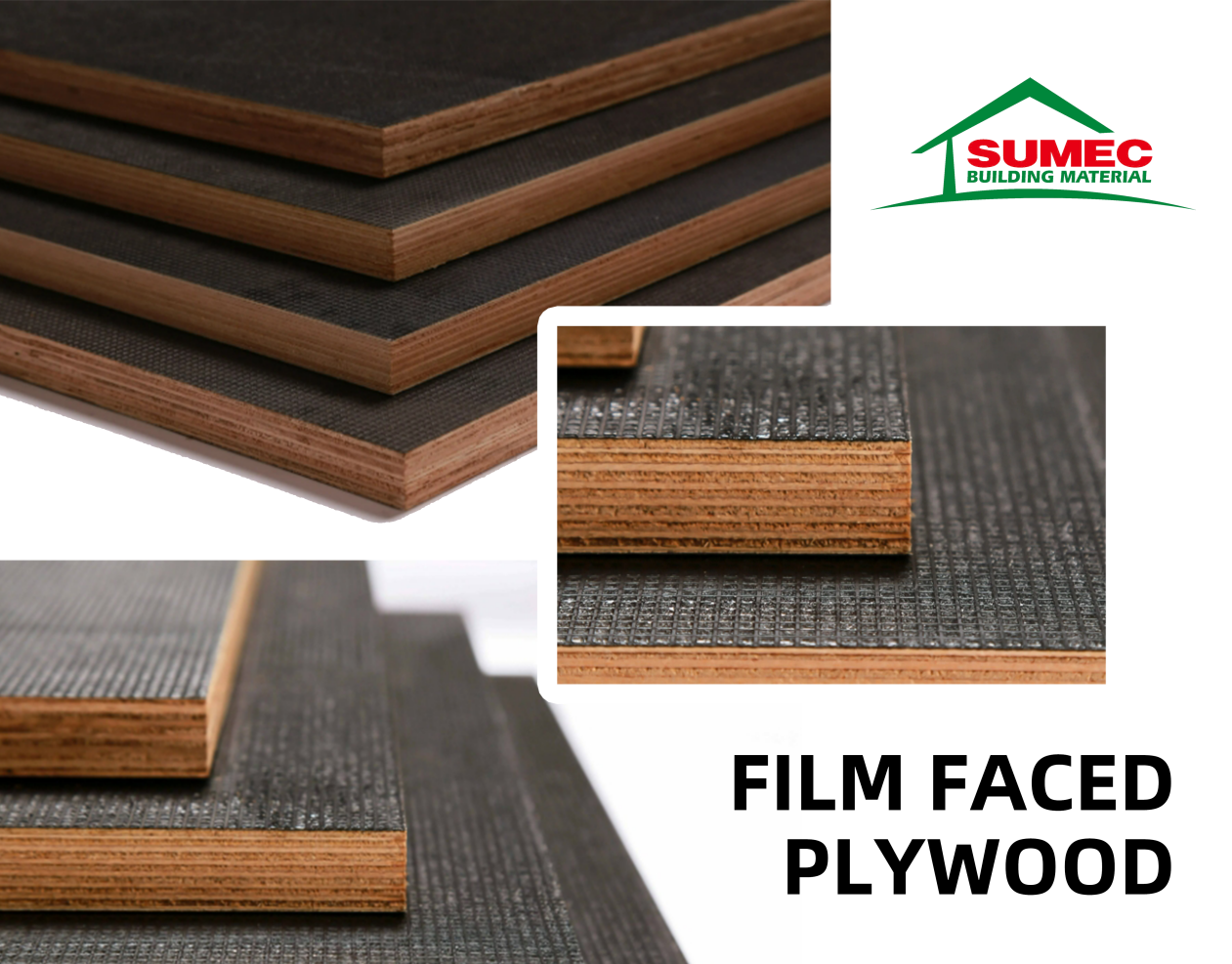
The core competitiveness of Anti-slip Plywood lies in the balanced unification of anti-slip performance and basic performance achieved through technological improvement. Compared with ordinary plywood, Anti-slip Plywood significantly increases the surface friction coefficient through processes such as surface embossing, coating treatment, and mixing special fibers, effectively solving the slip hazard in harsh environments such as humidity and oil stains. This functional improvement does not sacrifice the original advantages of plywood; it still maintains good load-bearing capacity, deformation resistance, and processing adaptability, and can be cut, spliced, and processed according to the needs of different application scenarios. More importantly, compared with other anti-slip materials such as metal and rubber, Contreplaqué antidérapant has advantages such as light weight, good environmental protection, and controllable cost. Especially in scenarios with requirements for material weight and environmental standards, it demonstrates irreplaceable competitiveness. This characteristic of “functional upgrading + advantage retention” enables it to accurately match the safety needs of diverse downstream fields.
From the perspective of the expansion of application scenarios, the market boundary of Anti-slip Plywood is constantly widening, gradually penetrating from the traditional construction field to more segmented scenarios. In the construction scenario, Contreplaqué antidérapant is widely used in key parts such as scaffolding pedals, temporary passages, and aerial work platforms, effectively reducing the fall risk of construction workers during aerial work or in humid environments, and becoming an important part of the construction safety management system. In addition, in the construction of leisure venues such as outdoor landscapes and stadiums, Anti-slip Plywood has also become the preferred material to improve the safety factor of the venue by virtue of the balance between its anti-slip performance and natural texture. The diversified expansion of application scenarios is essentially the result of the precise docking of Anti-slip Plywood with the safety needs of different industries, and also provides broad space for its market growth.
Currently, the development of the Contreplaqué antidérapant industry is facing the dual drive of technological upgrading and market standardization. At the technical level, the industry is gradually breaking through the limitations of traditional anti-slip processes, and further improving the anti-slip durability and environmental performance of products by introducing new environmentally friendly coating materials and optimizing surface treatment processes. Some enterprises have begun to explore intelligent production models, ensuring the stability and consistency of product anti-slip performance through precise control of process parameters, and solving the problem of uneven product quality caused by traditional manual processing. At the market level, with the continuous improvement of safety standards in downstream industries, the market has put forward higher requirements for the quality certification and performance testing of Anti-slip Plywood, forcing the industry to gradually establish a unified product standard and testing system. The advancement of such industry standardization not only helps eliminate low-quality products and improve the overall quality level of the industry but also enhances the trust of the downstream market in Anti-slip Plywood, laying a foundation for the healthy development of the industry.
Despite the broad market prospects, the Contreplaqué antidérapant industry still faces many challenges that need to be addressed. Fluctuations in raw material prices are a common pressure in the industry. The instability of wood prices directly affects product cost control and brings uncertainty to corporate profit margins. At the same time, due to weak technological R&D capabilities, some small and medium-sized enterprises still rely on traditional processes for production. Key indicators such as product anti-slip performance and durability are difficult to meet the needs of the high-end market, leading to a structural contradiction in the market of “fierce homogeneous competition in low-end products and insufficient supply of high-end products”. In addition, the imperfection of industry standards also brings difficulties to market supervision. Some unscrupulous enterprises disrupt the market order through false publicity and shoddy products, affecting consumers’ perception and trust in Anti-slip Plywood. In the field of international trade, environmental barriers and technical barriers also form certain restrictions on the export expansion of Anti-slip Plywood, increasing the market development costs of enterprises.