
Plywood Glue: Phenolic, Melamine, UF, and MUF Resin Systems Explained Clearly
Plywood glue holds each layer of wood together, even when things get hot, wet, or just plain old. In plywood manufacturing, you’ll find four main resin systems: Phenolic, Melamine, Urea-Formaldehyde (UF), and Melamine-Urea-Formaldehyde (MUF).
Each one brings its own strengths—bonding power, moisture resistance, and how well it stands up to being reused. All of that matters, whether you’re building furniture, a house, or something that floats.
People in wood production and materials engineering look closely at the data to pick the right glue. Phenolic resin is the go-to for outdoor and structural jobs since it’s waterproof. Melamine resin makes surfaces tougher and more durable. UF resin is a staple for interiors—it’s strong and cheap. MUF resin sits somewhere between UF and Phenolic, offering a mix of their best features.
Let’s break down each plywood glue system—where it fits, how it holds up, and what you should really consider before choosing.
Overview of Plywood Glue Systems
Plywood comes together thanks to synthetic resin adhesives that bond the thin wood layers into one sturdy panel. Each resin brings its own mix of strength, water resistance, and price—so your plywood’s performance indoors or out really depends on the glue.
Types of Adhesives Used in Plywood Manufacturing
Most of the time, plywood makers use Urea-Formaldehyde (UF), Melamine-Urea-Formaldehyde (MUF), Melamine (WBP Melamine), and Phenol-Formaldehyde (PF) glues. The differences? It’s all about their chemistry, how they handle moisture, and whether you can reuse the panels.
- UF resin bonds interior plywood. It cures fast and keeps costs down, but it’s not great with moisture.
- MUF resin mixes melamine and urea formaldehyde, so it’s better with water—good for furniture and decorative panels.
- Phenolic resin is the champion of water resistance. You’ll see it in exterior, marine, and film-faced plywood.
- Melamine resin falls in the middle and often ends up in construction-grade panels.
Each adhesive’s chemistry decides how it deals with heat, moisture, and pressure. That’s what really keeps the bond stable over time.
Role of Resin Systems in Plywood Performance
Resin systems do more than just stick things together. They decide how plywood stands up to humidity, heat, and stress. Phenolic glue keeps its strength even after boiling-water tests, thanks to its tough phenol-formaldehyde structure.
MUF adhesives fill the gap between indoor and outdoor needs. Melamine boosts crosslinking, so these panels can handle some wetness without falling apart. UF glue doesn’t have that, so it fails when things get damp for too long—definitely not for outdoors.
Manufacturers choose their resin based on what the project demands. Furniture makers lean toward UF or MUF for a smooth finish. Builders grab phenolic glue for concrete formwork, where panels get wet, dry, and roughed up over and over.
Historical Development of Wood Adhesives
Early plywood makers used animal and plant glues, but those didn’t last in humid climates. Synthetic adhesives showed up in the early 1900s and quickly took over, creating much stronger bonds with wood fibers.
Urea-formaldehyde became the standard in the 1930s—it cured fast and was cheap. Later, adding melamine improved water resistance, giving us MUF resins for furniture and construction.
Phenol-formaldehyde adhesives were developed for military and marine uses, and they brought real weather resistance. These advances laid the groundwork for today’s plywood, where resin systems are dialed in to match strength, moisture resistance, and environmental rules.
Phenolic Resin Glue for Plywood
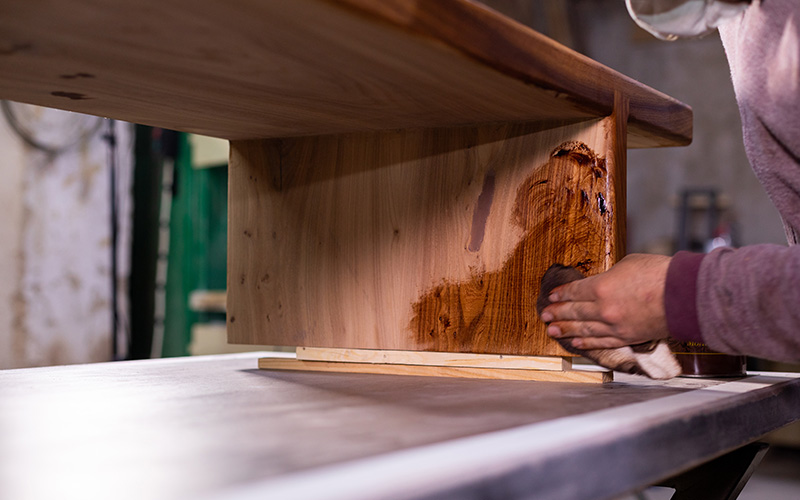
Phenolic resin glue relies on phenol-formaldehyde chemistry to make plywood bonds that can handle water and stress. It cures under heat and pressure, so you get panels ready for structural, exterior, and marine uses—basically anywhere you need serious stability.
Manufacturing Process and Application
To make phenolic resin glue, manufacturers react phenol with formaldehyde under controlled conditions. This creates a thermosetting resin that locks in place when heated.
During plywood production, they coat the veneers with the liquid resin and stack them with the grain running in different directions. Then, they press the stack at roughly 120–150°C with a lot of pressure until the glue cures. Once it sets, the resin won’t melt or dissolve, so the layers stay bonded for good.
You’ll find phenolic adhesives in film-faced plywood, marine plywood, and formwork boards—spots where water or concrete are always in play. Thanks to their chemical resistance and heat stability, they also show up in structural panels, laminated veneer lumber (LVL), and outdoor furniture that needs to survive wet or humid weather.
Key Advantages of Phenolic Adhesives
Phenolic adhesives stand out for their long-term water resistance. The cross-linked structure keeps moisture out, so plywood keeps its bond even after repeated soaking and drying.
They’re also tough against heat and chemicals, letting panels survive harsh production and repeated concrete casting. Since the cured resin is rigid and stable, plywood resists delamination and warping as time goes on.
Phenolic bonds meet strict formaldehyde standards (E0–E1 range) after curing, since most formaldehyde gets used up during the reaction. That makes phenolic systems a good pick for indoor air quality. Sure, they need higher press temperatures than urea-based glues, but the payoff is better durability and moisture resistance.
Suitability for Exterior and Structural Use
Phenolic resin glue meets the water-boil-proof (WBP) standard, so it’s perfect for exterior and marine-grade plywood. It keeps its strength even after boiling—meeting international specs for load-bearing and outdoor panels.
In structural grades, phenolic-bonded plywood supports beams, floors, and formwork where other adhesives would just give up. You can even reuse these panels up to 25 times in shuttering, if you treat them right.
The cured glue shrugs off fungi and bacteria, so there’s less maintenance in humid places. Its weather resistance means plywood stays the right size even in rain, sun, or steamy factories—making it a solid choice where you just can’t risk failure.
Melamine Resin Adhesives: Uses and Properties
Melamine resin adhesives bond wood panels and laminates by creating a rigid, cross-linked network. They offer solid thermal stability, moisture tolerance, and a long service life for engineered wood—handy for both structural and decorative uses.
Melamine Glue Composition
Melamine glue is built from melamine-formaldehyde resin, which forms when melamine reacts with formaldehyde. The result? A network of bonds that harden up when heated. Once cured, it’s a thermoset, so it keeps its shape and strength after cooling down.
Manufacturers often add a bit of urea or other tweaks to cut costs or speed up curing. Fillers, hardeners, and catalysts help fine-tune the glue for production. The melamine-to-formaldehyde ratio affects bond strength, shelf life, and how it deals with moisture or heat.
- Melamine: Cross-linking agent
- Formaldehyde: Makes the polymer network
- Urea/modifiers: For cost and property tweaks
- Catalysts/hardeners: Control how fast it cures
- Fillers (optional): Improve how it spreads and handles
Each ingredient matters, shaping how the glue performs during production and in real-world use.
Benefits and Limitations
Melamine adhesives beat urea-formaldehyde glues when it comes to moisture resistance and hardness. Their cross-links make them more stable, so they work in humid spots and light exterior jobs. Plus, they don’t mind heat or most cleaning solvents.
But, they need the right temperature and pressure to cure properly. If you mess that up, the bond weakens. Melamine glues cost more than urea-based ones, so people use them where the extra durability is worth it. They can release small amounts of formaldehyde, so factories usually have ventilation or emission controls in place.
It’s always a balance—cost, performance, and emissions—when deciding if melamine glue is the right fit for your production line.
Moisture Resistance and Application Areas
Melamine resin adhesives fight off swelling, delamination, and bond failure when things get damp. Their polymer network keeps water out, helping plywood keep its shape and strength. For even more protection, melamine-urea-formaldehyde (MUF) glues blend melamine’s water resistance with urea’s affordability.
Where do these glues show up?
- Plywood and blockboard for inside or semi-outdoor uses
- Laminates and veneers where you need a stable bond at higher temperatures
- Furniture and flooring panels that deal with humidity or regular cleaning
Since these adhesives hold up after getting wet again and again, manufacturers pick them for products that need to look good and stay strong—no matter what the weather or cleaning crew throws at them.
Urea-Formaldehyde Resin in Plywood Production
Urea-formaldehyde (UF) resin is everywhere in interior-grade plywood. It’s cheap, cures fast, and dries clear. You get good strength and smooth surfaces, which is just what you want for furniture and decorative panels.
Chemical Structure and Curing Process
UF resin starts with a reaction between urea and formaldehyde, creating a thermosetting amino resin. It all kicks off with a condensation reaction under alkaline conditions to form a prepolymer.
Later, switching to acidic conditions triggers crosslinking, which locks the resin into a rigid, three-dimensional network. During curing, heat and pressure help the molecules form methylene and ether linkages between urea units.
This reaction releases water and sometimes a bit of formaldehyde gas as by-products. Once cured, the resin turns hard and infusible, gripping wood fibers tightly.
The usual curing temperature for plywood falls between 110°C and 130°C, though it depends on the resin formula and board moisture. UF resin keeps pressing times short, which speeds up mass production of plywood sheets.
- Molar ratio (formaldehyde:urea): 1.0–2.0
- Cure temperature: 110–130°C
- Press time: 3–6 minutes
- Solubility before curing: Water-soluble
Strength and Bonding Characteristics
UF resin bonds to wood in two ways: chemical adhesion with wood’s hydroxyl groups and mechanical interlocking in the wood’s pores. These interactions keep the adhesive line thin, which saves material and spreads stress evenly.
Dry shear strength usually hits or tops 1.0 MPa—good enough for interior plywood. But, the bond weakens fast when exposed to moisture because the UF network soaks up water and eventually breaks down.
Manufacturers tweak the resin’s molar ratio or add fillers like clay minerals or cellulose powder to boost toughness and cut down on cracking. They also control press temperature and adhesive spread rate to improve bond reliability and surface finish.
Environmental Considerations
Formaldehyde emissions remain the main concern with UF resin. Unreacted formaldehyde in the polymer network can escape over time, especially when it’s warm or humid.
Modern resins use low formaldehyde-to-urea ratios or scavenger additives to trap free formaldehyde. These tweaks help meet standards like E1 (≤0.124 mg/m³) under European rules.
UF resin is cheap and popular, but it doesn’t handle moisture well and needs emission controls. If humidity’s a big deal, manufacturers often move to phenol-formaldehyde or melamine-urea-formaldehyde systems, which keep bonds strong and meet stricter air quality rules.
Melamine Urea-Formaldehyde (MUF) Resin Systems
Melamine urea-formaldehyde (MUF) resins blend melamine-formaldehyde’s moisture resistance with urea-formaldehyde’s lower cost. Woodworking and panel industries use them when they need reliable bonding in humid or unpredictable environments.
Comparative Performance of MUF Glue
MUF glue forms by co-polycondensation of melamine, urea, and formaldehyde. Each ingredient brings something useful:
- Melamine—boosts water resistance
- Urea—keeps production costs down
- Formaldehyde—delivers crosslinking strength
Unlike regular UF resins, MUF keeps its adhesive strength even when things get damp. Melamine’s ring structure stands up to hydrolysis, so MUF-bonded plywood doesn’t give off as many volatile compounds after curing.
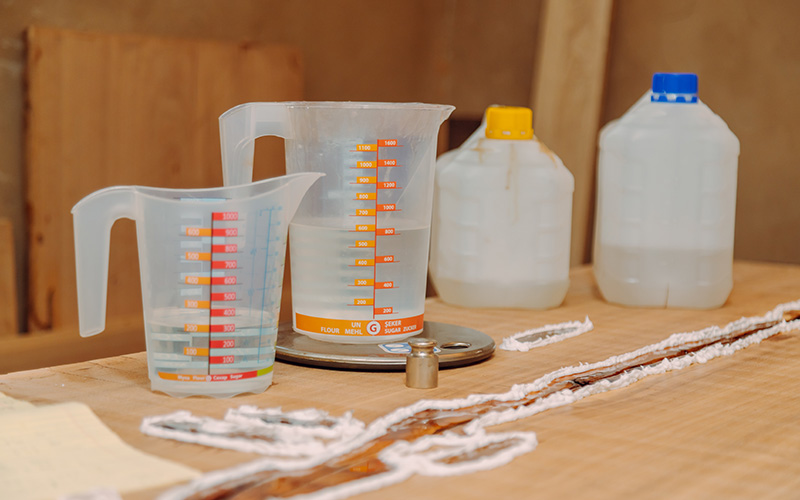
Tests show MUF’s bond durability in wet cycles often doubles that of UF adhesives under the same conditions. MUF also cures at lower temperatures than phenolic resins, making it easier for medium-density panel production. You can tweak its curing by playing with pH and the melamine-to-urea ratio during synthesis.
Applications in High-Durability Panels
Manufacturers go for MUF adhesives when they need moderate water resistance but don’t want to pay for full-on phenolic glue. You’ll see it in interior-grade plywood, blockboard cores, and furniture laminates that might get a little humid now and then.
MUF-bonded plywood does better than UF panels in bond-line integrity during cold-water and boil tests, but it’s still more affordable than pure melamine-formaldehyde resins. Its use picked up when formaldehyde emission rules got tighter, since you can meet lower release standards by adjusting the formaldehyde-to-urea molar ratio.
For load-bearing wood composites, MUF is handy when you want long press life, steady viscosity, and quick tack. Since you can use the same equipment as UF resin, switching to MUF barely disrupts pressing and mixing routines.
Customization and Blending Options
MUF systems let you tweak the formula. Change the melamine content a bit and you shift the balance between cost, cure speed, and durability.
If you use 20–25% melamine, you’re set for interior jobs. If you go higher, you get better wet strength for semi-exterior panels.
Additives like citric acid, buffering salts, or catalysts help fine-tune the cure speed and pH stability. Sometimes, manufacturers blend MUF with phenolic resins to get both low emissions and high performance when a long service life is needed.
Big suppliers like AkzoNobel offer MUF adhesives in different viscosity grades for roll spread, curtain coating, or spray application. That versatility keeps MUF in play across furniture, flooring, and decorative laminate production lines.
Selecting the Right Plywood Glue
Each plywood adhesive has its sweet spot. The right pick depends on how you’ll use the plywood, how much moisture or heat it’ll see, and how long you want it to last.
Factors Affecting Adhesive Choice
Several factors come into play when picking a glue system. Environmental exposure tops the list. For interiors, Urea-Formaldehyde (UF) glue holds up well in controlled humidity.
If you’re working with exterior or marine panels, Phenolic Resin gives a waterproof bond that shrugs off boiling water and sunlight. Project scale and budget matter too. Melamine Urea-Formaldehyde (MUF) is a good middle ground for moderate moisture resistance and lower cost.
Some jobs, like construction formwork, use Melamine-Phenolic blends since they need to be reused a bunch of times. Temperature tolerance and press cycle also matter. MUF cures faster than Phenolic, which can speed up production, but Phenolic’s higher heat and pressure mean stronger bonds for tough environments. It’s always a balancing act between cost, durability, and what you expect from the plywood.
Performance Comparison by Application
Performance shifts a lot depending on where you use the adhesive. Here’s a quick rundown of how each resin system stacks up for typical jobs:
- UF: Low moisture resistance. Great for furniture and cabinets. Usually lasts 1–2 reuse cycles.
- MUF: Medium moisture resistance. Good for indoor formwork and general construction. Handles 4–20 reuse cycles.
- Phenolic: High moisture resistance. Stands up in exterior, marine, or industrial formwork. Can last up to 25 cycles if treated right.
In furniture and interior panels, looks and finish often matter more than holding up in wet conditions, so UF or MUF usually does the trick. For outdoor work, Phenolic adhesive keeps bonds strong even after multiple wet-dry cycles. Most builders choose based on how tough the job is, not just the glue’s price tag.
Longevity and Maintenance Implications
The glue system shapes both the service life and the maintenance needs of plywood. Phenolic resin panels usually last longer because their bond stays strong, even after lots of washing or heavy rain.
This durability can save money on upkeep over time. I mean, who doesn’t appreciate a product that just quietly does its job?
MUF products fall somewhere in the middle. Melamine boosts UF’s water resistance, so these sheets handle moderate humidity, but they can age faster if you leave them outside too much.
UF panels work fine indoors as long as they stay dry. But if you get leaks or condensation, they’ll start to break down pretty quickly.
If you want your panels to last, it’s worth inspecting them regularly and storing them right. Dry stacking and sealing the cut edges help keep water out, which protects the glue—no matter which resin you picked.
En savoir plus sur nos produits ?
Contact