
Concrete Forming Plywood: Overlay Types, Strength Grades, and Applications
Concrete forming drives cost, finish, and schedule on a job. About half of concrete work costs sit in formwork, so panel choice shapes profit and rework.
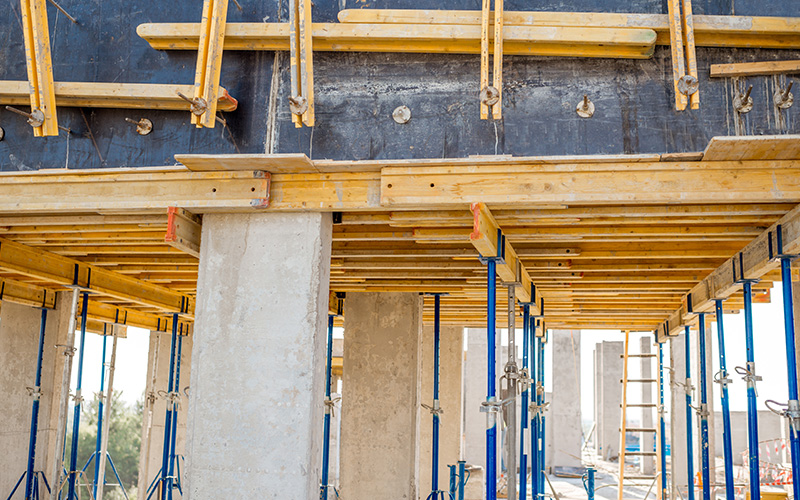
Panels need to handle wet concrete pressure, release agents, and repeat use. Regular plywood just can’t cut it here.
Concrete forming plywood uses engineered overlays and defined strength grades to control surface finish, reuse count, and load capacity during concrete pours. HDO and MDO add resin-treated overlays because the sealed surface limits moisture absorption, which helps concrete release cleanly.
In practice, this means fewer surface defects and more pours per panel. Overlay type, strength grade, and panel care all play a role in matching panels to walls, slabs, and architectural concrete—without breaking the bank.
Core Types of Concrete Forming Plywood (The Technical Breakdown)
Concrete forming plywood comes in three main types. Each type differs by face treatment, surface finish, and reuse life, which directly affects cost, labor, and concrete surface quality.
B-B Plyform (The Standard Choice)
Definition: B-B plyform is oil-treated form plywood with no overlay, using B-grade faces and a solid wood core.
- Construction: It uses hardwood plywood veneers with B-grade faces and C-grade inner plies. The wood grain stays exposed since there’s no overlay.
- Surface Result: The bare wood face transfers grain lines to the concrete. You’ll see visible texture—fine for foundations and basement walls.
- Treatment: Mills oil-treat the panels to slow water absorption. This helps with swelling during short pours, but surface wear still happens.
- Reuse Life: Expect 5–10 pours if handled carefully. Fewer pours means replacing panels more often.
- Common Uses: Contractors pick this when appearance doesn’t matter much, but budgets do.
MDO (Medium Density Overlay)
Definition: MDO plywood uses a resin-impregnated fiber overlay with about 34% resin content bonded to one or both faces.
- Overlay Design: The medium-density overlay seals the surface. Resin fills the fibers and blocks moisture entry.
- Surface Result: It gives a matte finish with no wood grain transfer. That means cleaner walls and less patching.
- Release Behavior: Most panels come factory-treated with a release agent, so stripping is easier.
- Reuse Life: Reuse can hit up to 20 pours if you keep the edges sealed.
- Applications: MDO plywood fits commercial slabs, walls, and repeat-use formwork where finish consistency matters.
HDO (High Density Overlay)
Definition: HDO plywood uses a high-density overlay with 50% or higher resin content on the panel face.
- Overlay Design: The thick resin layer makes a hard, non-porous surface. This helps limit abrasion from concrete fines.
- Surface Result: You get a glossy, steel-form finish on concrete. That means less grinding or skim coating after stripping.
- Durability: The dense overlay resists water and cement paste better than MDO. Still, edges need sealing.
- Reuse Life: Panels often last 20–50+ pours, depending on handling and form pressure.
- Applications: HDO plywood works great for high-cycle form ply systems, columns, and architectural forming setups.
Understanding Strength Grades: Class I vs. Structural I
Concrete forming plywood falls under structural plywood standards set by the APA. Two common strength grades are Class I Plyform and Structural I Plyform.
Class I Plyform uses Group 1 wood species on the face veneers. Group 1 species have high stiffness values. The faces resist bending, so the panel holds its shape under normal concrete pressure.
Class I works well for wall forms, footings, and slabs with moderate pour heights. It’s a solid choice for general forming.
Structural I Plyform uses Group 1 species throughout the entire panel, not just on the faces. This boosts strength both along and across the panel.
Every ply adds to load resistance, so the panel can handle higher pressures before deflection. That means fewer form failures during tall or fast pours.
Structural I is the go-to for high-pressure pouring, like tall walls or rapid concrete placement. The higher internal strength helps keep forms aligned and surfaces looking good.
Selection Framework: How to Choose?
Selection depends on the finish you want, how many pours the panels need to survive, and the site’s exposure to moisture and weather. Each factor affects overlay type, panel grade, and cost per pour.
Factor 1: Desired Finish
The surface finish you need sets the baseline for plywood choice. Architectural concrete and decorative concrete call for smooth, uniform faces. Builders usually go with film-faced plywood or phenolic plywood since the resin film keeps grain from showing through.
That means fewer defects after pouring and less patching. Standard plywood works for structural concrete where appearance isn’t a big deal. Its open grain can imprint on concrete, which is fine for foundations or hidden walls.
For exposed work, overlays like HDO or MDO reduce surface marks. The resin layer creates a sealed face, so the concrete meets visual specs without extra coatings or grinding.
Factor 2: Project Scale & Pours
Project size decides how many times panels get reused. A small residential pour might only need standard plywood, used once or twice.
Large commercial jobs often require 20 or more pours, so cost per use matters more. Film-faced plywood stands up to repeated pours because the phenolic film resists abrasion and moisture.
The overlay slows down surface wear, letting panels last longer. That spreads the purchase cost over more pours. Here’s a quick comparison:
Factor 3: Environmental Exposure
Exposure during the build changes panel life. Short indoor jobs put less stress on panels. Outdoor or longer projects need better resistance.
Phenolic plywood uses water-resistant resin bonds and sealed faces. Moisture doesn’t get in as easily, so there’s less swelling and edge damage.
Panels stay flatter during long pour cycles. In wet or humid climates, sealing edges and using the right release agents matter a lot. Even the best overlay can’t save a panel if water hits the core.
Maintenance & Best Practices for Longevity
Panels last longer when crews control bond release, block water at the edges, and handle them with care after each pour. These steps limit surface wear, edge swelling, and face checking, which all affect reuse count and concrete finish.
Using Release Agent Correctly
Apply a thin, even film of release agent before each pour. A light coat creates a barrier and keeps cement paste from sticking to the overlay.
You’ll get cleaner stripping and less face damage. Don’t overdo it—too much oil stains concrete and attracts grit, which scuffs the panel. Mill-oiled panels usually just need a light recoat between uses.
- Use agents approved for overlays and project specs.
- Spray or roll, then wipe off puddles.
- Reapply after cleaning or surface repairs.
Getting this right keeps the face intact and helps panels stay flat for more pours.
Edge Sealing to Prevent Water Absorption
Seal all exposed edges with a water‑resistant edge sealer. Plywood edges suck up moisture faster than faces because the end grain is open.
When water gets in, edges swell and can delaminate or mess up panel fit. Edge sealing blocks this, so panels keep their size and line up better during setup.
Many panels ship oiled and edge‑sealed (OES), but cuts or damage reopen the edge and need resealing.
- Reseal after cutting to size
- Reseal after edge repairs
- Reseal when coating wears off
Consistent edge care protects the bond lines and keeps panels in service longer.
Cleaning and Storage Recommendations
Clean panels soon after stripping. Fresh residue comes off easier and causes less abrasion. Use plastic or wood tools—metal scratches overlays and chips edges.
Clean, then spot-repair and recoat before the next use. Store panels flat, face-to-face and back-to-back. That slows drying and helps prevent face checking.
Keep stacks out of sun and rain, or cover loosely to let air flow without trapping heat.
- Don’t drop panels.
- Lift to avoid corner damage.
- Stack in small bundles for transport.
These habits cut down on surface wear and edge damage, so you get more pours and a better finish each time.
Summary / Comparison Table
Concrete forming plywood comes in several types, with differences in overlay, strength grade, and how many times you can reuse each panel.
The overlay affects how well the surface resists wear and moisture. The core grade controls how stiff the panel stays under wet concrete loads.
These details impact finish quality, panel life, and overall job cost.
| Type | Initial Cost | Reusability | Finish Quality |
| HDO (High Density Overlay) | High | 50+ pours | Smooth, steel-form look |
| MDO (Medium Density Overlay) | Medium | 20–40 pours | Uniform, matte |
| Film-Faced (Phenolic) | Medium | 15–30 pours | Smooth, slight texture |
| Plyform / Exterior Plywood | Low | 5–15 pours | Visible wood grain |
HDO panels use a resin-heavy fiber overlay bonded with heat and pressure. That extra resin helps them shrug off abrasion and water for longer stretches.
Fewer panel swaps and a consistent finish—those are the perks you notice over many pours.
MDO uses a similar idea but with less resin in the overlay. It still keeps out moisture, but it wears down a bit faster.
This type finds a sweet spot between cost and reuse when a matte or painted concrete face is fine for the job.
Film-faced panels have a phenolic film sealed to the surface. The film blocks water and cement paste, making release easier.
Faster stripping and less cleanup—hard to argue with that.
Core strength matters a lot too. Panels made for concrete forming use exterior-type glue, so they keep their bond when wet.
They stay stiff during placement and vibration. That’s critical for a clean pour.
Frequently Asked Questions
How do the strength grades of plywood impact its suitability for concrete forming applications?
Strength grades describe the quality of face and core veneers—think B-B, B-C, or Structural I. A B-grade face has fewer knots and voids, so you get a smoother concrete surface after stripping.
Structural I panels use Group 1 wood species and tighter build rules. This lets them resist bending under heavy concrete pressure.
Tall walls or big pours? These panels rarely let you down.
What are the specifications to consider when selecting MDO plywood for concrete forms?
MDO plywood uses a resin-fiber overlay on one or both faces. That overlay slows down moisture absorption and helps the surface last longer through repeated pours.
Most MDO panels use B-grade faces and C-grade inner plies. It’s a practical balance—smooth finish, manageable cost, and decent reusability for job sites that don’t need extreme durability.
In what applications is 3/4 HDO plywood most effectively used in concrete forming?
3/4 inch HDO plywood brings extra stiffness thanks to its thickness and dense overlay. The hard resin surface stands up to abrasion from aggregate and vibration.
This combo makes it ideal for vertical walls, columns, and high-pressure pours. It holds its shape well, especially when forms stay loaded for a while.
How does 1/2 inch HDO plywood perform compared to other thicknesses in concrete formwork?
1/2 inch HDO plywood feels lighter in your hands and flexes more than thicker options. That thinner size just can’t take as much pressure before it gives.
This plywood really shines in light-duty forms or when you need to create curves. It’s easier to move around, but you’ll need to watch your spacing and keep pour heights lower.
En savoir plus sur nos produits ?
Contact