
Sheathing vs Structural Plywood: Engineering Properties & Uses
People often toss around “sheathing” and “structural plywood” like they’re the same thing, but that’s not quite true. Plywood starts as thin wood veneers, layered in alternating directions, then pressed together with adhesives.
This cross-layering controls how strong and stiff the panel is, and how much it moves. Sheathing describes the role a panel plays in construction, while structural plywood refers to its tested performance.
Some plywood panels carry and transfer loads, while others mainly just cover framing and spread out forces. Let’s break down ratings, span labels, exposure grades, and how building codes actually treat wood panels.
That way, you can match the right panel to your project, not just pick by name.
What Is Sheathing in Construction?
Sheathing is the board layer you attach to wall studs, roof rafters, or floor joists. It goes over framing to create a flat surface for siding, roofing, or flooring.
This layer doesn’t just sit there; it adds structural stability. Nailing or screwing sheathing panels to framing at set intervals helps the structure resist racking from wind or earthquakes.
That’s why your walls stay square instead of twisting when the wind blows sideways. Most sheathing uses either contreplaqué or oriented strand board (OSB).
Plywood uses cross-layered veneers, which limits expansion across the panel. That means it can handle short bursts of moisture with less swelling at the edges.
OSB, on the other hand, uses compressed wood strands and resin, giving it consistent strength for wall bracing—usually at a lower price.
Some projects use non-structural sheathing like fiberboard or foam panels. These add insulation or moisture control, but they don’t resist racking, so you have to pair them with structural panels to meet code.
Sheathing also acts as the base for weather barriers. You install house wrap or integrated systems right over it, since the flat surface makes it easier to seal seams and reduce air leaks.
Common sheathing roles:
- Bracing for walls, roofs, and floors
- Base for cladding and roofing
- Support for air and moisture control layers
What Is Plywood Sheathing?
Plywood sheathing is simply plywood used as a structural skin on walls, roofs, or floors. It ties studs, rafters, and joists together into a single system.
Manufacturers make sheathing plywood from cross-laminated wood veneers bonded with phenolic resin adhesives. Each layer’s grain runs at a right angle to the next, so loads spread across the whole panel instead of following one grain line.
This keeps warping down and makes stiffness more predictable. Most plywood sheathing follows APA Rated Sheathing standards and comes in common thicknesses like 3/8 in., 1/2 in., and 5/8 in.
Thicker panels handle bending better, letting you meet span and wind-load needs without extra framing. Sometimes, plywood sheathing doubles as plywood siding, acting as both structure and exterior finish—but then you’ll need to seal and flash it properly since it faces the weather.
Let’s clear up the terms:
| Term | What it means |
| Sheathing plywood | Plywood chosen for use as sheathing |
| Plywood sheathing | The installed panel on walls, roofs, or floors |
| Plywood siding | Sheathing that also serves as exterior siding |
Plywood sheathing holds up better than OSB when it comes to short-term moisture, since veneer layers dry out faster. That means less swelling at the edges if it gets wet for a bit.
What Does “Structural Plywood” Actually Mean?
When you see structural plywood, it’s not about looks—it’s all about performance under load. It’s meant to be part of the structural components of a building, not just a pretty face.
Structural plywood meets standards like AS/NZS 2269 or similar codes. These standards make sure the panel can handle certain loads, resist bending, and stay stable over time.
Manufacturers glue thin wood veneers together, with each layer’s grain running at right angles. This keeps the panel from warping and spreads loads more evenly.
Adhesive matters too. Structural plywood uses A-Bond or B-Bond phenolic adhesives that stand up to moisture. That way, the glue line holds up even when things get humid.
Common traits of structural plywood:
- Rated for load-bearing use
- Made for structural applications like walls, floors, and roofs
- Tested for stiffness, strength, and durability
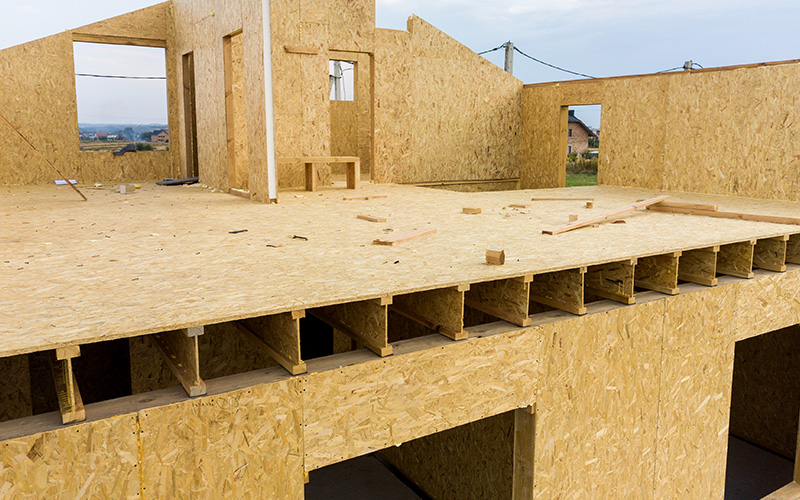
Is Plywood Sheathing Structural? (Usually, Yes)
Most plywood sold as sheathing in today’s construction is structural. Manufacturers rate it under U.S. standards like PS 1 or PS 2, which set minimum strength and stiffness.
That means you can use it to resist loads in walls, floors, and roofs. The panel spans between studs, joists, or rafters and transfers loads across them, so the building acts as a single system instead of a bunch of loose parts.
Structural plywood sheathing gets its strength from cross-laminated veneers and exterior or Exposure 1 adhesives. Because of the alternating layers, the panel resists bending and racking, which helps control wall movement under wind or earthquakes.
But not all plywood is up to the task. If a panel is labeled for appearance or interior use, it might not have a span rating or structural grade. If there’s no stamp with a span rating, performance category, or exposure class, don’t count on it for structure.
Why “Regular” or “Normal” Plywood Is Not Always Structural
People say “regular plywood” all the time, but that doesn’t mean much in engineering. Most products sold under that name are non-structural plywood—think furniture-grade, cabinet-grade, or panels meant for looks.
These focus on surface finish, not load capacity. Manufacturers often use urea-formaldehyde glue and mixed hardwood cores. This glue softens when wet, and the core has gaps, so the panel doesn’t have rated strength or bending values.
Basically, you can’t trust it to handle wind, seismic, or floor loads. Structural plywood, on the other hand, earns its rating by passing tests and meeting standards. Panels stamped as Structural I, PS 1, or PS 2 show span ratings, thickness, and glue type.
They use phenol-formaldehyde adhesives and controlled veneer layouts, which stay stable under moisture and heat. That means the panel keeps its strength in real-world use.
If you use non-structural plywood for load-bearing work, you risk deflection, fastener failure, or failing inspection.
The Real Difference: Structural Ratings, Not Product Names
When picking between sheathing and structural plywood, the label matters less than the structural rating stamped on the panel. You can buy non-structural plywood, and sheathing can be plywood or OSB. The stamp tells you how it’ll perform, not what the receipt says.
Structural ratings come from standards like APA Rated Sheathing or Structural I. These ratings confirm thickness, span, and bond type. That way, you know how far the panel can span and how much load it can handle.
The key is panel grade and rating, not whether it’s called plywood or sheathing. For example, a 15/32 APA Rated Sheathing 32/16 Exposure 1 panel meets specific strength and stiffness values, so inspectors and engineers don’t have to guess.
Structural I panels have stricter limits on core gaps and stiffness, which means higher shear values in engineered shear walls. You use them when plans call for certain shear ratings, not just standard framing.
Plywood grades matter too. Panels made from C-D or C-C plugged plywood serve different surface and structural needs. Pick the grade for exposure and finish, but always check the rating for structural use.
What to check on the stamp:
- Panel rating (Rated Sheathing or Structural I)
- Span rating (like 32/16)
- Exposure class (Exposure 1 or Exterior)
- Thickness or performance category
Wood Structural Panels Explained (APA & Rated Sheathing)
When you hear Wood Structural Panel, it’s an engineering category set by U.S. standards. This includes softwood plywood and OSB made under PS 1 and PS 2 product standards.
These panels carry loads in roofs, walls, and floors. The APA – The Engineered Wood Association sets the testing and labeling rules.
APA trademarks link each panel to a design spec, span rating, thickness, and bond class. You can match a panel to stud spacing and load needs without much guesswork.
APA Rated Sheathing pops up most often in specs. It works for wall bracing, roof decks, and subfloors as long as you follow the printed span rating.
When you use the right fasteners and spacing, you get code-compliant strength. Many wood structural panels use phenolic adhesives, especially phenol-formaldehyde resin.
This resin forms a heat-cured, waterproof bond between veneers or strands. The glue line stands up to moisture during construction delays and keeps its strength.
Some panels display a Structural I mark. That label means the panel’s shear values have been verified for engineered shear walls and diaphragms.
If your design doesn’t call for those values, standard Rated Sheathing still meets the same span ratings. Here’s what you’ll spot on the panel stamp:
- Performance Category (thickness class)
- Span Rating (support spacing)
- Bond classification (Exterior or Exposure 1)
Structural Ratings You’ll See on Sheathing Panels
The panel stamp tells you how it performs. These ratings come from APA standards and guide how you can use the panel in walls, roofs, and floors.
APA Rated Sheathing means the panel meets PS 2 performance rules for strength and stiffness. It can be plywood or OSB.
The panel passes lab tests for load and deflection, so you can rely on it for standard framing. Performance Category (CAT) states the panel thickness in inches, like 15/32 CAT.
Manufacturers use CAT instead of nominal size because sanding changes the actual thickness. This helps you match span tables and avoid using a panel that’s too thin.
Span Rating shows up as numbers like 32/16. The first number is for roofs, the second for floors.
This gives you clear limits on joist or rafter spacing. Structural I adds tighter strength and stiffness controls to APA Rated Sheathing.
Manufacturers control wood species and panel layout to raise shear and diaphragm values. You use Structural I when an engineer needs higher lateral load resistance, not for basic framing.
Exposure 1 describes glue durability, not strength. The adhesive resists short-term moisture during construction.
The panel can handle getting wet before the building dries in, but it’s not for long-term weather exposure.
Span Ratings and Thickness: Why 15/32 Isn’t Just “1/2 Inch”
When you see 15/32-inch plywood, it’s tempting to call it 1/2 inch. But it’s not.
Manufacturers sand panels after pressing, so a “1/2-inch” panel usually measures 15/32 inch. The label shows the real thickness, not a rounded name.
Span ratings tell you how far a panel can span between supports. A common mark is 32/16.
The first number is for roof sheathing, the second for floor sheathing. The same panel can work on a roof with 32-inch spacing or a floor with 16-inch spacing, if you install it as rated.
Sheathing thickness and span rating work together. A 15/32 panel with a 32/16 rating meets code for many roofs and floors.
The panel’s stiffness matches the spacing limits, so it controls bending under load. Plywood sizes use nominal names, not exact measurements.
- 15/32 inch (nominal 1/2 inch)
- 19/32 inch (nominal 5/8 inch)
The key is simple: always match the actual thickness and span rating to your framing layout, not the nominal name you see on the stack.
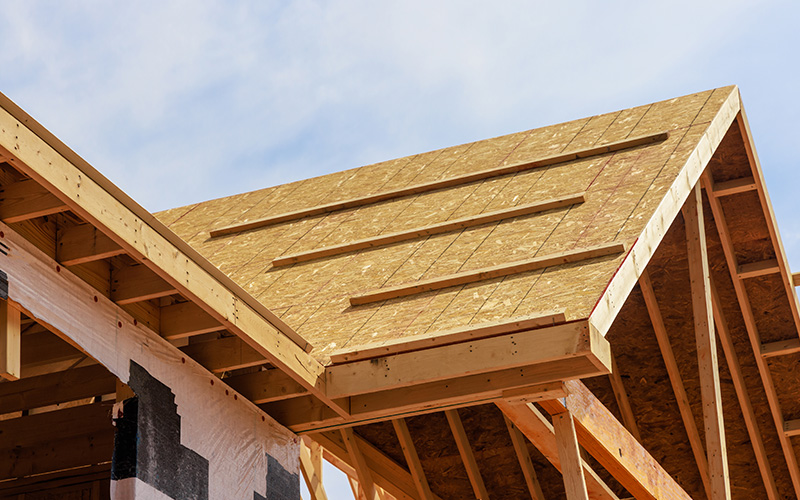
Sheathing Plywood vs Structural Plywood: Side-by-Side Comparison
Both products show up on walls, roofs, and floors, but they serve different goals. Sheathing plywood acts as a system layer tying framing together.
Structural plywood uses cross‑laminated veneers bonded with exterior phenolic adhesives. Each layer runs perpendicular to the next, which helps the panel resist bending and racking forces.
Sheathing plywood might use similar construction, but manufacturers don’t always test it for load capacity. It works well to stiffen a wall or roof plane, but don’t assume it can replace a rated structural panel.
The choice depends on code requirements and load paths. If the panel must resist measured forces, specify structural plywood. If it mainly ties framing together and supports finishes, sheathing plywood usually does the trick.
Load-Bearing vs Load Distribution: Understanding the Design Intent
It’s important to separate load-bearing from load distribution when picking a panel. Load-bearing deals with vertical forces from people, furniture, and walls.
Load distribution spreads those forces across framing so no single joist or stud takes the full weight. Structural plywood often supports load-bearing roles because it uses rated veneer grades and tested thicknesses, like 19/32 in. or 23/32 in. panels.
It can span floor joists and carry design loads set by building codes. You’ll see it in subfloors and floors where the panel works with joists to resist bending.
Sheathing focuses on load distribution, not primary support. It transfers loads to framing and resists racking through shear strength.
Wall and roof sheathing help keep the building square during wind or seismic events, but they don’t replace structural floor panels. In floor sheathing and subflooring, the design intent often overlaps.
A structural-rated panel distributes loads across multiple joists due to its stiffness and fastening pattern. The panel reduces bounce and point loads, even though the framing still carries most of the weight.
Plywood Sheathing vs OSB Sheathing
People often compare plywood sheathing and OSB (oriented strand board) when picking structural panels for walls, roofs, and floors. Both meet U.S. building code requirements when rated for structural use, but they behave differently under load and moisture.
Plywood uses cross‑laminated wood veneers with alternating grain directions. This layout limits expansion and contraction because each layer resists movement in the next.
Plywood panels tend to stay flatter after repeated wet‑dry cycles, which helps with floor stiffness and roof alignment. OSB uses long wood strands arranged in layers and bonded with waterproof resins.
The strands run in set directions, so OSB achieves uniform strength across the panel. You get predictable shear performance for wall bracing at a lower cost per sheet.
Moisture response is a big difference. OSB can absorb water more slowly, but it also dries more slowly, which can cause edge swelling if it stays wet too long.
Plywood absorbs water faster but releases it faster too, so panel edges usually return closer to their original thickness.
Moisture and Exposure Ratings (Exposure 1 vs Exterior)
Moisture ratings show how long a panel can handle wet conditions without losing strength. These ratings focus on adhesive bond durability, not face grades or coatings.
Exposure 1 panels use waterproof adhesives designed for short-term wetting. The glue resists moisture during construction, so the panel keeps its strength if it gets rained on.
You can leave roof or wall sheathing uncovered for a limited time, but you need to dry and protect it as soon as possible. Exterior panels also use waterproof adhesives but meet stricter test requirements.
The bond stands up to repeated and long-term moisture cycles. The panel can remain exposed to weather in service if needed.
Moisture barriers matter with both ratings. Adding housewrap, roofing underlayment, or flashing limits water entry.
Barriers reduce swelling risk and help the panel perform as rated.
Common Problems With Sheathing Plywood
Moisture often causes headaches for sheathing materials, both before and after installation. Plywood and OSB soak up water through their exposed edges.
When the strands or veneers swell unevenly, dimensional stability drops. You’ll notice raised panel edges, uneven walls, or even wavy spots under siding or roofing.
Edge swelling is a big culprit for service issues. OSB tends to show this more since its compressed wood strands expand at cut edges.
Fasteners can end up sticking out, and finish materials might not sit flat. It’s not a great look, and it can mess with the final fit.
Installation mistakes make things worse. If panels butt tight together without the recommended gap, seasonal moisture has nowhere to go.
As panels expand, they press against each other, sometimes causing buckling or pulling nails loose. Not ideal.
Fastener type and spacing play a role too. If you use smooth nails or space them too far apart, you lose shear strength between framing and sheathing.
This reduces wall stiffness and can mess with code-required capacity. Little details add up fast.
Common jobsite problems include:
- Improper storage, which raises moisture content before installation
- Incorrect nailing patterns, which reduce structural performance
- Missing edge support, which increases deflection between studs
Typical Applications of Structural Sheathing Panels
Structural sheathing panels show up in walls, roofs, and shear walls where the frame needs to carry load and resist movement. These panels include APA Rated Sheathing made from plywood or OSB, with span ratings and nail schedules stamped right on the face.
This lets you match the panel to the spacing and loads called out on your plans. Wall sheathing supports studs and fights racking from wind or earthquakes.
Panels work because their cross‑layered or strand layouts spread load across the sheet. That means straighter walls and fewer cracks around doors and windows as the building shifts.
Roof sheathing supports roofing materials and transfers loads to rafters or trusses. The panels get stiffer when you install the strength axis across supports.
So the roof deck bends less under snow or workers, which helps shingles and membranes last longer. Shear walls rely on specific panel grades and edge nailing.
Structural I panels come with verified shear values for engineered designs. That lets you hit code targets without extra bracing.
- Common placements
- Exterior walls and interior braced walls
- Roof decks under shingles or metal roofing
- Floor and roof diaphragms in engineered plans
Panels sometimes get installed next to concrete foundations as sill-backed wall sheathing. This limits movement at the base and helps doors keep working smoothly over time.
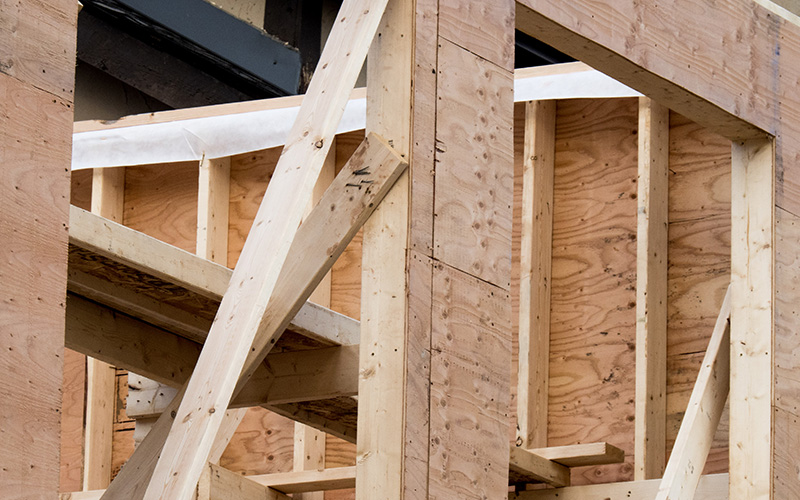
Can Structural Plywood Be Used Without Being Sheathing?
Absolutely. Structural plywood shows up in plenty of roles that aren’t sheathing.
Sheathing is a job, not a material, while structural plywood is a panel type with rated strength. You’ll see structural plywood used as subflooring all the time.
Panels with a PS 1 or PS 2 grade stamp and a span rating like 32/16 can easily carry floor loads across joists. You can fasten the panel right to joists and walk on it during construction without worrying about damage.
Builders also use structural plywood for roof decks, stair treads, and built-in platforms. The panel’s cross-laminated veneer layers help spread loads in both directions.
This means the panel resists bending and edge cracks better than single-layer boards. Outside buildings, structural plywood pops up in shipping crates, pallets, and industrial shelving.
Panels rated Exposure 1 can take short-term moisture during transport, so a little rain or humidity won’t wreck them. The main thing? When you use structural plywood for load support, always follow the grade stamp, span rating, and fastening schedule.
How Building Codes and Inspectors View Sheathing vs Structural Panels
Building codes like the International Building Code (IBC) treat plywood and OSB as wood structural panels if they meet standards like PS 1 or PS 2. The APA grade stamp shows thickness, span rating, and exposure class right on the panel.
For inspectors, that stamp is proof the panel fits the code-approved use. Inspectors care about how you use the panel, not just what you call it.
When a wall or roof acts as a shear wall or diaphragm, the code needs panels rated for that load. Inspectors check panel type, nail spacing, and edge blocking because those details control racking resistance.
Some plans call for Structural I Rated Sheathing. This label means the panel passed extra testing for shear performance.
Inspectors will look for the Structural I mark only if the engineered drawings require it. If plans don’t specify Structural I, standard rated sheathing usually passes code.
Inspectors also check:
- Panel orientation matches the strength axis.
- Fasteners match the schedule on the plans.
- Exposure ratings fit the location.
How to Choose the Right Panel for Your Project
Start by looking at the grade and rating stamp on the panel. Check for APA or similar markings that list span rating, exposure class, and thickness.
That stamp means the panel passed tests for load and moisture standards that engineers count on. Next, figure out how you’ll use the panel.
Structural plywood uses cross‑laminated veneers to spread loads across the sheet. This matters when you need better fastener holding at edges, like in shear walls or roof diaphragms.
Sheathing panels (including OSB) use bonded wood strands for even strength across the face. Builders like this for big wall or roof areas where loads are spread out.
Don’t forget climate and your build schedule. Panels rated Exposure 1 can handle short-term wetting during construction, which helps if rain hits before you get the building enclosed.
But it’s not a substitute for proper weather protection. Use thickness and span tables to match your framing spacing.
Thicker panels resist deflection better because they’re deeper. Engineers specify this to reduce floor bounce and wall movement.
Always follow the fastening and spacing rules in the manufacturer’s guide. The right nail size, edge spacing, and expansion gaps let the panel move without buckling.
FAQs About Sheathing vs Structural Plywood
Is sheathing the same as plywood?
Nope. Sheathing is how you use a panel, not what it’s made of. You use sheathing on walls, roofs, or floors to resist racking and tie the framing together. Plywood is just one material for the job.
Is all plywood sheathing structural?
No. Plywood needs an APA or PS 1/PS 2 structural rating stamp to count as structural. That stamp confirms tested values for stiffness and shear. Inspectors look for it on load‑resisting walls.
Is OSB sheathing considered structural plywood?
No. OSB is a structural wood panel, but it’s not plywood. OSB uses oriented wood strands instead of veneers. It meets structural codes but falls under a different product type.
What thickness plywood is used for wall sheathing?
Most folks go with 3/8 inch panels when studs are spaced 16 inches apart. If the spacing is wider or you want a bit more stiffness, 15/32 inch is a common pick.
Just check the span ratings stamped on the panels—they’ll tell you if you’ve got the right match.
En savoir plus sur nos produits ?
Contact