
Chipboard: Analysis of Export Market in Southeast Asia
Against the backdrop of restructuring in the global wood-based panel trade landscape, chipboard stands out as one of the core categories for wood-building-material exports, thanks to its cost-effectiveness, wide adaptability and high raw-material utilization rate. As trade barriers keep rising and competition becomes saturated in European and American markets, Southeast Asia, driven by booming infrastructure, large-scale home-goods manufacturing industries and growing urban-related demand, has gradually evolved into one of the most promising growth tracks for global chipboard exports, as well as a key battleground for foreign trade players exploring incremental markets. This article comprehensively analyzes the demand logic, supply demand pattern, trade strengths, existing challenges and future development trends of the Southeast Asian chipboard export market, providing references for industry overseas trade planning.
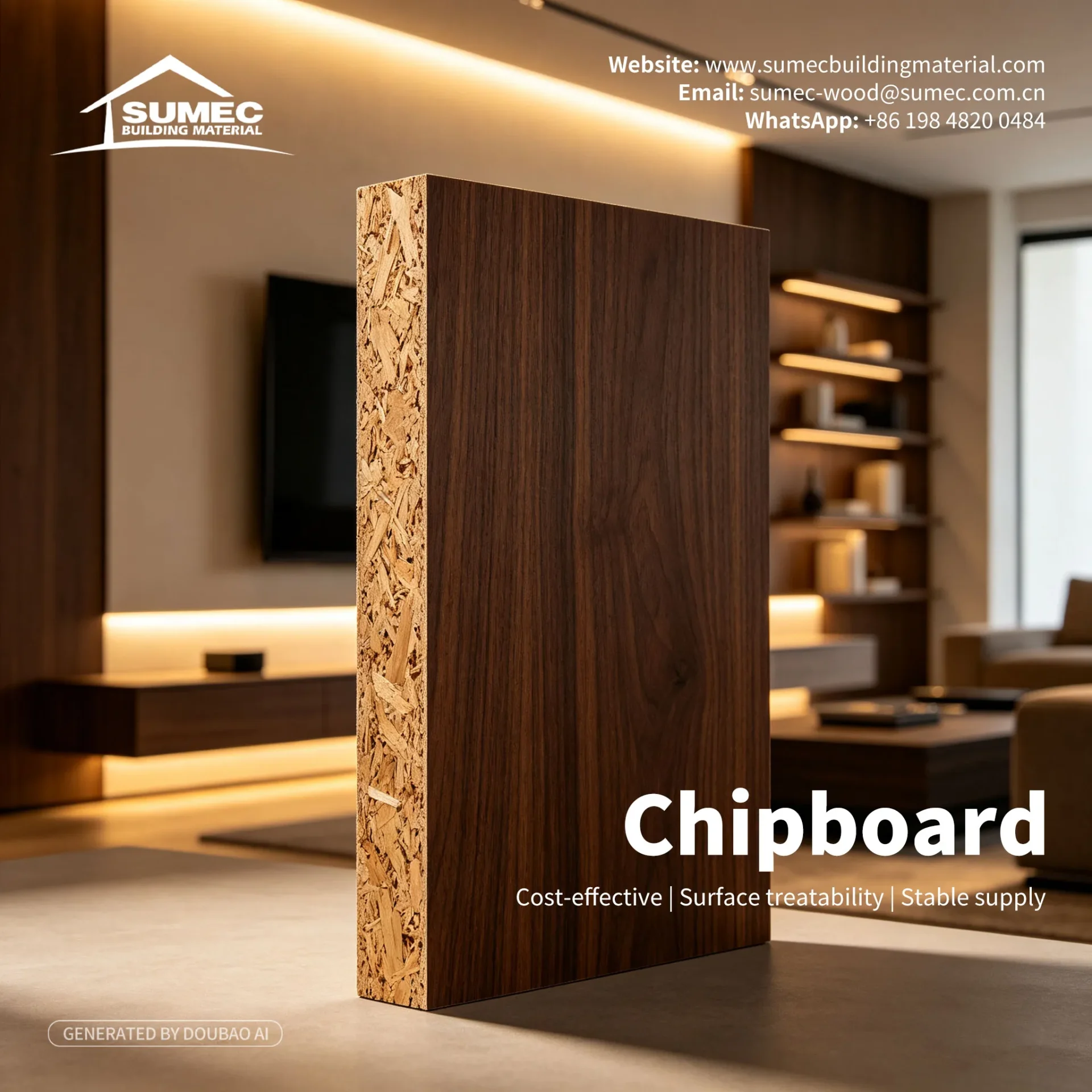
Core Demand Drivers for Aglomerado in Southeast Asia
Steady economic growth across Southeast Asia and accelerating urbanization, together with the expansion of the home-goods industry, have formed three major demand pillars: building & renovation, furniture manufacturing and packaging support, continuously fuelling consumption growth for chipboard.
Urbanization and infrastructure upgrading underpin fundamental market demand. Most Southeast Asian countries are undergoing rapid urbanization. Ongoing construction and renovation projects for urban residential buildings, commercial complexes and public facilities keep driving chipboard consumption for interior finishing, partition walls and ceiling substrates. Real-estate markets in many regional economies maintain stable performance. Both new housing construction and renovation of existing residences create broad basic-market space for general-purpose, mid-to-low-grade chipboard.
Expanding furniture manufacturing clusters serve as a major consumption engine. Southeast Asia has become an important global hub for furniture production with continuously expanding output of home-goods. Aglomerado acts as a key substrate for furniture cabinets, tabletops and decorative panels, well suited for mass-market local home-goods production, leading to rising consumption. As export volumes of finished Southeast Asian furniture grow, capacity expansion of end-products further boosts upstream panel import demand, creating a positive cycle of “panel import furniture manufacturing-end-product export”.
Incremental demand comes from lightweight packaging and industrial supporting applications. Driven by the rise of regional manufacturing, the packaging sector for light industry, electronics and home-goods is developing fast. Featuring light weight, good workability and controllable costs, chipboard is widely used in industrial packaging, cushioning substrates and logistics pallets. This emerging segment further expands market boundaries.
Supply-Demand Pattern of the Southeast Asian Chipboard Market
At present, the Southeast Asian chipboard market is characterised by limited local production capacity, high import reliance and divergent national demand. Domestic supply cannot fully match rising market requirements, leaving ample room for imported products.
On the local-supply side, some Southeast Asian countries possess natural timber resources and certain wood-panel manufacturing capabilities to produce basic-grade chipboard locally. Nevertheless, overall industrial supporting infrastructure remains weak, high-end production lines are insufficient. Locally-produced goods often suffer from insufficient dimensional accuracy, poor surface flatness, low environmental-performance standards and limited product specifications, and can only satisfy low-end basic needs. In addition, regional wood-processing sectors are largely concentrated on solid-wood panels and plywood. Specialised chipboard capacity is insufficient to meet quality requirements for large-scale furniture production and mid-to-high-end renovation.
In terms of import requirements and regional divergence, Vietnam, Malaysia, Thailand and Indonesia represent key consuming markets with distinct demand structures. Fueled by dense furniture manufacturing clusters, Vietnam records the largest import volumes for standardised, high-stability chipboard and leads regional growth. Malaysia features mature building-material distribution networks and complete resource support, with strong demand for mid-to-high-end panels for renovation and custom furniture. Thailand and Indonesia are mainly domestic-demand-oriented; infrastructure and local home-goods consumption drive steady panel imports, supporting large-size, stable-growth markets. Overall, Southeast Asia maintains high reliance on imported chipboard, creating substantial penetration opportunities fo external suppliers.
Key Existing Market Challenges
Despite huge potential for chipboard exports to Southeast Asia, overseas suppliers face multiple headwinds including homogeneous competition, rising quality-standard requirements and growing local-substitution pressure, squeezing profit margins and threatening long-term market stability.
First, fierce homogeneous competition in low-end segments. A large number of export suppliers focus on commodity-grade general-purpose chipboard with highly similar specifications, quality and processing techniques. Competition is largely price-driven, compressing margins in low-end segments and triggering unhealthy industry-wide price competition, which impedes sustainable overseas-market development.
Second, continuously upgraded regional quality and environmental requirements. Driven by improved quality of exported finished furniture and local consumption upgrading, market expectations for chipboard are rising in terms of emission standards, surface flatness, moisture-resistance and structural stability. Traditional low-emission-performance, low-stability low-end products are gradually phased out. Exporters need to optimise production processes and quality-control systems, placing higher demands on manufacturing R&D and quality assurance.
Third, rising risks of local-capacity substitution. Endowed with abundant forest resources, Southeast Asia keeps expanding its wood-based-panel manufacturing base. New chipboard production lines are being commissioned and local output is gradually increasing. In the long run, import substitution for general-purpose low-end grades will strengthen, potentially eroding market shares for external suppliers in basic segments.
Fourth, information gaps across sub-markets. Individual Southeast Asian countries differ in market requirements, consumption preferences and distribution rules. Some foreign-trade participants lack deep understanding of local industrial stages, competitive landscapes and compliance requirements, relying on past experience instead of targeted research. This may result in mismatches between supplied goods and actual market needs.
Development Trends and Strategic Recommendations for Aglomerado Exports to Southeast Asia
Judging from supply-demand fundamentals, trade environment and industry shifts, four major trends will shape Southeast Asian chipboard exports: quality upgrading, deepened segmentation, supply-chain localisation and high-end transformation. Growth opportunities will increasingly favour high-quality production capacity.
On the product side, the market will shift from low-cost commodity-grade offerings to differentiated quality-focused segments. The low-end price-competition track will shrink, while demand for specialised grades such as moisture-resistant, low-emission, high-density stable and custom-size chipboard will expand rapidly. High-quality panels for premium custom furniture, commercial fit-out and precision furniture manufacturing will replace low-end alternatives and become major growth drivers with improved added value.
On the market side, differentiated strategies for sub-segments will prevail. Vietnam will remain a core import market for furniture-grade substrates with growing demand for high-quality standardised panels. Malaysia, Singapore and other higher-end markets will see rising penetration of low-emission, premium-quality chipboard. Large-population markets such as Indonesia and the Philippines will register steady growth for general-purpose panels driven by infrastructure and basic renovation. Differentiated deployment across individual countries will be critical to escape price-driven competition.
On the trade side, collaborative and refined supply-chain operations will gain importance. Pure product-export models will lose competitiveness. Customised order fulfilment aligned with local requirements, reliable performance and supporting services will become core competitive strengths. Exporters will optimise inventory turnover, logistics delivery and market-specific after-sales support to build efficient Southeast-Asia-oriented supply chains and strengthen customer stickiness.
Conclusão
Southeast Asia remains one of the most dynamic growth markets for global chipboard exports. Urbanisation, furniture-sector expansion and favourable trade conditions create solid fundamentals for export business. Notwithstanding challenges including low-end competition, tightening standards and local-capacity substitution, opportunities outweigh risks. Going forward, aligning with Southeast Asian market-upgrading trends, focusing on high-quality differentiated products, optimising supply-chain services and adopting country-specific differentiated layouts constitute core paths for chipboard foreign trade players to achieve sustainable growth in Southeast Asia.