
Comment choisir le panneau MDF adapté
panneau MDF is a type of panel manufactured by taking wood fibers or other plant fibers as raw materials, processing the fibers, adding synthetic resin, and pressing them under heat and pressure. Featuring uniform internal structure, fine texture, stable performance, good impact resistance and easy workability, density fiberboards are widely applied in domestic furniture production, interior decoration, musical instrument making, packaging and other fields.
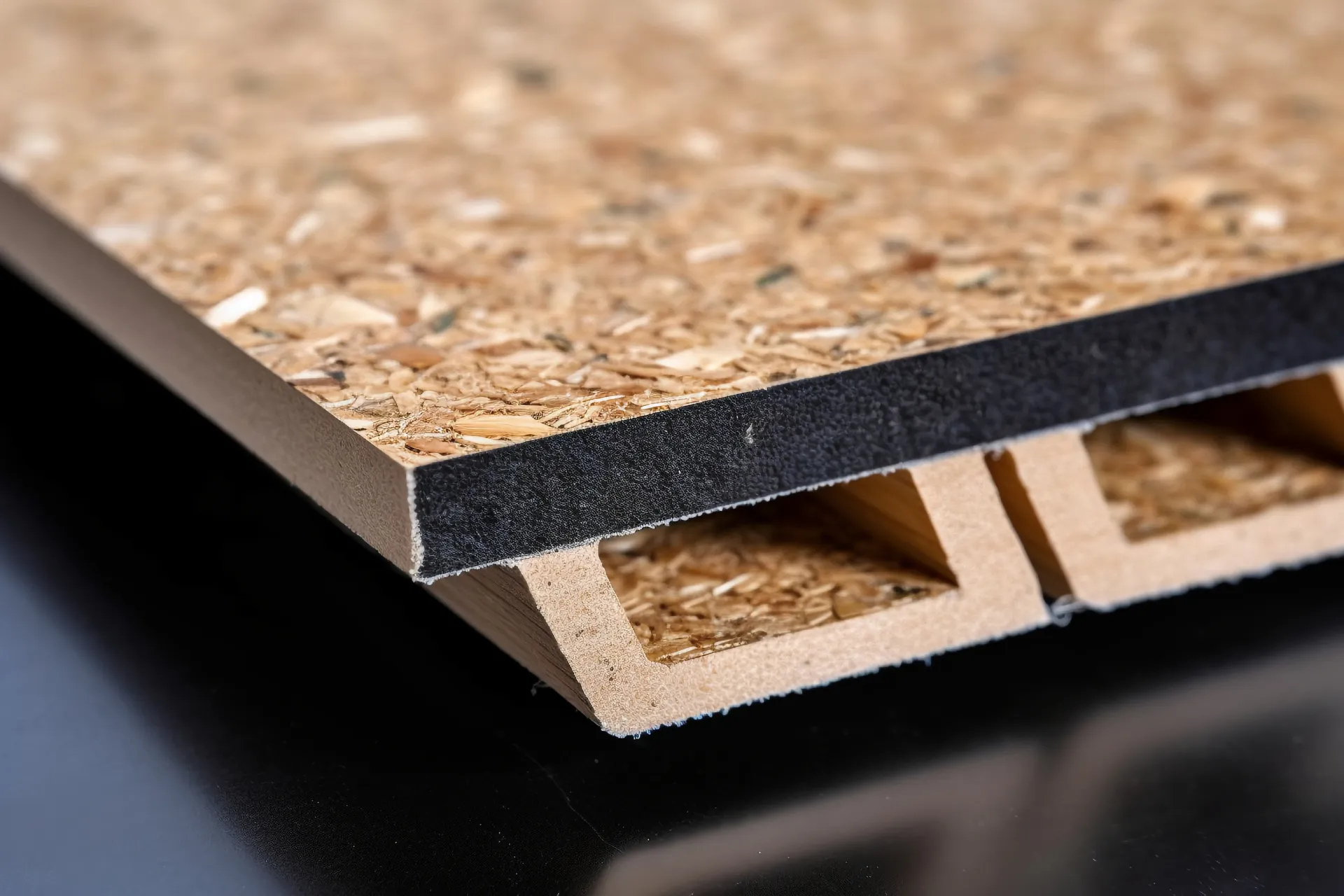
It boasts distinct advantages: it has a flat and even surface with consistent density, and can be carved and grooved into various shapes. Veneers, adhesive films, decorative panels, thin light metal sheets, melamine boards and other materials can all be pasted onto its surface, and it is also easy to finish with all kinds of coatings and paints. For this reason, panneau MDF is rarely used for cabinet bodies, but is commonly adopted for cabinet doors, especially shaped cabinet doors.
I. Classification of Density Fiberboards
To pick suitable density fiberboards, it is essential to learn their classifications. By density, they are divided into high-density fiberboard, medium-density fiberboard and low-density fiberboard.
1. Low-density Fiberboard
It features low density, light weight and porous structure with a porosity of around 80% by volume. It is an ideal material for sound absorption, heat insulation and shockproof purposes, and is mostly used as decorative materials in conference halls, concert halls, theaters, bars and other venues instead of load-bearing components.
2. Medium-density Fiberboard
Finished panel furniture such as common membrane-pressed doors and wardrobe cabinets are mostly made of medium-density fiberboard. Some merchants pass off low-density boards as qualified products. A simple identification method is to weigh the boards — overly light boards are unqualified. In addition, if screws can be easily driven into the board surface with a screwdriver, the product is also substandard.
3. High-density Fiberboard
In the past, many people believed that high-density base boards for vacuum-formed doors meant better quality, yet this view is incorrect.
Higher density puts higher requirements on cutting tools. Each cutter head costs dozens or nearly a hundred yuan and needs frequent replacement once worn out.
Although higher density brings higher static bending strength and tensile strength, it also leads to a higher water absorption expansion rate, making such boards more prone to cracking compared with other density fiberboards.
It is worth emphasizing that when low-density boards and medium & high-density boards are soaked in water simultaneously, low-density boards expand first in a short period of time, while high-density boards will expand more severely as time goes by.
Therefore, high-density fiberboards are mostly used as base boards for decorative structures such as interior doors and hard-wrapped wall substrates, as well as laminated wood flooring.
II. Selection Tips for panneau MDF
1. Select by Formaldehyde Emission Grade
In accordance with national standards, density fiberboards are classified into Grade E0, E1 and E2 based on free formaldehyde content.
Grade E2: formaldehyde emission ≤5mg/L
Grade E1: formaldehyde emission ≤1.5mg/L, applicable to direct indoor decoration
Grade E0: formaldehyde emission ≤0.5mg/L
Consumers are advised to prioritize products with low formaldehyde emission for higher safety.
2. Check Overall Product Quality
Surface Cleanliness: Qualified boards have no obvious surface particles. Particles are caused by impurities during pressing, which not only ruin the appearance but also lead to easy paint peeling.
Surface Smoothness: The board surface should feel smooth to the touch; a rough texture indicates defective processing.
Surface Flatness: The surface shall be bright and even. Uneven surfaces viewed from the side reveal flaws in raw materials or coating technology.
Overall Toughness: Excessively stiff boards are very likely inferior products.