
Common Building Materials for Concert Halls: Acoustic and Aesthetic Construction Centered on Panels
As a “container” for sound, the selection of building materials for a concert hall directly determines its acoustic effects and spatial experience. Among them, sound-absorbing panels are the core elements for regulating acoustic balance, working together with other functional panels to create a performance space that meets professional standards.
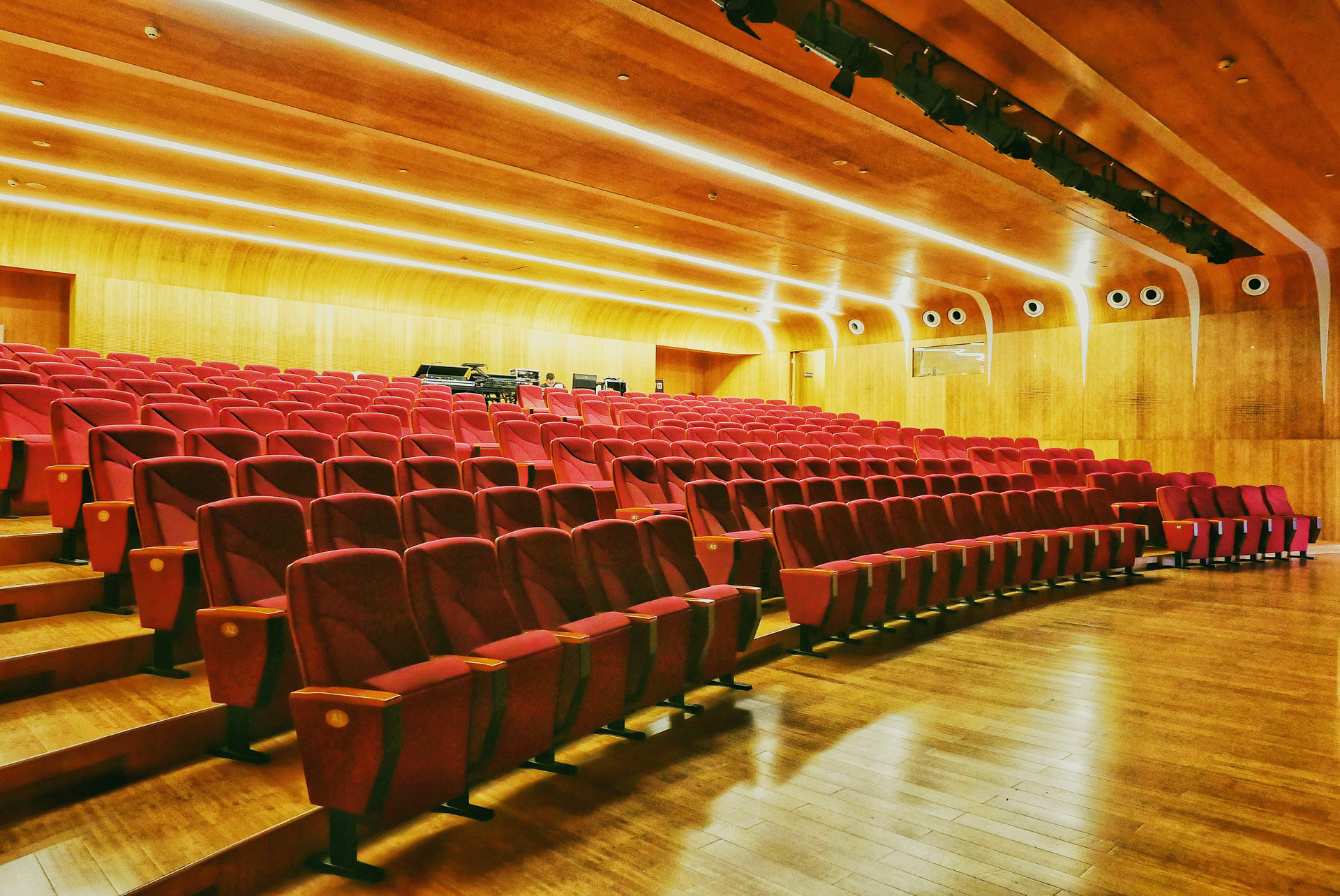
Sound-absorbing panels serve as the “core regulators” in the acoustic design of concert halls, whose core value lies in precisely controlling the reverberation time to avoid sound superposition and distortion. Depending on the differences in acoustic requirements, different types of sound-absorbing panels are used in concert halls. Mineral wool sound-absorbing panels, with their dense microporous structure, act as efficient absorbers for high and mid-frequency sound waves. They are often applied to the walls and ceilings of the auditorium to ensure clear sound transmission. In terms of low-frequency noise control, polyester fiber sound-absorbing panels excel; their flexible material can effectively absorb low-frequency resonance below 500Hz. Installed on both sides of the stage and in the backstage area, they reduce the interference of low-frequency vibrations from musical instruments on the main sound field.
Wooden sound-absorbing panels achieve the unification of acoustic functions and natural aesthetics. It is worth noting that the application of sound-absorbing panels must follow the principle of “zoned adaptation”. The amount of sound-absorbing panels in the stage area will be controlled to prevent excessive sound absorption leading to volume attenuation, while the auditorium and corridors need to strengthen the sound-absorbing effect to reduce environmental noise interference.
Complementing sound-absorbing panels acoustically are reflective panels, which together create a uniform sound field distribution. In local wall areas, marble panels are also commonly used; their hard surface can form directional sound wave reflection, enhancing sound penetration. They form an “absorption-reflection balance” with sound-absorbing panels, making the sound field both clear and layered.
Structural safety and stability rely on the support of load-bearing panels. Hollow composite panels are widely used in the floor and stage construction of concert halls due to their advantage of “lightweight and high strength”. Their honeycomb internal structure can bear a load of more than 500kg per square meter, but only weighs 1/3 of traditional panels. This not only meets the load-bearing needs of musical instruments and equipment but also reduces the overall building load. The surface of these panels is usually treated to be non-slip, with a friction coefficient maintained above 0.6 to prevent the sliding of personnel and equipment during performances. At the same time, their closed structure can reduce sound wave transmission and prevent ground sound from interfering with the lower space.
Fire-resistant and environmentally friendly panels are the “invisible barriers” for concert hall safety. Ceramic-aluminum sound-absorbing panels perfectly integrate sound-absorbing functions with fire-resistant performance. The base material composed of clay and aluminum powder has a Class A non-combustible fire rating and releases no toxic gases when exposed to fire. At the same time, its Noise Reduction Coefficient (NRC) reaches 0.85, making it suitable for the walls of evacuation passages and equipment rooms in concert halls, taking into account both acoustic control and fire safety. Under the requirement of environmental protection, recycled fiber sound-absorbing panels are gradually becoming popular. Made from recycled materials, each ton used can reduce carbon dioxide emissions by 3.2 tons. With a thermal conductivity as low as 0.035W/(m·K), they assist in heat preservation while absorbing sound, reducing the energy consumption of concert halls.
The application of panels in concert halls is essentially a process of “acoustic logic first, unification of function and aesthetics”. As the core element, sound-absorbing panels form a synergistic system with reflective panels, load-bearing panels, fire-resistant panels, etc.: GRG panels build the sound field framework, mineral wool sound-absorbing panels optimize reverberation, wooden panels create an atmosphere, and fire-resistant panels build a solid safety line. The combination of these panels is not a simple stacking but a precise proportioning based on the concert hall’s volume and performance types. Ultimately, it achieves the professional goal that “every seat can hear clear and balanced sound”, making building materials the “invisible collaborators” of sound art.