
What Is Baltic Birch Plywood & Why Is It a Top Choice for Makers
In the manufacturing industry, Baltic birch plywood gains wide recognition for its excellent performance. For ordinary consumers, it is a key material support for high-quality products. This kind of plywood can span multiple industries and become the preferred raw material for furniture factories, musical instrument workshops and other production entities. Solid performance reasons lie behind this phenomenon. This article will explain the characteristics of Baltic birch plywood in plain language and clarify the core reasons for its popularity among manufacturers.
Table of Contents
- What is Baltic Birch Plywood?
- 3 Core Characteristics of Baltic Birch Plywood
- 3 High-Frequency Application Scenarios
- Cost Interpretation and Green Transformation
- Why Is It Trusted by Makers?
- 6 Practical Tips: Purchase, Processing and Storage Explained at One Time
- 结论
What is Baltic Birch Plywood?
Baltic birch plywood is not a board made of ordinary birch. Its definition includes two key restrictive conditions: raw material origin and process standards.
The Baltic Sea region has long, cold winters and plenty of sunlight in summer. This special climate makes birch grow slowly. Slow growth leads to two key benefits: higher wood density and finer texture.
The World Wide Fund for Nature (WWF) released the European Forestry Resources Report 2024. It states: “The wood fiber density of birch along the Baltic Sea is 15%-20% higher than that of ordinary birch, and its physical properties are more stable.”
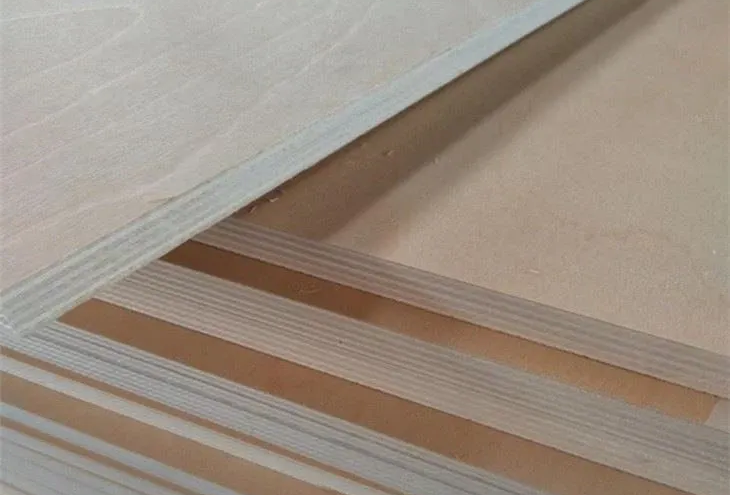
Now let’s look at its production process. First, workers cut birch into thin, even wood sheets through rotary cutting. Then they arrange these sheets in a “grain + cross grain” pattern—staggering each layer.
Next, they use eco-friendly adhesives to bond the sheets. They press the layers under high temperature and pressure to make the multi-layer board.One key point: most of its layers are even numbers, usually 6 to 24 layers. This symmetrical structure works well. It can reduce the stress from wood shrinking or swelling as much as possible.
This feature also makes it different from ordinary plywood in an important way.
Three Core Characteristics of Baltic Birch Plywood
Compared with ordinary plywood, the advantages of Baltic birch plywood are concentrated in three dimensions: stability, strength and surface quality. The performance differences between the two can be clearly presented through the following table.
Characteristic 1: Structural Stability
Structural stability is Baltic birch plywood’s biggest strength. This stability comes from two things: its raw material quality and its symmetrical lamination process.
Ordinary plywood is easy to warp or bend. The main reason is its complex raw materials. It may mix different woods, like poplar and pine. Also, its layers are not arranged in a standard way. So when temperature or humidity changes, ordinary plywood often changes shape.
Baltic birch is different. It has stable moisture content on its own. When paired with its even-layer, symmetrical structure, it resists the effects of temperature and humidity changes well.
It stays flat in the dry winters of northern China. It also stays flat during the humid plum rain season in southern China.
This is why it works so well for packaging precision instruments and making museum display cabinets.
Characteristic 2: Excellent Strength and Toughness
The high-density birch raw material endows Baltic birch plywood with strong bearing capacity and impact resistance, which is better than ordinary plywood. Taking 18mm thick boards as an example, Baltic birch plywood can bear a pressure of 30kg/cm² (Data source: Wood Industry Issue 3, 2024), while ordinary plywood may break when the pressure exceeds 20kg/cm². At the same time, it has good toughness and can be processed into curved and curved shapes through molds. It is suitable for products with special material shape requirements, such as guitar bodies and curved furniture.
Characteristic 3: Excellent Surface Quality
Processing efficiency is a key indicator for manufacturers, and Baltic birch plywood performs excellently in this dimension. Ordinary plywood has poor surface flatness and requires at least two procedures of putty scraping and polishing to meet processing requirements. Baltic birch plywood has a smooth surface and can be directly painted. The splicing gap of its single board is less than 0.05mm, which is barely visible to the naked eye. This characteristic not only reduces labor and auxiliary material costs, but also reduces waste products caused by improper surface repair, which plays a significant role in improving mass production efficiency.
Three High-Frequency Application Scenarios: Comprehensive Coverage from Daily Items to Industrial Fields
Scenario 1: Furniture Manufacturing
Customized furniture, such as wardrobes, desks, and children’s beds, is one of the main application scenarios of Baltic birch plywood. Furniture is prone to bumps during use and needs to adapt to temperature and humidity changes in different seasons. The impact resistance and shape stability of Baltic birch plywood can meet the use needs. Especially in the production of children’s furniture, its commonly used E0-grade adhesives can avoid the harm of harmful substances. Therefore, it is preferred by furniture manufacturers who focus on quality.
Scenario 2: Interior Decoration
Decoration scenarios such as background walls, ceilings, and exhibition stands require materials to be both beautiful and durable. Baltic birch has a fine texture and natural texture, which can be directly dyed, pasted with veneer or treated with clear paint. At the same time, it is not easy to crack and fall off after installation, and its service life is 3-5 years longer than that of ordinary decorative boards. It is widely used in public places such as hotels and shopping malls.
Scenario 3: Outdoor Facilities
Outdoor facilities such as park benches, outdoor plank roads, and balcony flower boxes are exposed to the natural environment for a long time, so they have high requirements for the weather resistance of wood. After simple anti-corrosion treatment, Baltic birch plywood can resist rain erosion and UV aging. Its normal service life in outdoor environment can reach 5-8 years, while ordinary plywood can only be used for 1-2 years under the same conditions, and is prone to rot and deformation.
Cost Interpretation and Green Transformation
For manufacturers, judging if a material is cost-effective means looking at all costs. These include purchase, processing, use and after-sales costs. Now the industry is pushing for green transformation. With this trend, Baltic birch plywood’s overall advantages stand out more.
Cost Interpretation: Slightly Higher Short-Term Purchase Cost, Lower Long-Term Comprehensive Cost
Baltic birch plywood is indeed 10%-20% more expensive than ordinary plywood when you buy it. But when you look at all steps—processing, use, after-sales and more—it’s actually cheaper.
The China National Plywood Industry Association released the Material Cost-Benefit Analysis Report 2025. It shows clear savings for manufacturers using Baltic birch plywood:
- Processing steps are cut by 30%, and labor costs drop by 25%.
- Scrap rate falls from 8%-10% (for ordinary plywood) to less than 2%.
- Product after-sales maintenance rate goes down by 60%.
- Adding up all these savings, manufacturers can cut their total costs by over 50%.
Green Transformation: Meet International Environmental Standards and Break Trade Barriers
Global green production is becoming more and more important. Many countries and regions now have stricter environmental rules for imported products.
Baltic birch plywood fits these rules well. Most of its raw materials come from FSC-certified forests. FSC (Forest Stewardship Council) ensures these forests are managed in a sustainable way.
It also uses E0-grade or formaldehyde-free adhesives. These adhesives fully meet international environmental standards, such as EU REACH regulations and US CARB 2 standards.
This is a big plus for export. Products made with Baltic birch plywood won’t be restricted because of poor environmental performance. For manufacturers that sell overseas, this is a key competitive edge.
What’s more, it’s highly recyclable—up to 95% (Data source: EU Environmental Protection Organization 2024 Report). When discarded, it can be turned into biomass fuel or recycled boards. This fits manufacturers’ “circular economy” goals and helps businesses achieve green transformation.
Why Is It Trusted by Makers?
Question 1: Is the raw material supply of Baltic birch plywood stable? Is there a risk of stockout?
Answer: The raw material supply is very stable. You don’t need to worry about stockouts.
Countries along the Baltic Sea have mature forestry management systems. According to 2025 data from the Finnish Forestry Association, this region cuts down about 12 million cubic meters of birch every year. About 3 million cubic meters of that goes to make plywood. The global demand for this plywood is only about 2.5 million cubic meters each year. So supply is more than enough.
Local areas also follow a “cut and plant” policy. For every tree cut down, workers plant 2 new ones. This ensures long-term, steady raw material supply and keeps manufacturers’ production going.
Question 2: Can Baltic birch plywood meet customized needs? Is it only available in fixed sizes?
Answer: It can meet customized needs. It’s not just sold in fixed sizes.
Its common size is 1220×2440mm, and its thickness ranges from 3mm to 30mm. If you need special sizes—like extra-large decorative boards or ultra-thin boards for musical instruments—you can ask manufacturers to make them for you.
The customization time is usually 7 to 15 days. That’s 3 to 5 days shorter than ordinary plywood. It can fit the production needs of different industries easily.
Question 3: For export-oriented enterprises, what is the international recognition of Baltic birch plywood?
Answer: It is well recognized internationally and stands for high quality.
In markets like Europe, America, Japan and South Korea, Baltic birch plywood is seen as a top-quality type of plywood. Many buyers will clearly ask for this material when they make inquiries.
It also has complete test reports and certification systems. It can quickly provide certification documents like FSC, CE and CARB. The export customs declaration process goes smoothly. No extra environmental tests are needed, which saves customs clearance time and costs.
Some fake products exist in the market. These fakes use ordinary birch but claim to be Baltic birch. When you buy Baltic birch plywood, focus on three types of marks to avoid fakes.First, check the origin mark. Make sure it lists Baltic coastal countries, like Finland or Russia.Second, check the certification mark. It should have FSC certification or E0-grade environmental certification.Third, check the testing mark. It must come with test data for key features, such as moisture content and strength.You can also use weight to help judge. If two plywood sheets have the same thickness, the real Baltic birch one is heavier. This is because it has a higher density.
Six Practical Tips: Purchase, Processing and Storage Explained at One Time
Both manufacturers and individual users need to master the correct methods of purchasing, processing and storing Baltic birch plywood to give full play to its material value. The following are six practical operation tips.
(1) Identify Genuine Baltic Birch Plywood
Some fake products exist in the market. These fakes use ordinary birch but claim to be Baltic birch. When you buy Baltic birch plywood, focus on three types of marks to avoid fakes.First, check the origin mark. Make sure it lists Baltic coastal countries, like Finland or Russia.Second, check the certification mark. It should have FSC certification or E0-grade environmental certification.Third, check the testing mark. It must come with test data for key features, such as moisture content and strength.You can also use weight to help judge. If two plywood sheets have the same thickness, the real Baltic birch one is heavier. This is because it has a higher density.
(2) Use Alloy Steel Cutting Tools to Reduce Edge Chipping
Although Baltic birch plywood is easy to process, appropriate tools are still needed for cutting. Ordinary woodworking saw blades are easy to cause edge chipping of the board. It is recommended to use alloy steel saw blades and control the cutting speed at 3000-4000 rpm. Before cutting, paste masking tape on the edge of the board, which can effectively improve the flatness of the cut and reduce edge chipping.
(3) Perform Sealing Treatment Before Painting to Improve Paint Film Quality
Baltic birch has a dense texture, and direct painting is prone to uneven paint absorption. It is recommended to apply a layer of sealing primer before painting to seal the pores on the wood surface, and then apply the top coat. This treatment method can not only make the paint film smoother, but also enhance the adhesion of the paint film and extend the service life of the product.
(4) Store in Moisture-Proof and Sun-Proof Environment, Away from Extreme Conditions
When storing, the boards should be placed in a dry and ventilated warehouse. The ground needs to be raised with wooden squares to prevent the boards from being damp due to direct contact with the ground. At the same time, they should be kept away from windows, heating and other positions to prevent the boards from cracking due to direct sunlight or high-temperature baking. If the storage time exceeds 3 months, the boards should be turned over regularly to maintain ventilation.
(5) Preheat and Soften Before Bending Processing to Improve Forming Effect
If the board needs to be processed into a curved shape, it is recommended to preheat and soften it first: soak the board in warm water at 60-70℃ for 30 minutes. For boards with a thickness of more than 15mm, the soaking time should be extended to 1 hour. After the wood fibers are fully softened, fix them on the mold and let them dry naturally. This can effectively avoid processing cracks and ensure the stability of the curved shape.
(6) Focus on Flatness and Moisture Content During Acceptance
After receiving the goods, two key indicators need to be checked for acceptance: first, flatness. Lay the board flat on the ground and measure it with a straightedge. A surface error exceeding 0.2mm is unqualified; second, moisture content. Use a moisture meter to test. The value ranging from 8% to 12% meets the standard. Boards beyond this range are prone to deformation, and you should communicate with the supplier for return or exchange in time.
结论
Its raw materials come from places with great climatic advantages. It also has excellent production technology. The plywood is stable and tough in physical properties. It brings practical value by improving work efficiency. Besides, it meets global environmental protection standards. And it can be used in many different scenarios. With all these strengths, Baltic birch plywood has become manufacturers’ first choice.
For manufacturers, raw material selection is the primary link in product quality control. High-quality raw materials can provide a basic guarantee for product quality and help build brand reputation. The outstanding performance of Baltic birch plywood in various dimensions makes it a reliable production raw material.
进一步了解我们的产品?
立即联系