인테리어 리모델링을 위한 목재 선택
Choosing wood for interior renovation can be a real headache. Wood is indispensable for building wardrobes and cabinets, laying flooring, or installing feature walls. However, the market offers a bewildering variety of wood‑based materials. With merchants making exaggerated claims, novice homeowners are easily misled. Some people spend more than two weeks agonizing over wood selection. Today, we lay out five of the most commonly‑used wood‑based panels for interior renovation, helping you avoid unnecessary pitfalls and make informed choices.
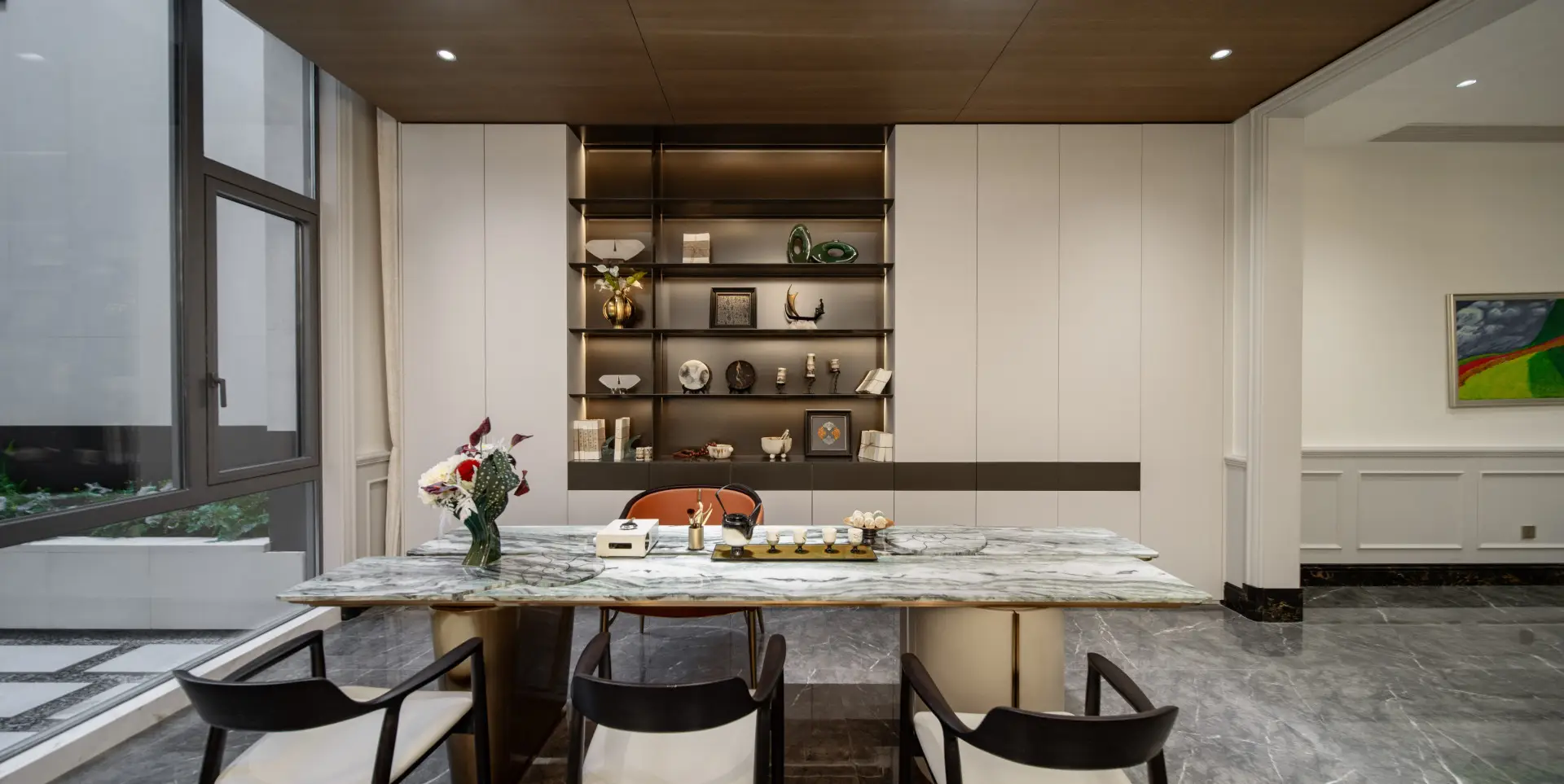
The first type, and the most familiar one, is solid wood panel. When it comes to renovation materials, solid wood is many people’s first thought. Regarded as eco‑friendly and premium‑textured, it is widely deemed the top renovation option. Solid wood panels boast striking natural grain and a warm, tactile surface with authentic wood texture. They are relatively environmentally friendly: qualified solid wood generally meets formaldehyde emission standards. Used for wardrobes and feature walls, it delivers both visual appeal and environmental performance. In addition, solid wood offers good wear resistance and durability. With proper routine maintenance, it can last for decades and be sanded and refinished later, making it highly cost‑effective in the long run.
Nevertheless, it has notable drawbacks. First, it comes with a high price tag, considerably more expensive than alternative panels. Full solid‑wood construction will greatly raise renovation costs for those on a tight budget. Second, solid wood is highly vulnerable to moisture and sunlight, prone to warping and cracking. Without adequate moisture‑proof treatment, wardrobe doors are likely to warp, and daily upkeep can be demanding.
The second option, the most widely‑used and cost‑effective one, is particle board. Many households opt for particle board for custom‑built wardrobes and cabinets. Its major merit lies in its low price and outstanding cost‑performance, making it ideal for most ordinary families. It cuts renovation expenses when applied to wardrobe and cabinet carcasses. It also features excellent structural stability, resisting warping and cracking, and performs well in humid southern regions as well as dry northern climates. Cleaning is effortless; wiping with a damp cloth will not damage it. Moreover, particle board has a smooth flat surface, preventing uneven surfaces on cabinet bodies and countertops. Its downside is its inferior texture compared with solid wood. Its veneered surface lacks genuine natural wood texture and looks rather plain, so it is not recommended for homeowners pursuing high‑end aesthetics and texture. Environmental performance varies drastically across products; prioritize boards graded E0 or ENF.
Third is multi‑layer solid wood board, balancing practicality and visual appeal. Positioned between solid wood and particle board, it serves as a compromise solution for many home renovations. Several of my acquaintances have used it for wardrobes and flooring with satisfying feedback. Manufactured by pressing multiple wood veneers together, multi‑layer solid wood board inherits the texture of solid wood and the dimensional stability of particle board. It resists warping and cracking and delivers decent moisture resistance. Qualified products keep formaldehyde emissions within safe limits, suiting wardrobes, flooring and cabinets alike. Its price sits between particle board and pure solid wood, making it suitable for households with moderate budgets. Note that its surface also requires veneering, so its grain is less authentic than genuine solid wood. There is a huge quality gap between premium and inferior multi‑layer boards: low‑grade ones tend to delaminate and blister, so inspect carefully before purchasing.
Fourth is melamine‑faced board, favored by aesthetic‑focused homeowners, also known as paint‑free board. Its scratch‑resistant, wear‑proof finished surface eliminates painting procedures, shortening construction cycles. It comes in abundant grain patterns to match diverse interior styles. Its advantages include sharp simulated textures such as faux‑wood and faux‑marble finishes. Skipping paint application avoids formaldehyde pollution generated by painting, bringing relatively good environmental performance. The surface resists scratches and stains, simplifying daily care. Applied to wardrobe and cabinet doors, it achieves great looks with less maintenance and shorter construction time. Its disadvantages are its relatively high price, higher than particle board and multi‑layer solid wood board. Core materials differ greatly among products: some use particle‑board cores while others adopt multi‑layer cores. Poor‑quality cores drastically reduce service life and lead to warping and blistering.
Fifth is MDF (Medium‑Density Fiberboard), ideal for decorative profiling. Made of compressed wood fibers, MDF features exceptional flatness and workability, widely used for decorative moldings and carved details in interior projects. Its strengths are superior flatness and ease of cutting and carving for complex decorative shapes, coupled with affordable pricing. Its critical weakness is poor moisture resistance. Once exposed to water, it swells, warps, cracks and even grows mold. It must never be installed in damp spaces such as bathrooms and kitchens, nor used for moisture‑exposed furniture like wardrobes and cabinets.
In truth, there is no absolutely superior or inferior wood‑based panel for interior renovation. Hopefully this article can assist you as you select materials for your home renovation.