
3/4-Inch vs 5/8-Inch Plywood: Thickness Comparison and Structural Impact Guide
Choosing between 3/4-inch and 5/8-inch plywood usually comes down to cost versus risk. The price gap might seem small, but a thin panel in the wrong spot can mean sagging floors or loose fasteners.
That 1/8-inch difference sounds minor, but it actually changes how plywood handles weight and span. 3/4-inch plywood resists bending better than 5/8-inch plywood because the added thickness increases stiffness, which lets it carry heavier loads over wider spans.
Floors feel firmer and shelves flex less with the thicker panel. The thinner 5/8-inch panel is lighter and costs less, but it bends sooner under the same load.
This article digs into what that thickness really means, how strength and weight compare, and why those details matter in real projects. It also points out where 5/8-inch plywood works fine and where 3/4-inch plywood helps avoid future headaches.
The “Hidden” Specs: Nominal vs. Actual Thickness
Plywood thickness labels use nominal sizes, not exact measurements. Manufacturing steps remove some material, so real thickness ends up thinner than the label says.
This gap matters when comparing 3/4-inch and 5/8-inch plywood, especially for fit, strength, and load limits. Manufacturers label plywood before final sanding, then press veneers with glue and sand both faces to meet surface grade rules.
Why Plywood Is Thinner Than It Says
Sanding removes measurable material. For 3/4-inch plywood, sanding often reduces thickness by 1/32 to 1/16 inch. So, the panel won’t measure a full 0.75 inches.
The same process affects 5/8-inch sheets. The effect varies by type of plywood. Cabinet-grade birch or maple plywood gets tighter sanding limits because flat panels matter for joinery.
Construction-grade softwood plywood allows wider tolerance. Shelves, dadoes, and grooves need to match actual thickness, not the label, or gaps will show up.
The Real Numbers (Comparison Table)
The table below shows typical real-world measurements for common panels. Values reflect industry standards and field measurements.
The difference is 1/8 inch (3.175 mm). That small change means about 15–20% less material in 5/8-inch plywood. In real use, this translates to more flex over the same span and less screw holding power.
Key Performance Differences
Plywood thickness fundamentally dictates the panel’s functional capability, directly influencing its structural rigidity, connection strength, and physical manageability on the job site.
- Stiffness and Span Rating: Thickness determines how much a panel bends under load, with 3/4-inch boards offering superior resistance to deflection for firmer floors and wider framing spans.
- Fastener Holding Power: The amount of solid material available for screw threads to bite into affects how securely the plywood can anchor hardware like hinges and drawer slides.
- Weight and Handling: While thicker panels provide better stability, they significantly increase sheet weight, making transport and installation more labor-intensive compared to lighter 5/8-inch options.
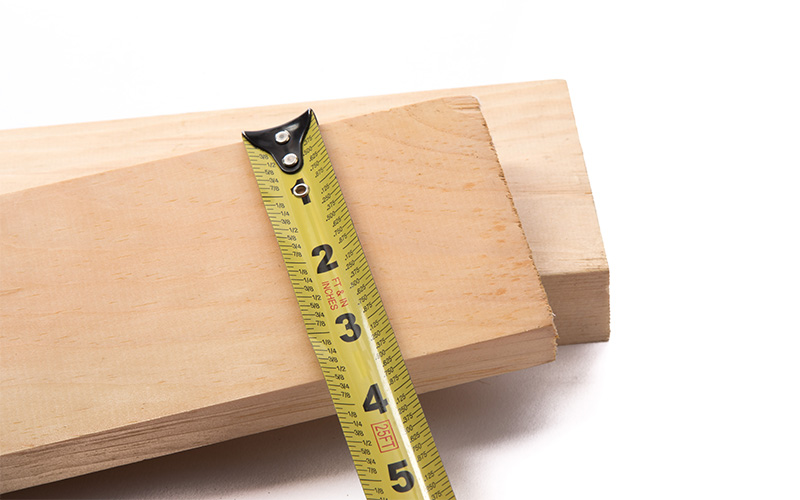
Stiffness and Span Rating
Stiffness describes how much a panel bends under weight. Thicker panels bend less because added thickness increases resistance to deflection.
3/4 inch plywood usually carries a 24/16 span rating. 5/8 inch plywood often carries a 19/16 rating.
3/4 plywood can span wider joist spacing without noticeable flex. For framing set at 16 inches on center, both thicknesses meet code in many cases.
At 24 inches on center, 3/4 plywood performs more reliably. Floors feel firmer and move less, so you get fewer squeaks or cracked finishes.
Fastener Holding Power
Fastener holding power depends on how much material surrounds the screw threads. Thicker plywood gives screws more depth to bite into.
3/4 plywood gives screws about 1/8 inch more depth than 5/8 plywood. The screw grabs more wood fibers and resists pull-out better under load.
This matters for cabinet hinges, stair treads, and side-mounted drawer slides. Screws stay tight longer and resist loosening from repeated use.
With 5/8 inch plywood, installers often use closer fastener spacing or adhesive to make up for the reduced holding depth.
Weight and Handling
Weight affects transport, lifting, and installation speed. Thickness directly increases sheet weight.
A standard 4×8 sheet of 3/4 inch plywood weighs about 60–70 pounds. A 5/8 inch plywood sheet weighs about 45–55 pounds.
5/8 plywood is easier for one person to carry, position, and cut. 3/4 plywood usually needs two people for safe handling, especially on walls or ceilings.
The extra weight helps the panel sit flat during fastening. For solo DIY work, 5/8 plywood reduces fatigue and lowers the risk of handling injuries.
Scenario Showdown: When to Use Which?
Plywood thickness fundamentally dictates the panel’s functional capability, creating distinct trade-offs between structural rigidity, connection strength, and physical manageability.
- Stiffness and Span Rating: Thicker 3/4-inch panels offer superior resistance to deflection, allowing them to bridge wider joist spacing without the “bounciness” common in thinner sheets.
- Fastener Holding Power: The additional material depth in 3/4-inch plywood provides more wood fiber for screws to bite into, which is critical for securing hinges and drawer slides.
- Weight and Handling: While 3/4-inch plywood adds stability, it weighs significantly more (approx. 60-70 lbs), making 5/8-inch panels the preferred choice for solo work or difficult installs.
Subflooring
Most builders pick 3/4-inch plywood for subflooring. The extra 1/8 inch increases stiffness across common 16-inch joist spacing and limits deflection.
Less deflection means fewer squeaks and less movement under foot traffic. Building codes often allow 5/8-inch plywood for subfloor at 16-inch spacing, but it flexes more between joists.
That flex can loosen fasteners over time, raising the risk of noise and cracked tile.
- 3/4-inch: Best for living areas, tile floors, and heavy furniture.
- 5/8-inch: Okay for light-use rooms with tight joist spacing.
Roofing
Roof decks carry snow, wind uplift, and roofing materials. Nobody really walks on them after install, so 5/8-inch plywood often makes more sense.
The thinner panel weighs less per 4×8 sheet, which reduces stress on rafters and trusses. It’s also easier to handle during install and lowers structural load overall.
Many roofs use 1/2-inch plywood with closer rafter spacing. 3/4-inch plywood usually adds cost and weight without much benefit unless the design calls for wide rafter spacing or heavy roof systems.
- 5/8-inch: Standard residential roofing.
- 1/2-inch: Light roofs with tight spacing.
- 3/4-inch: Special designs or wide spans.
Cabinetry & Furniture
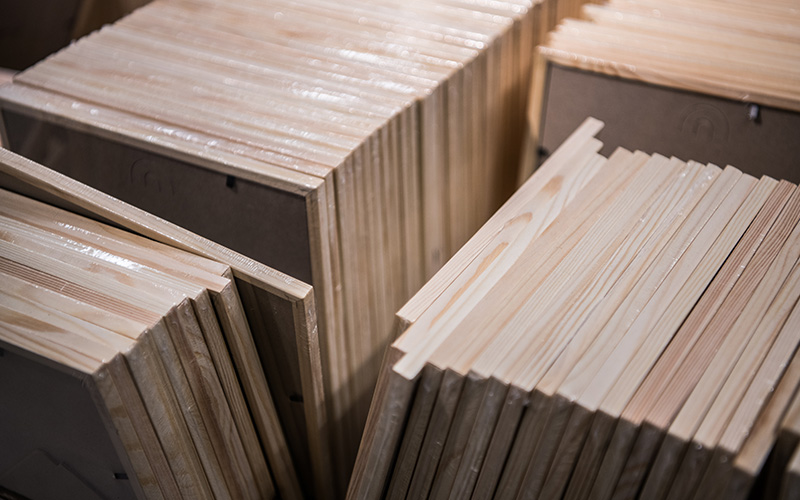
Thickness choice affects how cabinets carry weight and resist racking. For cabinet boxes, 3/4-inch plywood is the go-to. The thicker panel spans wider openings without sagging, which matters for shelves loaded with heavy stuff.
Using 3/4-inch panels lets the box support itself without extra stretchers. Fewer braces mean simpler assembly.
For drawers, backs, and non-structural parts, 5/8-inch plywood works well. It cuts weight and material cost but still holds screws securely.
- Cabinet carcass: 3/4-inch
- Shelves (long span): 3/4-inch
- Drawer sides, backs: 5/8-inch or thinner
Quick Decision Matrix
This matrix compares 5/8 vs 3/4 plywood by common uses. It focuses on thickness, span limits, and the practical reason for each choice.
| 애플리케이션 | Rec. Thickness | Reason | Span Limit |
| Subfloor over joists | 3/4-inch | The extra 1/8 inch increases stiffness, which reduces flex between joists. Fewer squeaks and less floor movement. | Up to 24 in. OC |
| Subfloor, tight spacing | 5/8-inch | Thinner panels work when joists sit closer because the shorter span limits bending. Good for lighter loads. | Up to 16 in. OC |
| Wall sheathing | 5/8-inch | Walls carry less live load, so thinner panels meet code while cutting weight. Easier to lift and fasten. | Stud spacing per code |
| Roof decking | 3/4-inch | Thicker panels resist sag from snow and foot traffic during installs. Flatter roof plane. | Up to 24 in. OC |
| Cabinets and shelves | 3/4-inch | Greater thickness improves screw holding because fasteners bite deeper. Less shelf deflection. | Short to medium spans |
| Furniture panels | 5/8-inch | Lighter weight makes handling easier but keeps enough rigidity for panels. Helps with transport and assembly. | Short spans |
Cost and weight differ. 5/8-inch sheets weigh less and usually cost less, which matters for big wall jobs. 3/4-inch sheets add mass and stiffness, which matters where loads and spans increase.
결론
Plywood thickness really shapes how stiff a floor feels, how well it holds screws, and how much it moves over time.
3/4-inch panels bend less because the added thickness increases stiffness. That means less deflection between joists and a floor that feels solid underfoot.
Floors with thicker plywood usually hold fasteners better, especially as years go by.
5/8-inch panels weigh less and cost less, which is handy for tight budgets or lighter projects.
They do flex more, so they’re best when joists are close together or the floor won’t see heavy loads.
Spacing and fastening start to matter a lot more when you go thinner.
Joist spacing really drives the choice here. Wider spacing increases bending, so thicker panels help cut down on noise and movement.
When spans grow, that extra thickness can make a real difference in bounce and squeaks.
Here’s a quick reference to keep things straight:
| Use Case | Joist Spacing | Preferred Thickness | Why It Fits |
| Subfloors | 16 in. or more | 3/4-inch | Lower deflection; stronger screw hold |
| Subfloors | 12–16 in. | 5/8-inch | Acceptable stiffness at tighter spans |
| Cabinets & built-ins | N/A | 3/4-inch | Better edge strength and fastener grip |
| Sheathing, non-structural | N/A | 5/8-inch | Lower weight and material cost |
If you’re unsure, going with 3/4-inch for floors and cabinets is usually safe. For sheathing and lighter-duty stuff, 5/8-inch makes sense.
Frequently Asked Questions
How does thickness affect the weight capacity of plywood?
Thicker plywood resists bending better, so it carries more load. A 3/4-inch panel is stiffer than a 5/8-inch one.
With 3/4-inch plywood, you’ll notice less deflection under the same weight. Floors feel firmer, and screws stay tight, which helps cut down on squeaks.
What is the maximum span for 3/4-inch plywood before it begins to sag?
Most 3/4-inch plywood works for 16-inch joist spacing with no obvious sag under normal residential loads.
Some tongue-and-groove panels allow 24-inch joist spacing if the stamp says so. Building codes usually limit sag to about L/360, meaning the panel shouldn’t bend more than one unit for every 360 units of span.
It’s worth checking the APA span rating stamp—it matters more than thickness alone.
When is it better to use 3/4-inch plywood over 5/8-inch for flooring?
3/4-inch plywood is a better bet when joist spacing is 16 inches on center or wider. It’s also smart for rooms with heavy loads, like kitchens, tile floors, or anywhere you’ll have big furniture.
Thicker plywood helps spread out the weight and keeps the floor from bouncing. That can help prevent cracked tile and loose screws down the road.
What are the standard thicknesses of plywood available in millimeters?
Plywood comes in both inch and metric sizes. Manufacturers usually stick to a handful of common thicknesses:
- 15 mm (about 5/8 inch)
- 18 mm (about 3/4 inch)
- 12 mm (about 1/2 inch)
- 9 mm (about 3/8 inch)
Imported plywood often lists metric sizes. That can get a bit confusing, especially when working with standard North American joist spacing.
제품에 대해 자세히 알아보시겠습니까?
지금 문의