
Plywood vs OSB vs MDF: Which Board Is Best for Your Project?
The market is flooded with different panel types, and plywood, Medium-Density Fiberboard (MDF), and Oriented Strand Board (OSB) are the three most commonly asked-about options. They all look like “man-made boards” at first glance, but their inner performance and ideal uses are completely different. Many people stare at samples in stores and wonder: “Which one is best for wardrobes? Which can resist moisture in the kitchen? Which offers the best value if I’m on a budget?”
Stop following trends blindly! This guide uses simple language to explain the differences between plywood, MDF, and OSB from three key angles: real performance, ideal uses, and tips to avoid mistakes. Whether you’re new to renovation or planning to customize furniture, you’ll find the perfect panel for your needs.
Table of Contents
- What is plywood?
- What is OSB?
- What is MDF?
- Which Panel Is Best for Your Home?
- Don’t Ignore These 4 Details – Split into Categories Plywood, OSB, and MDF
- Q&A: 3 Most Common Questions About Choosing Panels
- 결론
What is plywood?
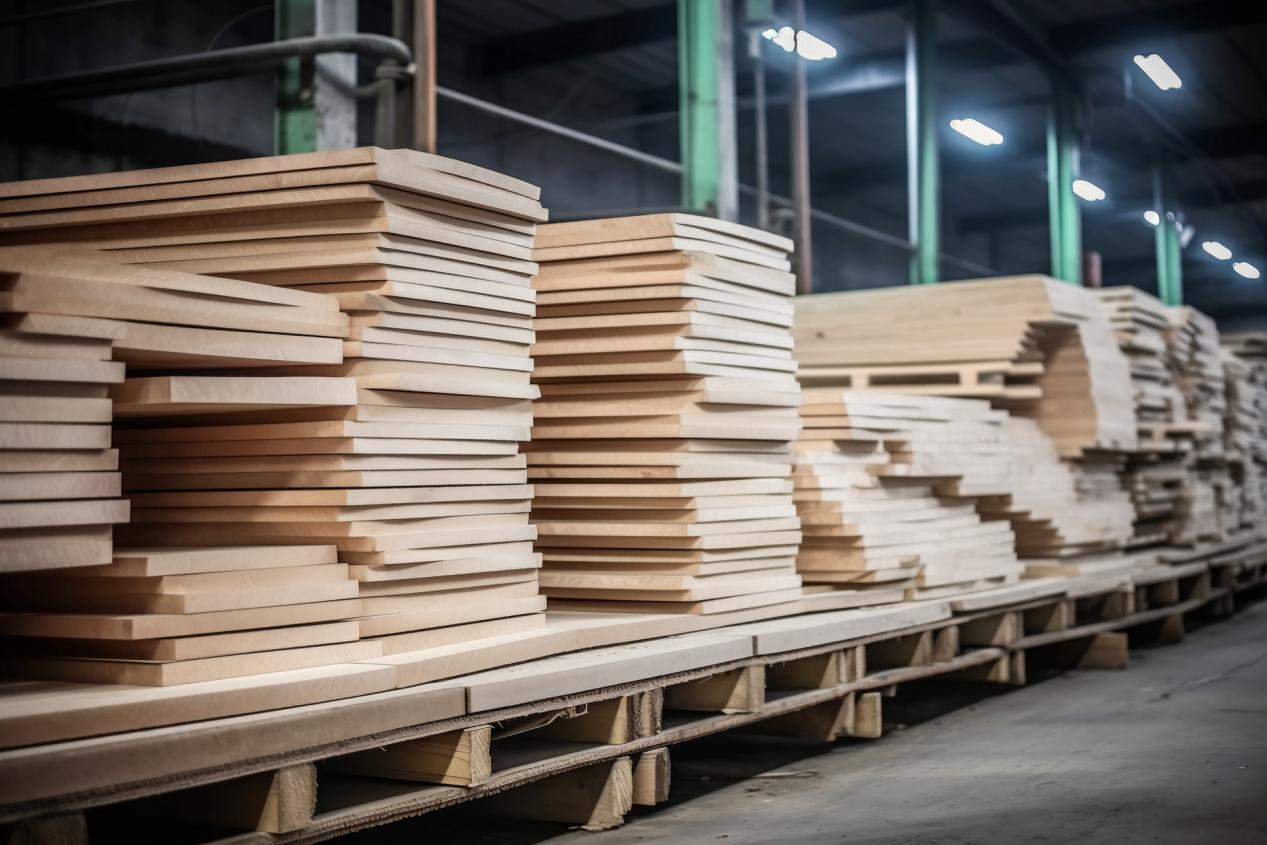
Plywood, which is made of layered wood sheets, is a durable material.
Making 합판 is like “stacking a sandwich,” but its “filling” is thin wood sheets. First, logs are cut into 1–3 mm thick veneers. These veneers are dried and coated with glue, then stacked following the rule: “The grain of adjacent veneers is perpendicular.” For example, if the first layer’s grain is horizontal, the second layer is vertical, and the third is horizontal again. This crisscross stacking is pressed into a solid board with high temperature and pressure. Common plywood has 3, 5, or 7 layers—all odd numbers.
What is OSB?
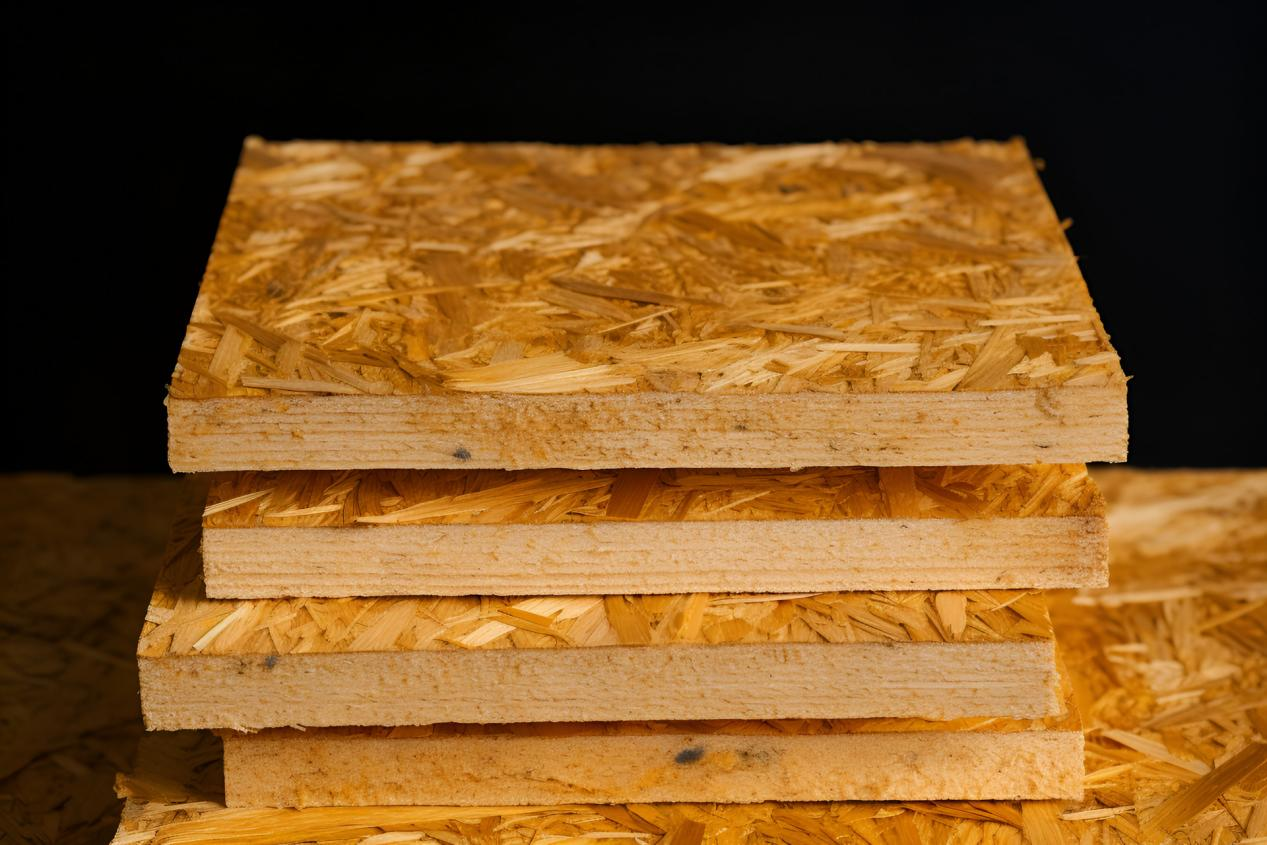
OSB is strong and consists of oriented wood strands.
OSB also has a simpler name: “European Pine Board.” Its material is fast-growing wood (like pine or poplar). To make OSB, logs are peeled and cut into long, thin wood strands—5–10 cm long, 1–2 cm wide (like enlarged wood chips but more complete). These strands are dried and sorted, then laid in layers following “oriented rules”: the surface strands are placed along the board’s length, and the core strands are placed along the board’s width. It’s like building a house with blocks—each layer has a fixed direction. Finally, glue is added, and the strands are pressed into a solid board with high temperature and pressure.
OSB’s key advantage is its “oriented arrangement”:
- Surface strands along the length make the board’s “longitudinal strength” stronger (e.g., it’s hard to bend or break the board along its length).
- Core strands across the width boost its “horizontal strength” (e.g., it’s hard to bend the board from side to side).
What is MDF?
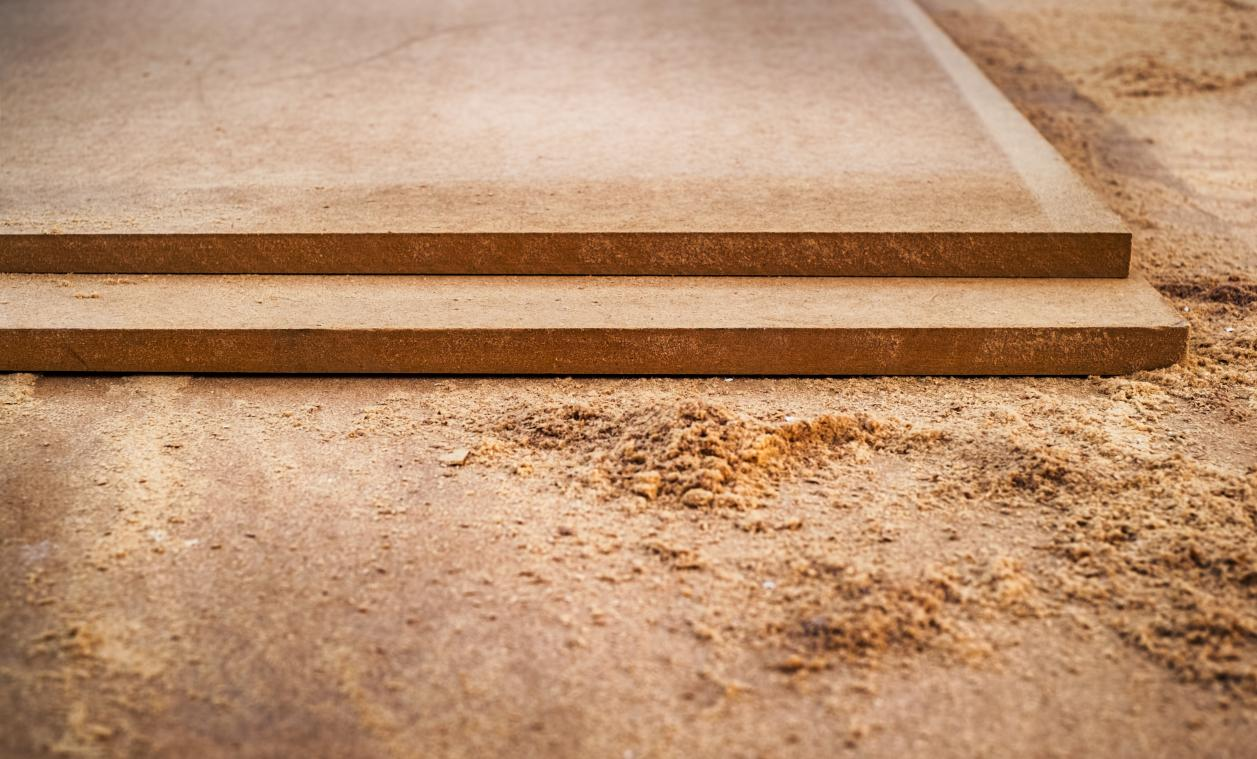
MDF is a type of smooth product composed of pressed wood fibers.
MDF uses “finer” materials: wood waste (like wood chips or wood pieces) is crushed into tiny fibers (as fine as flour). These fibers are dried, mixed evenly with glue, then pressed into a board with high temperature (120–200°C) and high pressure (5–10 MPa). MDF has three types based on density:
- Low-density MDF: Soft, like cardboard.
- Medium-density MDF: Moderate hardness, the most commonly used type.
- High-density MDF: Very hard, close to solid wood.
MDF’s biggest feature is “uniformity and smoothness”: its tiny fiber material means the board’s surface has no obvious grain gaps—it feels smooth to the touch. This makes it perfect for “surface decoration,” like painting or pasting wood veneers. It can create a delicate look easily. Also, MDF uses waste materials, so its cost is low. It’s cheaper than both plywood and OSB, making it a top choice for people who care about appearance and have a limited budget.
Which Panel Is Best for Your Home?
I. Where Will It Be Used?
1.Wardrobes, Bookcases, Storage Cabinets: Prioritize “Stability + Eco-Friendliness”
Furniture like wardrobes and bookcases must bear weight for a long time. They’re also placed in bedrooms or studies, so eco-friendliness matters too. Here’s how the three panels perform:
- 합판: Moderate fit. It has balanced nail-holding power and enough load-bearing capacity. Its moisture resistance is better than MDF—for example, it won’t swell easily in the humid rainy season in southern China. But note: It’s not good for “floor-to-ceiling wardrobe doors.” If the door is too long, it may warp slightly over time. It’s perfect for wardrobe side panels or shelves.
- OSB: High fit. It has the strongest bending and shear resistance among the three. Using OSB for wardrobe frames or shelves means even heavy coats won’t cause warping. Most OSB uses MDI glue, so its formaldehyde emission is low—great for closed spaces like bedrooms. The only downside: Its surface has obvious wood strand texture, so it can’t be used directly as a cabinet door. It needs veneer or paint.
- MDF: For cabinet bodies, MDF has clear flaws: weak nail-holding power and poor moisture resistance. But for cabinet doors, it shines: its smooth surface can be painted or covered with PVC film to create high-end looks. Its appearance is better than the other two panels.
2.Kitchen Cabinets: Focus on “Moisture Resistance + Oil Stain Resistance”
The kitchen is the most humid and oily space in the home. Panels must resist moisture and be easy to clean. Here’s how the three perform:
- Plywood: Moderate fit. Its moisture resistance is better than MDF but worse than OSB. It’s good for upper kitchen cabinets (they’re far from sinks and stoves, so they touch less moisture). But it’s not recommended for lower cabinets (they’re close to sinks, so water splashes easily). Plywood’s surface also has grain gaps—oil stains can get stuck in the gaps and are hard to clean. It needs edge sealing or a waterproof film.
- OSB: High fit. It has the best moisture resistance among the three. Even if water splashes on lower cabinets, wiping it dry immediately won’t cause swelling or warping. OSB is also strong—using it for kitchen cabinet frames or shelves means it can hold the weight of pots and pans. Like with wardrobes, its surface needs waterproof veneer or paint; otherwise, oil stains will seep into the wood strands.
- MDF: Not recommended. MDF’s dense fiber structure acts like a sponge—once it touches moisture, it swells and cracks quickly. Oil stains also seep into the panel easily; even after cleaning, oil marks remain. Using MDF in the kitchen will lead to lots of maintenance trouble later.
3.Renovation Base Layers: Look for “Load-Bearing + Value for Money”
Base layers for walls, floor underlays, or door/window frames don’t need good looks—but they need to be strong and cost-effective. Here’s how the three perform:
- 합판: Moderate fit. It has a smooth surface—using it for door/window frame base layers keeps the final decoration smooth. But it’s more expensive than OSB, so it’s less cost-effective.
- OSB: High fit. It has high structural strength—using it as a floor underlay reduces floor squeaks; using it as a wall base layer lets you hang tiles or decorative paintings without issues. It’s also cheaper than high-quality plywood, so it offers great value for money.
- MDF: Not recommended. It’s not strong enough—using it as a floor underlay will make it warp under foot, leading to floor bulging. Using it as a wall base layer means heavy items (e.g., air conditioners, decorative paintings) will fall easily. Its moisture resistance is also poor—if the wall has moisture, the base layer will grow mold.
II. How Eco-Friendly Is It?
Panel eco-friendliness directly affects your family’s health—especially if you have elderly people or children. The eco-friendliness of the three panels depends on “glue amount” and “glue type”:
- Plywood: Moderate formaldehyde risk. It’s made of layered veneers—more layers mean more glue. Most plywood uses urea-formaldehyde glue (which releases formaldehyde). High-quality 합판 can reach E0 grade, but reaching the stricter ENF grade is costly and rare. When buying, check the test report—avoid cheap, low-quality plywood (it may use bad urea-formaldehyde glue and have excessive formaldehyde).
- OSB: Lowest formaldehyde risk. Most OSB uses MDI glue, so its formaldehyde emission is very low. Most products reach E0 grade, and some even reach ENF grade. But note: A few small factories use urea-formaldehyde glue to cut costs. When buying, check the test report and prioritize products clearly labeled “MDI glue.”
- MDF: Highest formaldehyde risk. Its tiny fiber material needs lots of glue to bond. It uses more glue than the other two panels, and most use urea-formaldehyde glue. Even E0-grade MDF has a long formaldehyde release period (up to 10+ years). If the panel gets wet, formaldehyde emission increases. If you choose MDF, pick E0 grade or higher, seal all six sides, and avoid using it in closed spaces like bedrooms or children’s rooms.
Don’t Ignore These 4 Details – Split into Categories 합판, OSB, and MDF
Even if you know which panel fits your needs, you can still make mistakes when buying. Here are 5 practical tips to help you buy “high-quality, genuine” panels:
1. Don’t Believe “Zero Formaldehyde”—Check the “Eco-Grade Test Report”
Many sellers claim “zero formaldehyde panels,” but in reality, all man-made panels use glue—true zero formaldehyde is impossible. Focus on “national-level test reports,” which show formaldehyde emission. Prioritize ENF-grade or E0-grade products (E1 grade is the minimum standard, with formaldehyde emission ≤0.124mg/m³—it’s only for public spaces; choose higher grades for homes). Note: The report must have “CMA certification” (look for the CMA mark). This report is authoritative—avoid “company self-test reports” (sellers use them to trick buyers).
2. Touch the Surface, Check the Cut—Judge Panel Quality
- Plywood: Touch the surface—feel for smoothness, bulges, or dents. Check the cut—see if the veneers are even and if there are gaps. Tap the panel lightly—clear sounds mean even density; dull sounds mean possible hollow spots.
- OSB: Touch the surface—check if the wood strands are firm. Scratch gently with your finger—strands that don’t fall off mean tight pressing. Check the cut—see if the strands are arranged neatly and if there are obvious holes. Smell the panel—high-quality OSB only has a woody smell, no strong glue smell.
- MDF: Touch the surface—feel for smoothness and graininess. Check the cut—see if it’s even and if there are layers. Press the panel with moderate force—no deformation means enough density .
3. Ask About “Glue Type”—Especially for MDF and Plywood
Plywood and MDF: Prioritize products using “MDI glue.” They’re more expensive than urea-formaldehyde glue products, but their formaldehyde emission is much lower. If you choose urea-formaldehyde glue, confirm it’s “eco-friendly urea-formaldehyde glue”—avoid low-quality urea-formaldehyde glue products.
OSB: Ask the seller directly, “Does this use MDI glue?” Write it in the contract—prevent sellers from passing off urea-formaldehyde glue OSB as MDI glue OSB.
4. Pay Attention to “Edge Sealing”—Especially for Moisture-Prone Spaces
Edge sealing not only reduces formaldehyde emission but also prevents moisture from seeping into the panel. This is crucial for panels near kitchens or bathrooms. High-quality edge sealing should:
- Be smooth with no rough edges.
- Stay in place when pulled gently (won’t peel off).
- Match the panel’s color and texture (shows fine craftsmanship).
- For custom furniture, choose “PUR edge sealing” or “laser edge sealing”—they’re more durable and sealed better than regular EVA edge sealing.
Q&A: 3 Most Common Questions About Choosing Panels
1. I have kids at home—Which panel is the most eco-friendly?
Prioritize MDI glue OSB. It has the lowest formaldehyde emission and is strong—perfect for children’s room wardrobes or bookcases. If you need a decorative surface (e.g., a children’s room backdrop), choose ENF-grade MDF. But be sure to seal all six sides and ventilate the room for over 3 months before moving in.
2. I live in southern China with a humid rainy season—Which panel won’t get damaged by moisture for wardrobes?
Choose OSB. It has the best moisture resistance among the three panels. Even if there is slight moisture inside the wardrobe, it won’t warp easily. The second choice is 합판, but you must pick plywood with 5 or more layers. You also need to do moisture-proof treatment inside the wardrobe—for example, paste moisture-proof paper or place moisture-absorbing bags. Never choose MDF; it swells and bulges easily during the rainy season.
3. Which panel is best for floor-to-ceiling wardrobe doors?
Choose MDF (medium-density or high-density MDF). Its surface is smooth, so long door panels won’t have uneven gaps easily. It also has a high-quality appearance. But you need to note two points: First, the door panel thickness must be 18mm or more. Second, you must add a “straightener”. If you care about eco-friendliness, you can choose ENF-grade MDF, or use OSB with veneer for the door panels—it balances eco-friendliness and stability.
결론
Choosing the right panel is a key step in home renovation and furniture customization. This guide focuses on three mainstream panels—합판, MDF, and OSB—and explains the key points of panel selection in simple language from four angles: core characteristics, ideal use scenarios, balancing budget and eco-friendliness, and avoiding mistakes when buying.
Each of the three panels has its own strengths:
- 합판 is made by “crisscross pressing of multi-layer wood sheets”. It keeps wood’s flexibility and structural stability, making it a durable choice.
- OSB uses the “oriented arrangement of wood strands” process. It has excellent load-bearing and anti-warping abilities. Most OSB uses MDI glue, so it is the most eco-friendly among the three.
- MDF is made by pressing tiny wood fibers. Its surface is fine and smooth, and it is easy to process into shapes. It has a clear advantage in appearance, but its moisture resistance is weak.
For ideal use scenarios, you need to choose based on space needs:
- For wardrobe bodies, prioritize OSB or 합판; for wardrobe doors, MDF is more suitable.
- For kitchen cabinets (which face moisture and oil stains), prioritize OSB and avoid MDF.
- For renovation base layers (such as floor underlays and wall base layers), OSB offers better value for money—it is strong and moderately priced.
- For decorative surfaces (such as TV backdrops), MDF is more suitable; it can be easily made into complex shapes like curves and carvings.
When buying panels, you also need to avoid the “zero formaldehyde” trick. Always check the CMA-certified ENF-grade or E0-grade test report. Judge the panel quality by touching its surface , looking at its cut (to check structure), and smelling it. At the same time, confirm the glue type. For custom furniture, prioritize PUR edge sealing or laser edge sealing processes.
Overall, you don’t need to follow trends blindly when choosing panels. As long as you match your choice with three factors—use scenario, budget range, and eco-friendly needs—you can avoid mistakes and pick a panel that is both durable and suitable for your needs.
제품에 대해 자세히 알아보시겠습니까?
지금 문의