
LVT Flooring Export Advantage Analysis: Global Adaptability & Market Competitiveness
Against the backdrop of globalized building material trade and iterative upgrading of overseas interior decoration demands, resilient flooring has gradually become a mainstream choice in the international market. As a high-performance decorative flooring material, LVT (Luxury Vinyl Tile) stands out in global cross-border trade by virtue of its stable comprehensive performance, standardized production system and strong regional adaptability. It enjoys relatively prominent export advantages, covering product performance, international compliance, supply chain flexibility and cost-effectiveness, and has formed stable market competitiveness in major overseas regions such as North America, Europe and Southeast Asia.
Strong regional environmental adaptability is the core foundation for LVT flooring to expand global exports. Different from solid wood flooring which is restricted by climate and tree species resources, and ceramic flooring which has high transportation costs and heavy weight, LVT flooring features low water absorption, excellent moisture resistance and dimensional stability. It can adapt to the humid and rainy climate in Southeast Asia, the dry and cold weather in northern Europe and North America, and the high-temperature environment in coastal areas, with relatively low failure rates in long-term overseas use. In addition, its wear-resistant, stain-resistant and impact-resistant properties can well meet the high-frequency use needs of local residential, commercial and public space scenarios, effectively reducing after-sales maintenance pressure in cross-border sales and improving product market reputation.
Complete international compliance certification system constitutes a key export barrier of LVT flooring. Most standardized LVT flooring products can meet mainstream global environmental and safety standards, including EU CE certification, French A+ VOC environmental certification, and relevant green building certification specifications in North America. The products generally comply with international environmental protection regulations such as REACH and RoHS, with low volatile content and safe and reliable material properties. This highly standardized compliance capability enables LVT flooring to smoothly pass the commodity inspection thresholds of major trading regions, adapt to the strict market access rules of Europe and the United States, and reduce the policy risks of cross-border sales to a certain extent.
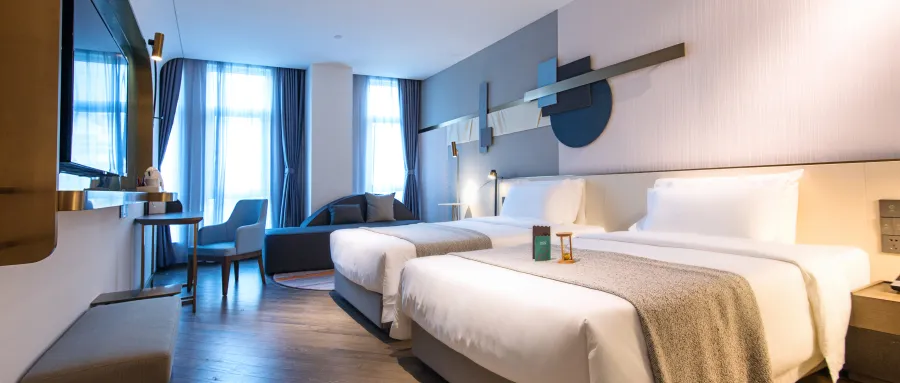
Rich aesthetic customization and scenario versatility further enhance overseas market inclusiveness. Relying on mature simulation printing and texture restoration technology, LVT flooring can replicate diverse textures such as natural wood, marble, terrazzo and fabric. It can match local mainstream design styles including European minimalism, American rural style, modern light luxury and Southeast Asian casual style. Diversified specifications, colors and splicing schemes can basically cover full-house home decoration, office commerce, retail stores, hotel engineering and other scenarios. The highly flexible product design can respond to the differentiated aesthetic and functional needs of different regional markets, with relatively wide market coverage.
Superior supply chain and cost performance are important support for sustained export growth. Compared with traditional natural building materials which are limited by resource scarcity and high processing costs, LVT flooring adopts mature composite polymer molding technology, with stable raw material supply and scalable mass production. Its lightweight feature helps reduce container transportation costs and loss rates in cross-border logistics, bringing obvious logistics cost advantages. Meanwhile, the standardized modular production mode shortens the production cycle, enables flexible response to bulk orders and customized small-batch orders, and adapts to the diversified procurement modes of overseas distributors, engineering purchasers and supermarket retail channels.
Policy compatibility and low threshold of local application also create favorable conditions for export expansion. In recent years, many regions have introduced supportive policies for green and lightweight building materials, and LVT flooring, as an eco-friendly renewable decorative material, fits the local green building development trend. In addition, its convenient click-lock installation method reduces the reliance on professional construction teams, lowers local construction labor costs, and is more in line with the labor-saving and efficient decoration demands of European and American markets. For emerging markets, its high cost performance also helps reduce the overall renovation budget, with strong market penetration.
It is undeniable that the export of LVT flooring also faces certain variable factors such as regional trade policies and market homogenization competition. Product quality and certification level vary among different batches and grades, which may affect long-term market recognition. Therefore, continuous optimization of production standards, upgrading of environmental protection and performance indicators, and in-depth adaptation to regional differentiated access rules are still necessary directions for the industry to consolidate export advantages.
On the whole, LVT flooring integrates environmental adaptability, international compliance, aesthetic diversity and supply chain advantages, and fits the development trend of lightweight, green and high-efficiency global building materials. With comprehensive and balanced product strength and market adaptability, it maintains stable demand in global cross-border trade and has broad sustainable export development potential.