

목재 기반 패널 수출: 구매자들이 이러한 “숨겨진 성과 지표”를 중요하게 여기는 이유는 무엇일까?
글로벌 건축자재 대외무역 분야의 경쟁은 표면 마감에 대한 피상적인 비교에서 점차 자재 성능에 대한 심층적인 경쟁으로 전환되고 있습니다. 해외 지역마다 건설 및 서비스 환경이 크게 다르며, 최종 고객들은 납품 품질에 대한 기준을 지속적으로 높이고 있습니다. 단순히 장식적인 표면 효과에만 의존해서는 제품의 지속 가능한 경쟁 우위를 확보하기 어렵습니다. 구매자의 제품 평가 체계 내에서, 다양한 사용 조건에 대한 기판의 적응성은 점차 공급업체의 전반적인 역량을 측정하는 핵심 기준으로 자리 잡고 있습니다. 또한 이는 유통 채널의 평판을 형성하고 꾸준한 재주문을 확보하는 데 있어 중요한 요소로 작용합니다.
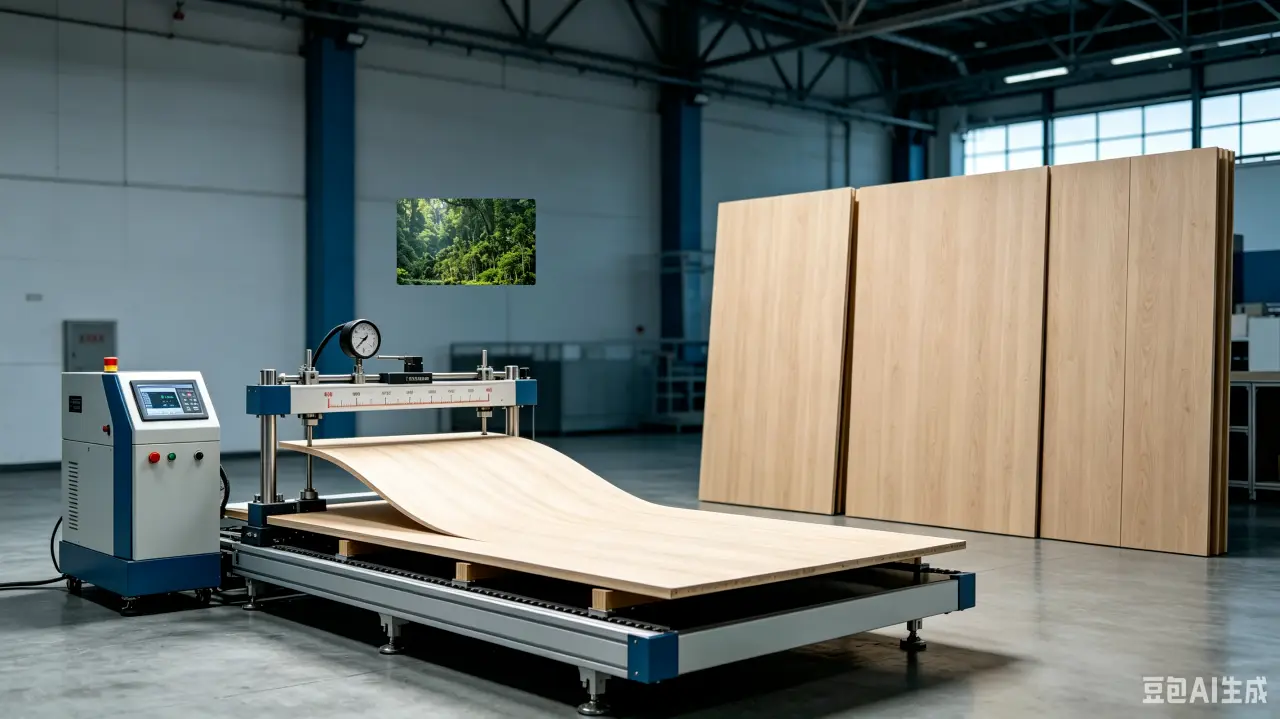
In markets with vastly different climatic conditions, including Southeast Asia, the Middle East and Northern Europe, there is diminishing room to differentiate products solely through surface craftsmanship. When selecting panels, overseas purchasers routinely verify hidden indicators one by one, such as density, bending resistance, screw holding power and weather resistance.
Density: Higher Does Not Equal Better; Application Adaptability Is Paramount
The industry once laboured under the misconception that higher density equates to superior quality. In actual product selection, however, density must be assessed comprehensively alongside intended applications, transportation modes and on-site processing techniques.
Low-density substrates: Lighter per unit weight, effectively reducing load limits for ocean freight containers. Suitable for interior soft furnishings in arid regions and consolidated container shipments for small-batch retail orders.
Medium-density substrates: Featuring relatively even stress distribution. Widely applicable to most standard household cabinets worldwide and enjoying strong versatility in foreign trade markets.
High-density substrates: Demonstrating stable compression and wear resistance. They are frequently prioritised by buyers for commercial fit-outs, humid coastal areas and regions with drastic temperature fluctuations.
Rather than isolated density figures, consistent and uniform density structure carries greater reference value. Panels with erratic density variations are prone to localised stress concentration during subsequent processing and load-bearing, which may trigger quality defects.
Bending Resistance & Dimensional Stability: Standard Evaluation Criteria for Large-Size Custom Panels
Seasonal cycles of humidity and dryness exert persistent micro-deformation stress on panel structures. Substrates with compact structures and stable modulus of rupture are less likely to develop visible warpage when used for floor-to-ceiling cabinets and large feature walls.
Taking inland cities in parts of the Middle East with extreme day-night temperature differences and year-round high humidity across Southeast Asia as examples, buyers routinely request technical parameters including bending durability and linear expansion coefficient when issuing inquiries.
Screw Holding Power: A Core Factor Determining Hardware Fastening Stability
Loose cabinet hardware can be attributed not only to hardware quality itself, but also to the substrate’s capacity to grip fasteners.
Panels with evenly distributed fibres and no internal voids or delamination experience milder declines in gripping strength after repeated screw installation and removal. In contrast, loosely structured substrates tend to suffer enlarged screw holes and loose hinge base plates after repeated disassembly and assembly.
For manufacturers undertaking engineering orders and integrated furniture exports, screw holding performance — including retention capacity after repeated disassembly — is normally incorporated into incoming material inspection protocols, instead of relying solely on standalone figures from factory test reports.
Commonly Verified Associated Indicators in Foreign Trade Procurement
Beyond the core indicators above, the following parameters frequently appear on buyers’ checklists:
• Thickness swelling upon water absorption: Mainly used to assess water resistance for kitchen, bathroom and coastal projects;
• Glue grade: WBP adhesives deliver strong resistance against delamination under hot and humid ocean shipping conditions, winning greater recognition from purchasers;
• Batch consistency: Fluctuations in key indicators (density, moisture content, screw holding power, etc.) among batches of identical specifications constitute a critical hidden factor influencing overseas buyers’ willingness to place repeat orders.
Ultimately, competition for exported wood panels hinges on how well substrate performance matches application scenarios. Increasingly rational buyers are pushing suppliers to shift from extensive to refined operation. Against this backdrop, SUMEC Wood Industry continuously focuses on substrate uniformity of density, structural stability and weather resistance. With customised substrate solutions, we help customers tackle challenges posed by diverse environments, ranging from high humidity in Southeast Asia to extreme temperature swings in the Middle East, jointly consolidating long-term competitiveness in foreign trade channels.